


Ruble Takedown Exposes Cracks In Putin’s Defense
December 20, 2014 by Administrator · Leave a Comment
Putin’s Next Move Is Crucial…

The plunge of the Russian currency this week is the drastic outcome of policies implemented by the major imperialist powers to force Russia to submit to American and European imperialism’s neo-colonial restructuring of Eurasia. Punishing the Putin regime’s interference with their plans for regime change in countries such as Ukraine and Syria, the NATO powers are financially strangling Russia.” Alex Lantier, Imperialism and the ruble crisis, WSWS
“The struggle for world domination has assumed titanic proportions. The phases of this struggle are played out upon the bones of the weak and backward nations.” Leon Trotsky, 1929
Russian President Vladimir Putin suffered a stunning defeat on Tuesday when a US-backed plan to push down oil prices sent the ruble into freefall. Russia’s currency plunged 10 percent on Monday followed by an 11 percent drop on Tuesday reducing the ruble’s value by more than half in less than a year. The jarring slide was assisted by western sympathizers at Russia’s Central Bank who, earlier in the day, boosted interest rates from 10.5 percent to 17 percent to slow the decline. But the higher rates only intensified the outflow of capital which put the ruble into a tailspin forcing international banks to remove pricing and liquidity from the currency leading to the suspension of trade. According to Russia Today:
“Russian Federation Council Chair Valentina Matviyenko has ordered a vote on a parliamentary investigation into the recent activities of the Central Bank and its alleged role in the worst-ever plunge of the ruble rate…
“I suggest to start a parliamentary investigation into activities of the Central Bank that has allowed violations of the citizens’ Constitutional rights, including the right for property,” the RIA Novosti quoted Tarlo as saying on Wednesday.
The senator added that according to the law, protecting financial stability in the country is the main task of the Central Bank and its senior management. However, the bank’s actions, in particular the recent raising of the key interest rate to 17 percent, have so far yielded the opposite results.” (Upper House plans probe into Central Bank role in ruble crash, RT)
The prospect that there may be collaborators and fifth columnists at Russia’s Central Bank should surprise no one. The RCB is an independent organization that serves the interests of global capital and regional oligarchs the same as central banks everywhere. This is a group that believes that humanity’s greatest achievement is the free flow of privately-owned capital to markets around the world where it can extract maximum value off the sweat of working people. Why would Russia be any different in that regard?
It isn’t. The actions of the Central Bank have cost the Russian people dearly, and yet, even now the main concern of RCB elites is their own survival and the preservation of the banking system. An article that appeared at Zero Hedge on Wednesday illustrates this point. After ruble trading was suspended, the RCB released a document with “7 new measures” all of which were aimed at protecting the banking system via moratoria on securities losses, breaks on interest rates, additional liquidity provisioning, easier credit and accounting standards, and this gem at the end:
“In order to maintain the stability of the banking sector in the face of increased interest rate and credit risks of a slowdown of the Russian economy the Bank of Russia and the Government of the Russian Federation prepare measures to recapitalize credit institutions in 2015.” (Russian Central Bank Releases 7 Measures It Will Take To Stabilize The Financial Sector, Zero Hedge)
Sound familiar? It should. You see, the Russian Central Bank works a lot like the Fed. At the first sign of trouble they build a nice, big rowboat for themselves and their dodgy bank buddies and leave everyone else to drown. That’s what these bullet points are all about. Save the banks, and to hell the people who suffer from their exploitative policies.
Here’s more from RT:
“Earlier this week a group of State Duma MPs from the Communist Party sent an official address to Putin asking him to sack (Central Bank head, Elvira) Nabiullina, and all senior managers of the Central Bank as their current policies are causing the rapid devaluation of ruble and impoverishment of the majority of the Russian population.
In their letter, the Communists also recalled Putin’s address to the Federal Assembly in which he said that control over inflation must not be in the way of the steady economic growth.
“They listen to your orders and then do the opposite,” the lawmakers complained.” (RT)
In other words, the RCB enforces its own “austerity” policy in Russia just as central bankers do everywhere. There’s nothing conspiratorial about this. CBs are owned and controlled by the big money guys which is why their policies invariably serve the interests of the rich. They might not call it “trickle down” or “structural adjustment” (as they do in the US), but it amounts to the same thing, the inexorable shifting of wealth from working class people to the parasitic plutocrats who control the system and its political agents. Same old, same old.
Even so, the media has pinned the blame for Tuesday’s ruble fiasco on Putin who, of course, has nothing to do with monetary policy. That said, the ruble rout helps to draw attention to the fact that Moscow is clearly losing its war with the US and needs to radically adjust its approach if it hopes to succeed. First of all, Putin might be a great chess player, but he’s got a lot to learn about finance. He also needs a crash-course in asymmetrical warfare if he wants to defend the country from more of Washington’s stealth attacks.
In the last 10 months, the United States has executed a near-perfect takedown of the Russian economy. Following a sloppy State Department-backed coup in Kiev, Washington has consolidated its power in the Capital, removed dissident elements in the government, deployed the CIA to oversee operations, launched a number of attacks on rebel forces in the east, transferred ownership of Ukraine’s vital pipeline system to US puppets and foreign corporations, created a tollbooth separating Moscow from the lucrative EU market, foiled a Russian plan to build an alternate pipeline to southern Europe (South Stream), built up its military assets in the Balkans and Black Sea and, finally–the cherry on the cake–initiated a daring sneak attack on Russia’s currency by employing its Saudi-proxy to flood the market with oil, push prices off a cliff, and trigger a run on the ruble which slashed its value by more than half forcing retail currency platforms to stop trading the battered ruble until prices stabilized.
Like we said, Putin might be a great chess player, but in his battle with the US, he’s getting his clock cleaned. So far, he’s been no match for the maniacal focus and relentless savagery of the Washington powerbrokers. Yes, he’s formed critical alliances across Asia and the world. He’s also created competing institutions (like the BRICS bank) that could break the imperial grip on global finance. And, he’s also expounded a vision of a new world in which “one center of power” does not dictate the rules to everyone else. That’s all great, but he’s losing the war, and that’s what counts. Washington doesn’t care about peoples’ dreams or aspirations. What they care about is ruling the world with an iron fist, which is precisely what they intend to do for the next century or so unless someone stops them. Putin’s actions, however admirable, have not yet changed that basic dynamic. In fact, this latest debacle (authored by the RCB) is a severe setback for the country and could impact Russia’s ability to defend itself against US-NATO aggression.
So what does Putin need to do to reverse the current trend?
The first order of business should be a fundamental change in approach followed by a quick switch from defense to offense. There should be no doubt by now, that Washington is going for the jugular. The attack on the ruble provides clear evidence that the US will not be satisfied until Russia has been decimated and reduced to “a permanent state of colonial dependency.” (Chomsky) The United States has launched a full-blown economic war on Russia and yet the Kremlin is still acting like Washington’s punching bag. You can’t win a war like that. You have to take the initiative; take chances, be bold, think outside the box. That’s what Washington is doing. The rout of the ruble is perhaps the most astonishingly-successful asymmetrical attack in recent memory. It involved tremendous risks and costs on the part of the perpetrators. For example, the lower oil prices have ravaged important domestic industries, created widespread financial instability, and sent markets across the planet into a nosedive. Even so, Washington persevered with its audacious strategy, undeterred by the vast collateral damage, never losing sight of its ultimate objective; to deprive Moscow of crucial oil revenues, to crash the ruble, and to open up Central Asia for imperial expansion and US military bases. (The pivot to Asia)
This is how the US plays the game, by keeping its “eyes on the prize” at all times, and by rolling roughshod over anyone or anything that gets in its way. That is why the US is the world’s only superpower, because the voracious oligarchs who run the country will stop at nothing to get what they want.
Does Putin have the grit to match that kind of venomous determination? Has he even adjusted to the fact that WW3 will be unlike any conflict in the past, that jihadi-proxies and Neo Nazi-proxies will be employed as shock troops for the empire clearing the way for US special forces and foot soldiers who will hold ground and establish the new order? Does he even realize that Barbarossa 2 is already underway, but that the Panzer divisions and 2 million German regulars have been replaced with high-powered computers, covert ops, color-coded revolutions, currency crises, capital flight, cyber attacks and relentless propaganda. That’s 4th Generation (4-G) warfare in a nutshell. And, guess what? The US attack on the ruble has shown that it is the undisputed master of this new kind of warfare. More important, Washington has just prevailed in a battle that could prove to be a critical turning point if Putin doesn’t get his act together and retaliate.
Retaliate?!?
You mean nukes?
Heck no. But, by the same token, you can’t expect to win a confrontation with the US by rerouting gas pipelines to Turkey or by forming stronger coalitions with other BRICS countries or by ditching the dollar. Because none of that stuff makes a damn bit of difference when your currency is in the toilet and the US is making every effort to grind your face into the pavement.
Capisce?
There’s an expression is football that goes something like this: The best defense is a good offense. You can’t win by sitting on the sidelines and hoping your team doesn’t lose. You must engage your adversary at every opportunity never giving ground without a fight. And when an opening appears where you can take the advantage, you must act promptly and decisively never looking back and never checking your motives. That’s how you win.
Washington only thinks in terms winning. It expects to win, and will do whatever is necessary to win. In fact, the whole system has been re-geared for one, sole purpose; to beat the holy hell out of anyone who gets out of line. That’s what we do, and we’ve gotten pretty good at it. So, if you want to compete at that level, you’ve got to have “game”. You’re going to have to step up and prove that you can run with the big kids.
And that’s what makes Putin’s next move so important, crucial really. Because whatever he does will send a message to Washington that he’s either up to the challenge or he’s not. Which is why he needs to come out swinging and do something completely unexpected. The element of surprise, that’s the ticket. And we’re not talking about military action either. That just plays to Uncle Sam’s strong hand. Putin doesn’t need another Vietnam. He needs a coherent gameplan. He needs a winning strategy. He needs to takes risks, put it all on the line and roll the freaking dice. You can’t lock horns with the US and play it safe. That’s a losing strategy. This is smash-mouth, steelcage smackdown, a scorched-earth event where winner takes all. You have to be ready to rumble.
Putin needs to think asymmetrically. What would Obama do if he was in Putin’s shoes?
You know what he’d do: He’d send military support to Assad. He’d arm rebel factions in Saudi Arabia, Somalia, Nigeria and elsewhere. He’d strengthen ties with Venezuela, Bolivia, Ecuador providing them with military, intelligence and logistical support. He’d deploy his NGOs and Think Tank cronies to foment revolution wherever leaders refused to follow Moscow’s directives. He would work tirelessly to build the economic, political, media, and military institutions he needed to impose his own self-serving version of snatch-and-grab capitalism on every nation on every continent in the world. That’s what Obama would do, because that’s what his puppetmasters would demand of him.
But Putin must be more discreet, because his resources are more limited. But he still has options, like the markets, for example. Let’s say Putin announces that creditors in the EU (particularly banks) won’t be paid until the ruble recovers. How does that sound?
Putin: “We’re really sorry about the inconvenience, but we won’t be able to make those onerous principle payments for a while. Please accept our humble apologies.” End of statement.
Moments later: Global stocks plunge 350 points on the prospect of a Russian default and its impact on the woefully-undercapitalized EU banking system.
Get the picture? That’s what you call an asymmetrical attack. The idea was even hinted at in a piece on Bloomberg News. Here’s an excerpt from the article:
“Sergei Markov, a pro-Putin academic, wrote in a column on Vzglyad.ru. “Since the reasons for the ruble’s fall are political, the response should be political, too. For example, a law that would ban Russian companies from repaying debts to Western counterparties if the ruble has dropped more than 50 percent in the last year. That will immediately lower the pressure on the ruble, many countries have done this, Malaysia is one example. It’s in great economic shape now.” ( Chicago Tribune)
Here’s more background from RT:
“Major banks across Europe, as well as the UK, US, and Japan, are at major risk should the Russian economy default, according to a new study by Capital Economics. The ING Group in the Netherlands, Raiffeisen Bank in Austria, Societe General in France, UniCredit in Italy, and Commerzbank in Germany, have all faced significant losses in the wake of the ruble crisis…
Overall Societe General, known as Rosbank in the Russian market, has the most exposure at US$31 billion, or €25 billion, according to Citigroup Inc. analysts. This is equivalent to 62 percent of the Paris-based bank’s tangible equity, Bloomberg News reported.
Following the drop, Raiffeisen, which has €15 billion at risk in Russia, saw its stocks plummeted more than 10 percent. Raiffeisen also has significant exposure in Ukraine, which is facing a similar currency sell-off as Russia.” (Russia crisis leaves banks around the world exposed by the billions, RT)
So Putin defaults which nudges the EU banking system down the stairwell. So what? What does that prove?
It proves that Russia has the tools to defend itself. It proves that Putin can disrupt the status quo and spread the pain a bit more equitably. “Spreading the pain” is a tool the US uses quite frequently in its dealings with other countries. Maybe Putin should take a bite of that same apple, eh?
Another option would be to implement capital controls to avoid ruble-dollar conversion and further capital flight. The beauty of capital controls is that they take power away from the big money guys who run the world and hand it back to elected officials. Leaders like Putin are then in a position to say, “Hey, we’re going to take a little break from the dollar system for while until we get caught up. I hope you’ll understand our situation.”
Capital controls are an extremely effective of avoiding capital flight and minimizing the impact of a currency crisis. Here’s a short summary of how these measures helped Malaysia muddle through in 1998:
“When the Asian financial crisis hit, Malaysia’s position looked a lot like Russia’s today: It had big foreign reserves and a low short-term debt level, but relatively high general indebtedness if households and corporations were factored in. At first, to bolster the ringgit, Deputy Prime Minister Anwar Ibrahim pushed through a market-based policy with a flexible exchange rate, rising interest rates and cuts in government spending. It didn’t work: Consumption and investment went down, and pessimism prevailed, exerting downward pressure on the exchange rate.
So, in June 1998, Prime Minister Mahathir Mohammad… appointed a different economic point man, Daim Zainuddin. In September, on Daim’s urging, Malaysia introduced capital controls. It banned offshore operations in ringgit and forbade foreign investors to repatriate profits for a year. Analysts at the time were sharply critical of the measures, and Malaysia’s reputation in the global financial markets inevitably suffered.
According to Kaplan and Rodrik, however, the capital controls were ultimately effective. The government was able to lower interest rates, the economy recovered, the controls were relaxed ahead of time, and by May 1999 Malaysia was back on the international capital markets with a $1 billion bond issue.” (, Chicago Tribune)
Sure they were effective, but they piss off the slacker class of oligarchs who think the whole system should be centered on their “inalienable right” to move capital from one spot to another so they can rake-off hefty profits at everyone else’s expense. Capital controls push those creeps to the back of the line so the state can do what it needs to do to preserve the failing economy from the attack of speculators. Here’s a clip from a speech Joseph Stiglitz gave in 2014 at the Atlanta Fed’s 2014 Financial Markets Conference. He said:
“When countries do not impose capital controls and allow exchange rates to vary freely, this can give rise to high levels of exchange rate volatility. The consequence can be high levels of economic volatility, imposing great costs on workers and firms throughout the economy. Even if they can lay off some of the risk, there is a cost to doing so. The very existence of this volatility affects the structure of the economy and overall economic performance.”
That sums it up pretty well. Without capital controls, the deep-pocket Wall Street banks and speculators can simply vacuum the money out of an economy leaving the country broken and penniless. This nihilistic decimation of emerging markets via capital flight is what the kleptocracy breezily refers to as “free markets”, the unwavering plundering of civilization to fatten the coffers of the swinish few at the top of the foodchain. That’s got to stop.
Putin needs to put his foot down now; stop the outflow of cash, stop the conversion of rubles to dollars, force investors to recycle their money into the domestic economy, indict the central bank governors and trundle them off to the hoosegow, and reassert the power of the people over the markets. If he doesn’t, then the speculators will continue to peck away until Russia’s reserves are drained-dry and the country is pushed back into another long-term slump. Who wants that?
And don’t think that Putin’s only problem is Washington either, because it isn’t. He’s got an even bigger headache in his own country with the morons who still buy the hogwash that “the market knows best.” These are the fantasists, the corporate toadies, and the fifth columnists, some of whom hold very high office. Here’s a clip I picked up at the Vineyard of the Saker under the heading “Medvedev declares: more of the same”:
(Russian Prime Minister) “Medvedev has just called a government meeting with most of the directors of top Russian corporations and the director of the Russian Central Bank. He immediately announced that he will not introduce any harsh regulatory measures and that he will let the market forces correct the situation. As for the former Minister of Finance, the one so much beloved in the West, Alexei Kudrin, he expressed his full support for the latest increase in interest rates.”
This is lunacy. The US has just turned Russia’s currency into worthless fishwrap, and bonehead Medvedev wants to play nice and return to “business as usual”??
No thanks. Maybe Medvedev wants to be a slave to the market, but I’ll bet Putin is smarter than that.
Putin’s not going to roll over and play dead for these vipers. He’s got to much on the ball for that. He’s going to beat them at their own game, fair and square. He’s going to implement capital controls, restructure the economy away from the west, and aggressively look for ways to deter Washington from spreading its heinous resource war to Central Asia and beyond.
He’s not going to give an inch. You’ll see.
Mike Whitney is a regular columnist for Veracity Voice
Mike Whitney lives in Washington state. He can be reached at:
Will Falling Oil Prices Crash The Markets?
December 14, 2014 by Administrator · Leave a Comment
Shale Leads The Way…
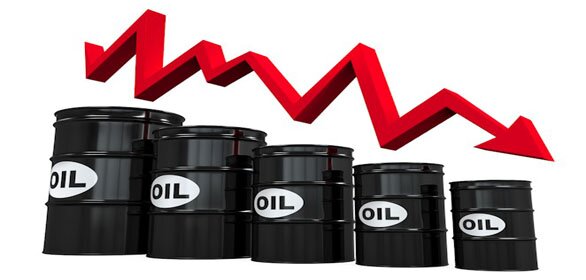
Crude oil prices dipped lower on Wednesday pushing down yields on US Treasuries and sending stocks down sharply. The 30-year UST slipped to a Depression era 2.83 percent while all three major US indices plunged into the red. The Dow Jones Industrial Average (DJIA) led the retreat losing a hefty 268 points before the session ended. The proximate cause of Wednesday’s bloodbath was news that OPEC had reduced its estimate of how much oil it would need to produce in 2015 to meet weakening global demand. According to USA Today:
“OPEC lowered its projection for 2015 production to 28.9 million barrels a day, or about 300,000 fewer than previously forecast, and a 12-year low…. That’s about 1.15 million barrels a day less than the cartel pumped last month, when OPEC left unchanged its 30 million barrel daily production quota…
The steep decline in crude price raises fears that small exploration and production companies could go out of business if the prices fall too low. And that, in turn, could cause turmoil among those who are lending to them: Junk-bond purchasers and smaller banks.” (USA Today)
Lower oil prices do not necessarily boost consumption or strengthen growth. Quite the contrary. Weaker demand is a sign that deflationary pressures are building and stagnation is becoming more entrenched. Also, the 42 percent price-drop in benchmark U.S. crude since its peak in June, is pushing highly-leveraged energy companies closer to the brink. If these companies cannot roll over their debts, (due to the lower prices) then many will default which will negatively impact the broader market. Here’s a brief summary from analyst Wolf Richter:
“The price of oil has plunged …and junk bonds in the US energy sector are getting hammered, after a phenomenal boom that peaked this year. Energy companies sold $50 billion in junk bonds through October, 14% of all junk bonds issued! But junk-rated energy companies trying to raise new money to service old debt or to fund costly fracking or off-shore drilling operations are suddenly hitting resistance.
And the erstwhile booming leveraged loans, the ugly sisters of junk bonds, are causing the Fed to have conniptions. Even Fed Chair Yellen singled them out because they involve banks and represent risks to the financial system. Regulators are investigating them and are trying to curtail them through “macroprudential” means, such as cracking down on banks, rather than through monetary means, such as raising rates. And what the Fed has been worrying about is already happening in the energy sector: leveraged loans are getting mauled. And it’s just the beginning…
“If oil can stabilize, the scope for contagion is limited,” Edward Marrinan, macro credit strategist at RBS Securities, told Bloomberg. “But if we see a further fall in prices, there will have to be a reaction in the broader market as problems will spill out and more segments of the high-yield space will feel the pain.”…Unless a miracle happens that will goose the price of oil pronto, there will be defaults, and they will reverberate beyond the oil patch.” (Oil and Gas Bloodbath Spreads to Junk Bonds, Leveraged Loans. Defaults Next, Wolf Ricter, Wolf Street)
The Fed’s low rates and QE pushed down yields on corporate debt as investors gorged on junk thinking the Fed “had their back”. That made it easier for fly-by-night energy companies to borrow tons of money at historic low rates even though their business model might have been pretty shaky. Now that oil is cratering, investors are getting skittish which has pushed up rates making it harder for companies to refinance their debtload. That means a number of these companies going to go bust, which will create losses for the investors and pension funds that bought their debt in the form of financially-engineered products. The question is, is there enough of this financially-engineered gunk piled up on bank balance sheets to start the dominoes tumbling through the system like they did in 2008?
That question was partially answered on Wednesday following OPEC’s dismal forecast which roiled stocks and send yields on risk-free US Treasuries into a nosedive. Investors ditched their stocks in a mad dash for the exits thinking that the worst is yet to come. USTs provide a haven for nervous investors looking for a safe place to hunker down while the storm passes.
Economist Jack Rasmus has an excellent piece at Counterpunch which explains why investors are so jittery. Here’s a clip from his article titled “The Economic Consequences of Global Oil Deflation”:
“Oil deflation may lead to widespread bankruptcies and defaults for various non-financial companies, which will in turn precipitate financial instability events in banks tied to those companies. The collapse of financial assets associated with oil could also have a further ‘chain effect’ on other forms of financial assets, thus spreading the financial instability to other credit markets.” (The Economic Consequences of Global Oil Deflation, Jack Rasmus, CounterPunch)
Falling oil prices typically drag other commodities prices down with them. This, in turn, hurts emerging markets that depend heavily on the sale of raw materials. Already these fragile economies are showing signs of stress from rising inflation and capital flight. In a country like Japan, however, one might think the effect would be positive since the lower yen has made imported oil more expensive. But that’s not the case. Falling oil prices increase deflationary pressures forcing the Bank of Japan to implement more extreme measures to reverse the trend and try to stimulate growth. What new and destabilizing policy will Japan’s Central Bank employ in its effort to dig its way out of recession? And the same question can be asked of Europe too, which has already endured three bouts of recession in the last five years. Here’s Rasmus again on oil deflation and global financial instability:
“Oil is not only a physical commodity bought, sold and traded on global markets; it has also become an important financial asset since the USA and the world began liberalized trading of oil commodity futures…
Just as declines in oil spills over to declines of other physical commodities…price deflation can also ‘spill over’ to other financial assets, causing their decline as well, in a ‘chain like’ effect.
That chain like effect is not dissimilar to what happened with the housing crash in 2006-08. At that time the deep contraction in the global housing sector ( a physical asset) not only ‘spilled over’ to other sectors of the real economy, but to mortgage bonds…and derivatives based upon those bonds, also crashed. The effect was to ‘spill over’ to other forms of financial assets that set off a chain reaction of financial asset deflation.
The same ‘financial asset chain effect’ could arise if oil prices continued to decline below USD$60 a barrel. That would represent a nearly 50 percent deflation in oil prices that could potentially set in motion a more generalized global financial instability event, possibly associated with a collapse of the corporate junk bond market in the USA that has fueled much of USA shale production.” (CounterPunch)
This is precisely the scenario we think will unfold in the months ahead. What Rasmus is talking about is “contagion”, the lethal spill-over from one asset class to another due to deteriorating conditions in the financial markets and too much leverage. When debts can no longer be serviced, defaults follow sucking liquidity from the system which leads to a sudden (and excruciating) repricing event. Rasmus believes that a sharp cutback in Shale gas and oil production could ignite a crash in junk bonds that will pave the way for more bank closures. Here’s what he says:
“The shake out in Shale that is coming will not occur smoothly. It will mean widespread business defaults in the sector. And since much of the drilling has been financed with risky high yield corporate ‘junk’ bonds, the shale shake out could translate into a financial crash of the US corporate junk bond market, which is now very over-extended, leading to regional bank busts in turn.” (CP)
The financial markets are a big bubble just waiting to burst. If Shale doesn’t do the trick, then something else will. It’s just a matter of time.
Rasmus also believes that the current oil-glut is politically motivated. Washington’s powerbrokers persuaded the Saudis to flood the market with petroleum to push down prices and crush oil-dependent Moscow. The US wants a weak and divided Russia that will comply with US plans to increase its military bases in Central Asia and allow NATO to be deployed to its western borders. Here’s Rasmus again:
“Saudi Arabia and its neocon friends in the USA are targeting both Iran and Russia with their new policy of driving down the price of oil. The impact of oil deflation is already severely affecting the Russian and Iranian economies. In other words, this policy of promoting global oil price deflation finds favor with significant political interests in the USA, who want to generate a deeper disruption of Russian and Iranian economies for reasons of global political objectives. It will not be the first time that oil is used as a global political weapon, nor the last.” (CP)
Washington’s strategy is seriously risky. There’s a good chance the plan could backfire and send stocks into freefall wiping out trillions in a flash. Then all the Fed’s work would amount to nothing.
Karma’s a bitch.
Mike Whitney is a regular columnist for Veracity Voice
Mike Whitney lives in Washington state. He can be reached at:
Talking Turkey
December 6, 2014 by Administrator · Leave a Comment
Putin Gobsmacks Obama and Euro-Leaders with Surprise Gas Deal…

On Monday, Russian President Vladimir Putin clinched a groundbreaking deal with Turkish President Recep Tayyip Erdoğan that will strengthen economic ties between the two nations and make Turkey the major hub for Russian gas in the region. Under the terms of the agreement, Russia will pump additional natural gas to locations in central Turkey and to a “hub at the Turkish-Greek border” which will eventually provide Putin with backdoor access to the lucrative EU market, although Turkey will serve as the critical intermediary. The move creates a de facto Russo-Turkey alliance that could shift the regional balance of power decisively in Moscow’s favor, thus creating another formidable hurtle for Washington’s “pivot to Asia” strategy. While the media is characterizing the change in plans (Putin has abandoned the South Stream pipeline project that would have transported gas to southern Europe) as a “diplomatic defeat” for Russia, the opposite appears to be the case. Putin has once again outmaneuvered the US on both the energy and geopolitical fronts adding to his long list of policy triumphs. Here’s a brief summary from Andrew Korybko at Sputnik News:
“Russia has abandoned the troubled South Stream project and will now be building its replacement with Turkey. This monumental decision signals that Ankara has made its choice to reject Euro-Atlanticsm and embrace Eurasian integration.
In what may possibly be the biggest move towards multipolarity thus far,..Turkey, has done away with its former Euro-Atlantic ambitions. A year ago, none of this would have been foreseeable, but the absolute failure of the US’ Mideast policy and the EU’s energy one made this stunning reversal possible in under a year. Turkey is still anticipated to have some privileged relations with the West, but the entire nature of the relationship has forever changed as the country officially engages in pragmatic multipolarity.
Turkey’s leadership made a major move by sealing such a colossal deal with Russia in such a sensitive political environment, and the old friendship can never be restored…The reverberations are truly global.” (“Cold Turkey: Ankara Buckles Against Western Pressure, Turns to Russia”, Sputnik News)
Korybko seems to be alone in grasping the magnitude of what happened in Ankara on Monday, although –judging by the Obama administration’s silence on the topic–the gravity of the transaction is beginning to sink in. Grandmaster Vlad’s latest move has caught US powerbrokers flat-footed and left them speechless. This is a scenario that no one had anticipated and, if it’s not handled correctly, could turn out to be a real nightmare. Here’s more on Monday’s press conference from Russia Today:
“Putin said that Russia is ready to build a new pipeline to meet Turkey’s growing gas demand, which may include a special hub on the Turkish-Greek border for customers in southern Europe.
For now, the supply of Russian gas to Turkey will be raised by 3 billion cubic meters via the already operating Blue Stream pipeline…Moscow will also reduce the gas price for Turkish customers by 6 percent from January 1, 2015, Putin said.
“We are ready to further reduce gas prices along with the implementation of our joint large-scale projects,” he added.” (“Putin: Russia forced to withdraw from S. Stream project due to EU stance”, RT)
How can this happen? How can Putin waltz into Ankara, scribble his name on a few sheets of paper, and abscond with a key US ally right under Washington’s nose? Isn’t there anyone at the White House who’s smart enough to anticipate a scenario like this or have they all been replaced with warmongering ding-dongs like Susan Rice and Samantha Powers?
The Obama administration has been doing everything in its power to control the flow of gas from east to west and to undermine Russian-EU economic integration. Now it looks like the nimble Putin has found a way to avoid the economic sanctions, (Turkey rejected sanctions on Russia) avoid US coercion and blackmail (which was used on Bulgaria, Hungary, and Serbia), and avoid Washington’s endless belligerence and hostility, and achieve his objectives at the same time. But– then again– isn’t that what you’d expect from a level-headed martial arts pro like Putin?
“I won’t beat you,” says Bad Vlad. “I’ll let you to beat yourself.”
And, so he has. Just ask the befuddled Obama who has yet to prevail in any of his encounters with Putin.
But why the silence? Why hasn’t the White House issued a statement about the big Russian-Turkey gas deal that everyone’s talking about?
I’ll tell you why. It’s because they don’t know what the hell just hit them, that’s why. They were completely blindsided by the announcement and can’t quite figure out what it means for the issues that are on the very top of their foreign policy agenda, like the pivot to Asia, or the wars in Syria and Ukraine, or the much-ballyhooed gas pipeline from Qatar to the EU, that was supposed to transit– you guessed it– Turkey. Is that plan still in the works or has the Putin-Erdogan alliance put the kibosh on that gem too? Let’s face it, Putin has really knocked it out of the park this time. Team Obama is clearly out of its league and has no idea of what’s going on. If Turkey turns eastward and joins the growing Russian bloc, US policymakers are going to have to scrap the better part of their strategic plans for the coming century and go back to Square 1. What a headache.
There’s a good article in Wednesday’s New York Times that summarizes Washington’s ambivalence towards South Stream perfectly. Here’s an excerpt:
“Moscow has long presented the project, proposed in 2007, as making good business sense because it would provide a new route for Russian gas to reach Europe. Washington and Brussels have opposed the project on the grounds that it was a vehicle for cementing Russian influence over southern Europe and for bypassing Ukraine, whose price disputes with Gazprom twice interrupted supplies to Europe in recent years.”
Putin’s Surprise Call to Scrap South Stream Gas Pipeline Leaves Europe Reeling”, New York Times)
This has been the argument from the get-go, that selling gas to people in the EU somehow strengthens Putin’s maniacal grip on the continent. What a joke. Would you, dear reader, be willing turn off the heat, tear up your energy bill, and freeze to death in the dark to prove to your gas company that you’re not willing to capitulate to their tyrannical rule?
Of course not, because the idea is ridiculous. Just like blocking South Stream is ridiculous. Putin is selling gas, not tyranny. He doesn’t want people clicking their heels and goosestepping to work. That’s just propaganda from the people in the oil industry who lost the competition for supplying fuel to the EU. Call it sour grapes if you want, because that’s what it is. Their pipeline failed, (Nabucco) and Putin’s won. End of story. It’s called capitalism. Deal with it.
And here’s another thing: The countries that South Stream would have served, do not have a back-up supplier to meet their growing gas needs. So by following Washington’s lead, they’ve basically shot themselves in the foot. Analysts figure that any replacement for Russian gas will probably be 30 percent more expensive then they would have paid Gazprom.
Hurrah for the US! Hurrah for stupidity!
The US has been determined to sabotage South Stream from the very beginning, mainly because Washington wants its corporations and banks to control the flow of gas to the EU market through privately-owned pipelines in Ukraine. That way they can rake in bigger profits for their moneybags shareholders. Without going into too much detail about the various methods the US has used to torpedo the project, there’s one story that’s worth a look. This is from Zero Hedge:
“…two months before the Ukraine government was overthrown the prime minister of Bulgaria, Plamen Oresharski, ordered a halt to work on the South Stream on the recommendation of the EU. The decision was announced after his talks with US senators.
“At this time there is a request from the European Commission, after which we’ve suspended the current works, I ordered it,” Oresharski told journalists after meeting with John McCain, Chris Murphy and Ron Johnson during their visit to Bulgaria on Sunday. “Further proceedings will be decided after additional consultations with Brussels.”
At the time McCain, commenting on the situation, said that “Bulgaria should solve the South Stream problems in collaboration with European colleagues,” adding that in the current situation they would want “less Russian involvement” in the project.
“America has decided that it wants to put itself in a position where it excludes anybody it doesn’t like from countries where it thinks it might have an interest, and there is no economic rationality in this at all,” (said)Ben Aris, editor of Business New Europe told RT.” (“Europe Gives Bulgaria A Bank System Lifeline As Battle Over “South Stream” Pipeline Heats Up”, Zero Hedge)
Let me get this straight: Madman McCain strolls into town and immediately starts ordering people around telling them he wants “less Russian involvement”, and that’s enough to bring South Stream to a screeching halt? Is that what you’re telling me?
Yep. Sure sounds like it.
Does that help you see what’s really going here? This isn’t about Putin. It’s about gas, and who’s going to profit from that gas, and in whose currency that gas will be denominated. That’s what it’s about. The rest of the nonsense about “Russian involvement” or terrorism or human rights or national sovereignty is just gibberish. The people who run this country (like McCain), don’t care about that kind of stuff. What they care about is money; money and power. That’s it.
So what are they going to do now? How are the big powerboys in Washington going to express their rage over this new threat created by Putin and Erdogan?
It doesn’t take a genius to figure that one out, after all, we’ve seen it a million times before.
They’re going to go after Erdogan hammer and tongs. That’s what they always do, isn’t it?
The only reason they haven’t started in already is because they’re getting their propaganda ducks in a row, which usually takes a day or two. But as soon as that’s taken care of, they’ll start dismantling old Recep one excruciating headline at a time. Erdogan is going to be the new Hitler and the greatest threat to humanity the world has ever seen. You can bet on it.
Whistleblower Sibel Edmonds thinks that Washington has had-it-in for Erdogan a long time now, dating back to a dust up he had with the CIA a few years back. In any event, she gives a pretty good account of what we can expect now that Erdogan is on Washington’s enemies list. Here’s a clip from her post at Boiling Frogs:
“We all know what happens to those puppets when they end up in a rift with the CIA. Don’t we? The rift always brings expiration. Once a puppet is considered expired, then lo and behold, all of a sudden, the reversal branding and marketing begins: All old skeletons are dug out of the deep closets and leaked to the media. His previously overlooked human rights violations are looked at and scrutinized under a microscope. The terrorist card is brought into the equation. And the list goes on…
… All Empire-installed puppets and regimes must commit to the Empire’s commandments….Thou shall not violate the Imperial commandments. Because if you do, thou shall be disgraced, exposed, uninstalled, and may even be given death. All you have to do is look at the past century’s history. See what happens when an installed puppet gets too confident and inflicted with hubris, and ignores one or more commandments. This is when they are reborn as dictators, despots, torturers, and yes, terrorists. This is when their backyards get dug up to find a few grams of weapons of mass destruction.”…
No matter how we look at it Erdogan’s days are numbered … Anyone who ever dares to be this reckless will be punished and made an example for all other installed-puppets…” (“Turkish PM Erdogan: The Speedy Transformation of an Imperial Puppet”, BFP)
So there it is. That’s what you can expect by the end of the week when the media starts their full-throttle demonizing of Erdogan, the man who dared to act independently and put the interests of his own people above those of the Washington mob bosses. As anyone who’s followed US foreign policy for the last 60 years will tell you; that’s a big no-no.
Mike Whitney is a regular columnist for Veracity Voice
Mike Whitney lives in Washington state. He can be reached at:
Defending Dollar Imperialism
December 6, 2014 by Administrator · Leave a Comment
Ukraine War Driven by Gas-Dollar Link…
“The Fed’s ‘need’ to take on an even more active role as foreigners further slow the purchases of our paper is to put the pedal to the metal on the currency debasement race now being run in the developed world — a race which is speeding us all toward the end of the present currency regime.” Stephanie Pomboy, MacroMavens
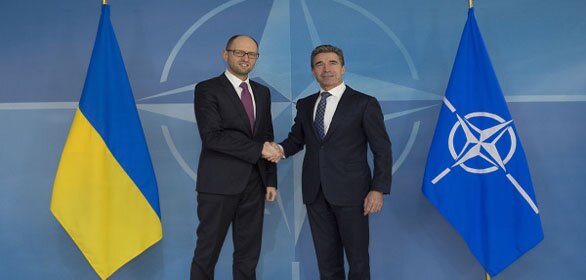
“No matter what our Western counterparts tell us, we can see what’s going on. NATO is blatantly building up its forces in Eastern Europe, including the Black Sea and the Baltic Sea areas. Its operational and combat training activities are gaining in scale.” Russian President Vladimir Putin
If there was a way the United States could achieve its long-term strategic objectives and, at the same time, avoid a war with Russia, it would do so. Unfortunately, that is not an option, which is why there’s going to be a clash between the two nuclear-armed adversaries sometime in the near future.
Let me explain: The Obama administration is trying to rebalance US policy in a way that shifts the focus of attention from the Middle East to Asia, which is expected to be the fastest growing region in the coming century. This policy-change is called the “pivot” to Asia. In order to benefit from Asia’s surge of growth, the US plans to beef up its presence on the continent, expand its military bases, strengthen bilateral alliances and trade agreements, and assume the role of regional security kingpin. The not-so-secret purpose of the policy is China “containment”, that is, Washington wants to preserve its position as the world’s only superpower by controlling China’s explosive growth. (The US wants a weak, divided China that will do what it’s told.)
In order to achieve its goals in Asia, the US needs to push NATO further eastward, tighten its encirclement of Russia, and control the flow of oil and gas from east to west. These are the necessary preconditions for establishing US hegemonic rule over the continent. And this is why the Obama administration is so invested in Kiev’s blundering junta-government; it’s because Washington needs Poroshenko’s neo Nazi shock troops to draw Russia into a conflagration in Ukraine that will drain its resources, discredit Putin in the eyes of his EU trading partners, and create the pretext for deploying NATO to Russia’s western border.
The idea that Obama’s proxy army in Ukraine is defending the country’s sovereignty is pure bunkum. What’s going on below the surface is the US is trying to stave off irreversible economic decline and an ever-shrinking share of global GDP through military force. What we’re seeing in Ukraine today, is a 21st century version of the Great Game implemented by political fantasists and Koolaid drinkers who think they can turn the clock back to the post WW2 heyday of the US Empire when the world was America’s oyster. Thankfully, that period is over.
Keep in mind, the glorious US military has spent the last 13 years fighting sheep herders in flip-flops in Afghanistan in a conflict that, at best, could be characterized as a stalemate. And now the White House wants to take on Russia?
Can you appreciate the insanity of the policy?
This is why Secretary of Defense Chuck Hagel was sacked last week, because he wasn’t sufficiently eager to pursue this madcap policy of escalating the wars in Afghanistan, Iraq, Syria and Ukraine. Everyone knows it’s true, the administration hasn’t even tried to deny it. They’d rather stick with foam-at-the-mouth buffoons, like Susan Rice and Samantha Powers, then a decorated veteran who has more credibility and intelligence in his little finger than Obama’s whole National Security team put together.
So now Obama is completely surrounded by rabid warmongering imbeciles, all of whom ascribe to the same fairytale that the US is going to dust-off Russia, remove Assad, redraw the map of the Middle East, control the flow of gas and oil from the ME to markets in the EU, and establish myriad beachheads across Asia where they can keep a tight grip on China’s growth.
Tell me, dear reader, doesn’t that strike you as a bit improbable?
But, of course, the Obama claque think it’s all within their grasp, because, well, because that’s what they’ve been told to think, and because that’s what the US has to do if it wants to maintain its exalted position as the world’s lone superpower when its economic significance in the world is steadily declining. You see, here’s the thing: The exceptional nation is becoming more unexceptional all the time, and that’s what has the political class worried, because they see the handwriting on the wall, and the writing says, “Enjoy it while it lasts, buddy, cuz you ain’t gonna be numero uno much longer.”
And the US has allies in this wacky crusade too, notably Israel and Saudi Arabia. The Saudis have been particularly helpful lately by flooding the market with oil to push down prices and crush the Russian economy. (On Friday, Benchmark crude oil prices plummeted to a four-year low, with Brent crude sinking to $69.11 a barrel.) The Obama administration is using the classic one-two punch of economic sanctions and plunging oil revenues to bully Moscow into withdrawing from Crimea so Washington can move its nuclear arsenal to within spitting distance of Moscow. Here’s a bit of background from the Guardian:
“Think about how the Obama administration sees the state of the world. It wants Tehran to come to heel over its nuclear programme. It wants Vladimir Putin to back off in eastern Ukraine. But after recent experiences in Iraq and Afghanistan, the White House has no desire to put American boots on the ground. Instead, with the help of its Saudi ally, Washington is trying to drive down the oil price by flooding an already weak market with crude. As the Russians and the Iranians are heavily dependent on oil exports, the assumption is that they will become easier to deal with.
John Kerry, the US secretary of state, allegedly struck a deal with King Abdullah in September under which the Saudis would sell crude at below the prevailing market price. That would help explain why the price has been falling at a time when, given the turmoil in Iraq and Syria caused by Islamic State, it would normally have been rising.” (Stakes are high as US plays the oil card against Iran and Russia, Larry Eliot, Guardian)
And here’s more from Salon’s Patrick L. Smith at Salon:
“Less than a week after the Minsk Protocol was signed, Kerry made a little-noted trip to Jeddah to see King Abdullah at his summer residence. When it was reported at all, this was put across as part of Kerry’s campaign to secure Arab support in the fight against the Islamic State.
Stop right there. That is not all there was to the visit, my trustworthy sources tell me. The other half of the visit had to do with Washington’s unabated desire to ruin the Russian economy. To do this, Kerry told the Saudis 1) to raise production and 2) to cut its crude price. Keep in mind these pertinent numbers: The Saudis produce a barrel of oil for less than $30 as break-even in the national budget; the Russians need $105.
Shortly after Kerry’s visit, the Saudis began increasing production, sure enough — by more than 100,000 barrels daily during the rest of September, more apparently to come…
Think about this. Winter is coming, there are serious production outages now in Iraq, Nigeria, Venezuela and Libya, other OPEC members are screaming for relief, and the Saudis make back-to-back moves certain to push falling prices still lower? You do the math, with Kerry’s unreported itinerary in mind, and to help you along I offer this from an extremely well-positioned source in the commodities markets: “There are very big hands pushing oil into global supply now,” this source wrote in an e-mail note the other day.” (What Really Happened in Beijing: Putin, Obama, Xi And The Back Story The Media Won’t Tell You, Patrick L. Smith, Salon)
The Obama team managed to persuade our good buddies the Saudis to flood the market with oil, drive down prices, and put the Russian economy into a nosedive. At the same time, the US has intensified its economic sanctions, done everything in its power to sabotage Gazprom’s South Stream pipeline (that would bypass Ukraine and deliver natural gas to Europe via a southern route), and cajole the Ukrainian parliament into auctioning off 49 percent of the leasing rights and underground storage facilities to privately-owned foreign corporations.
How do you like that? So the US has launched a full-blown economic war against Russia that’s been completely omitted in the western media. Are you surprised?
Washington is determined to block further Russo-EU economic integration in order to collapse the Russian economy and put foreign capital in control of regional energy distribution. It’s all about the pivot. The big money guys figure the US has to pivot to Asia to be a player in the next century. All of these unprovoked attacks on Moscow are based on that one lunatic strategy.
But aren’t people in the EU going to be angry when they can’t get the energy they need (at the prices they want) to run their businesses and heat their homes?
Washington doesn’t think so. Washington thinks its allies in the Middle East can meet the EU’s energy needs without any difficulty. Check out this clip from an article by analyst F. William Engdahl:
“…details are emerging of a new secret and quite stupid Saudi-US deal on Syria and the so-called IS. It involves oil and gas control of the entire region and the weakening of Russia and Iran by Saudi Arabian flooding the world market with cheap oil. ….
On September 11, US Secretary of State Kerry met Saudi King Abdullah at his palace on the Red Sea. The King invited former head of Saudi intelligence, Prince Bandar to attend. There a deal was hammered out which saw Saudi support for the Syrian airstrikes against ISIS on condition Washington backed the Saudis in toppling Assad, a firm ally of Russia and de facto of Iran and an obstacle to Saudi and UAE plans to control the emerging EU natural gas market and destroy Russia’s lucrative EU trade. A report in the Wall Street Journal noted there had been “months of behind-the-scenes work by the US and Arab leaders, who agreed on the need to cooperate against Islamic State, but not how or when.
The process gave the Saudis leverage to extract a fresh US commitment to beef up training for rebels fighting Mr. Assad, whose demise the Saudis still see as a top priority.”
(The Secret Stupid Saudi-US Deal on Syria, F. William Engdahl, BFP)
So the wars in Ukraine and Syria are not really separate conflicts at all. They’re both part of the same global resource war the US has been prosecuting for the last decade and a half. The US plans to cut off the flow of Russian gas and replace it with gas from Qatar which will flow through Syria and onto the EU market after Assad is toppled.
Here’s what’s going on: Syria’s troubles began shortly after it announced that it was going to be part of an “Islamic pipeline” that would transfer natural gas from the South Pars gas field off the coast of Iran across Iraq and Syria, eventually connecting to Greece and the lucrative EU market. According to author Dmitri Minin:
“A gas pipeline from Iran would be highly profitable for Syria. Europe would gain from it as well, but clearly someone in the West didn’t like it. The West’s gas-supplying allies in the Persian Gulf weren’t happy with it either, nor was would-be no. 1 gas transporter Turkey, as it would then be out of the game.” (The Geopolitics of Gas and the Syrian Crisis: Syrian “Opposition” Armed to Thwart Construction of Iran-Iraq-Syria Gas Pipeline, Dmitri Minin, Global Research)
Two months after Assad signed the deal with Iraq and Iran, the rebellion broke out in Syria. That’s quite a coincidence, don’t you think? Funny how frequently those kinds of things happen when foreign leaders don’t march to Washington’s tune.
Here’s more from Minin:
“Qatar is doing all it can to thwart the construction of the pipeline, including arming the opposition fighters in Syria, many of whom come from Saudi Arabia, Pakistan and Libya…
The Arabic newspaper Al-Akhbar cites information according to which there is a plan approved by the U.S. government to create a new pipeline for transporting gas from Qatar to Europe involving Turkey and Israel…
This new pipeline is to begin in Qatar, cross Saudi territory and then the territory of Jordan, thus bypassing Shiite Iraq, and reach Syria. Near Homs the pipeline is to branch in three directions: to Latakia, Tripoli in northern Lebanon, and Turkey. Homs, where there are also hydrocarbon reserves, is the project’s main crossroads, and it is not surprising… that the fiercest fighting is taking place. Here the fate of Syria is being decided. The parts of Syrian territory where detachments of rebels are operating with the support of the U.S., Qatar and Turkey, that is, the north, Homs and the environs of Damascus, coincide with the route that the pipeline is to follow to Turkey and Tripoli, Lebanon. A comparison of a map of armed hostilities and a map of the Qatar pipeline route indicates a link between armed activities and the desire to control these Syrian territories. Qatar’s allies are trying to accomplish three goals: to break Russia’s gas monopoly in Europe; to free Turkey from its dependence on Iranian gas; and to give Israel the chance to export its gas to Europe by land at less cost.”
How do you like that; another coincidence: “The fiercest fighting (in Syria) is taking place” where there’s massive “hydrocarbon reserves” and along the planned pipeline route.
So the conflict in Syria isn’t really about terrorism at all. It’s about natural gas, competing pipelines and access to markets in the EU. It’s about money and power. The whole ISIS-thing is a big hoax to conceal what’s really going on, which is a global war for resources, more blood for oil.
But how does the US benefit from all of this, after all, won’t the gas revenues go to Qatar and the transit countries rather than the US?
Yep, they sure will. But the gas will also be denominated in dollars which will shore up demand for USDs thus perpetuating the petrodollar recycling system which creates a vast market for US debt and which helps to keep US stocks and bonds in the nosebleed section. And that’s what this is all about, preserving dollar supremacy by forcing nations to hold excessive amounts of USDs to use in their energy transactions and to service their dollar-denominated debts.
As long as Washington can control the world’s energy supplies and force the world to trade in dollars, it can spend well in excess of what it produces and not be held to account. It’s like having a credit card you never have to pay off.
That’s a racket Uncle Sam is prepared to defend with everything he’s got, even nukes.
Mike Whitney is a regular columnist for Veracity Voice
Mike Whitney lives in Washington state. He can be reached at:
Chinese And Japanese Deflationary Economies
November 29, 2014 by Administrator · Leave a Comment

The global economy has just hit the wall. Do not underestimate the significance of the Asian downturn. Japan saw a dramatic rebirth after WWII and China was transformed into an industrial powerhouse from the “Free Trade” debacle. Now that the Central Bankers of the world are turning to Japan and China to keep the financial bubble from blowing, the focus pivots to the East. Pushing on a string is no easy task. Nervously, all eyes have to wonder if more debt will prevent the expected crash.
When the British financial press warns about Spreading deflation across East Asia threatens fresh debt crisis, people should listen.
“Deflation is becoming lodged in all the economic strongholds of East Asia. It is happening faster and going deeper than almost anybody expected just months ago, and is likely to find its way to Europe through currency warfare in short order.
China is in effect strapped to the rocketing dollar through its quasi-peg, increasingly a torture machine. George Magnus from UBS says this cannot continue. “What is happening in the property market is the tip of the iceberg for the whole economy. China will have to resort to monetary reflation over the winter, and I think this will include a lower yuan. We are heading into a currency war,” he said.”
The Economist provides the establishment viewpoint of the latest strategy in Deflation, deflated.
“WHEN people think of a large Asian country on the brink of deflation, they probably have Japan in mind. But China, the biggest of them all, is now skirting close to outright falls in prices across a wide swathe of the economy. Producer prices have been declining for nearly three years and consumer price inflation is mired at its lowest level since 2010.
Deflation is rightly feared by central bankers around the world as a most destructive economic force, making debts more expensive in real terms and leading to a vicious cycle of contraction as consumers delay purchases and companies put off investments. Yet the Chinese central bank has been remarkably laid-back about the downward lilt in prices. The most obvious tool in its kit to arrest the slide would be to cut interest rates, but it has not done so since July 2012; the benchmark one-year lending rate remains lofty at 6%. What explains the central bank’s calm in the face of falling prices, and is it making a big mistake?”
This last assessment demonstrates that when the shift in direction was announced, the financial community jumped on the bandwagon to In Change of Strategy, China Cuts Interest Rate.
“China finally admitted it has a growth problem — and that is a big step to getting the global economy back on track.
In cutting rates, China joins the parade of global policy makers who are stepping up their stimulus efforts to support growth. They are filling a void left by the United States Federal Reserve, which just ended a six-year bond-buying campaign that has kept borrowing costs low and has encouraged spending worldwide.”
The admission that a massive infusion to recapitalize the international system requires a new source to finance the retracting economies is significant. It seems that a tag team effort between China and Japan will hit the banking houses from different directions.
Japan Fires Another Shot in Global Currency War is the analysis from the Wall Street Journal.
“The Bank of Japan 8301.TO -1.63%’s surprise move to increase its asset purchases has sent the yen plummeting, with the dollar passing through ¥110 Friday to trade at highs not seen in six years. This is the mechanism through which Japan will try to restore inflation to its perennially stagnating economy. The BOJ describes its actions in terms of boosting domestic growth and pricing power, but the real way it works is to export deflation to the rest of the world – it has been doing this ever since the yen began an 30% decline versus the dollar once “Abenomics” stimulus measures were first floated in the fall of 2012.”
Japan will play the role of the QE Federal Reserve policy and the Chinese will finally slash their interest rates. Such moves are not taken because the global economies are prospering. Looking for actual growth is like Waiting for Godot.
The mystery that faces all economies is when does deflation become impervious to further stimulus? How many more times can the deficits, imbalances and shortfalls be papered or rolled over before a depression ensues.
Japan is already the poster child for negative growth and with the irrational expenditures that China has spent on ghost cities, their reported growth rates are about as valid as a stock buy recommendation from a Wall Street firm that is shorting their own portfolio.
Looking to the orient to pull the world out of a lethargic corporatist spiral is problematic at best. China slowed growth now reported at 7.3 percent is seen as setting the stage that fuels debt and property bubbles. Yet the balance of trade surpluses that China continues to build up against American consumption from their exports has never benefited economic conditions in the United States.
The Dollar Collapse site asks: Most of the World Panics — Is the US Next?
- Will stepped-up debt monetization and interest rate reductions succeed where the past batch failed?
- Can the US remain aloof from the carnage taking place all around it?
As the Asian economies suffer their own version of contraction on the road to a meltdown, who believes that the transnational corporations that have plotted to off shore their production for decades, will ever reverse their strategy and start returning manufacturing back in the US?
Who will buy the ever increasing US Treasury debt if China unwinds? Of course the Federal Reserve will ratchet up and even bigger QE infusion that will result with more zeros to the national debt.
The most effective solution for America is establishing a tax reform that encourages a domestic renaissance and setting tariffs at levels that will reverse the systemic balance of payments deficits. The worldwide deflation has commenced, so start thinking local and not global.
Sartre is the publisher, editor, and writer for Breaking All The Rules. He can be reached at:
Sartre is a regular columnist for Veracity Voice
Trotsky At The IMF
November 27, 2014 by Administrator · Leave a Comment
Does the Name “Strauss-Kahn” Ring a Bell?
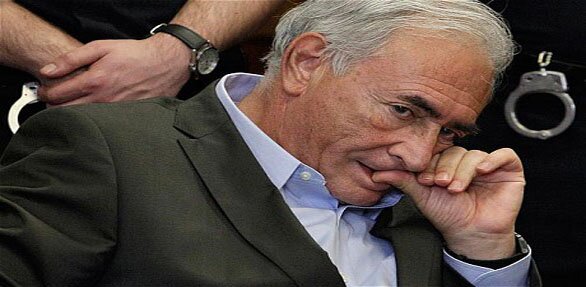
The International Monetary Fund has finally admitted that it was wrong to recommend austerity as early as it did in 2010-2011. The IMF now agrees that it should have waited until the US and EU economies were on a sustainable growth-path before advising them to trim their budget deficits and reduce public spending. According to a report issued by the IMF’s research division, the Independent Evaluation Office (IEO): “IMF advocacy of fiscal consolidation proved to be premature for major advanced economies, as growth projections turned out to be optimistic…This policy mix was less than fully effective in promoting recovery and exacerbated adverse spillovers.”
Now there’s an understatement.
What’s so disingenuous about the IMF’s apology, is that the bank knew exactly what the effects of its policy would be, but stuck with its recommendations to reward its constituents. That’s what really happened. The only reason it’s trying to distance itself from those decisions now, is to make the public think it was all just a big mistake.
But it wasn’t a mistake. It was deliberate and here’s the chart that proves it:

There it is, six years of policy in one lousy picture. And don’t kid yourself, the IMF played a critical role in this wealth-shifting fiasco. It’s job was to push for less public spending and deeper fiscal cuts while the Central Banks flooded the financial markets with liquidity (QE). The results are obvious, in fact, one of the Fed’s own officials, Andrew Huszar, admitted that QE was a massive bailout for the rich. “I’ve come to recognize the program for what it really is,” said Huszar who actually worked on the program, “the greatest backdoor Wall Street bailout of all time.” There it is, straight from the horse’s mouth.
So now the IMF wants to throw a little dust in everyone’s eyes by making it look like it was a big goof-up by well-meaning but misguided bankers. And the media is helping them by its omissions.
Let me explain: Of the more than 455 articles on Google News covering the IMF’s mea culpa, not one piece refers to the man who was the IMF’s Managing Director at the time in question. Doesn’t that strike you as a bit odd?
Why would the media scrub any mention of Dominique Strauss-Kahn from its coverage? Could it be that (according to NPR):
“The IMF’s managing director wanted to give Greece, Portugal and Ireland the time needed to put their accounts in order, and he also argued for softening the austerity measures associated with the bailouts for those countries.
Greek economists say that under Strauss-Kahn’s leadership, the IMF was a counterbalance to the strict austerity policies favored by northern European leaders. In fact, according to the daily Le Monde, Strauss-Kahn is fond of calling those who argue for tighter austerity “fous furieux,” which roughly translates as “mad men.”
Strauss-Kahn’s view is that shock-therapy measures imposed on Greece and other European countries with sovereign debt crises will lead only to economic recession and severe social unrest.
Several commentators pointed out Monday that at a time of turmoil in the eurozone and division among European leaders, it was the IMF, under Strauss-Kahn’s leadership, that kept the eurozone’s rescue strategy on track.
The Financial Times said that the IMF’s single most important influence in the resolution of the eurozone crisis was political — amid a lack of political leadership, the paper said, the IMF filled a vacuum.
(IMF Chief’s Arrest Renews Euro Debt Crisis Fears, NPR)
Ah-ha! So Strauss-Kahn wasn’t on board with the IMF’s shock doctrine prescription. In fact, he was opposed to it. So there were voices for sanity within the IMF, they just didn’t prevail in the policy debate.
But why would that be, after all, Strauss-Kahn was the IMF’s Managing Director, his views should have carried greater weight than anyone else’s, right?
Right. Except DSK got the ax for a sexual encounter at New York’s ritzy Sofitel Hotel. So the changes he had in mind never took place, which means that the distribution of wealth continued to flow upwards just like the moneybags constituents of the IMF had hoped for.
Funny how that works, isn’t it? Funny how it’s always the Elliot Spitzers, and the Scott Ritters, and the Dominique Strauss-Kahn’s who get nailed for their dalliances, but the big Wall Street guys never get caught.
Why is that?
The fact is, Strauss-Kahn was off the reservation and no longer supported the policies that the establishment elites who run the IMF wanted to see implemented. They felt threatened by DSK’s Keynesian approach and wanted to get rid of him. That’s it in a nutshell.
Do you know why the bigwig plutocrats hated DSK?
It had nothing to do with his sexual acrobatics at the Sofitel Hotel. Nobody cares about that shite. What they were worried about were his plans for the IMF which he laid out in a speech he gave at the Brookings Institution in April 2011, one month before he got the boot. The speech got very little attention at the time, but– for all practical purposes– it was DSK’s swan song. And, I think you’ll see why.
The experience must have been a real shocker for the gaggle of tycoons and hangers-on who attend these typically-tedious gatherings. Instead of praise for “market discipline”, “labor flexibility” and “fiscal consolidation”, Strauss-Kahn delivered a rousing 30 minute tribute to leftist ideals and wealth-sharing sounding more like a young Leon Trotsky addressing the Forth International than a cold-hearted bureaucrat heading the world’s most notorious loan sharking operation. By the time the speech ended, I’m sure the knives were already being sharped for the wayward Managing Director. To put it bluntly, DSK’s goose was cooked. Here’s a clip from the speech that will help to explain why:
“…The outstanding faults of the economic society in which we live are its failure to provide for full employment and its arbitrary and inequitable distribution of wealth and incomes”…
Not everyone will agree with the entirety of this statement. But what we have learnt over time is that unemployment and inequality can undermine the very achievements of the market economy, by sowing the seeds of instability…
.. the IMF cannot be indifferent to distribution issues…
Today, we need a similar full force forward response in ensuring that we get the recovery we need. And that means not only a recovery that is sustainable and balanced among countries, but also one that brings employment and fair distribution…
But growth alone is not enough. We need direct labor market policies…
Let me talk briefly about the second lung of the social crisis—inequality…IMF research also shows that sustainable growth over time is associated with a more equal income distribution…
We need policies to reduce inequality, and to ensure a fairer distribution of opportunities and resources. Strong social safety nets combined with progressive taxation can dampen market-driven inequality. Investment in health and education is critical. Collective bargaining rights are important, especially in an environment of stagnating real wages. Social partnership is a useful framework, as it allows both the growth gains and adjustment pains to be shared fairly…
We have also supported a tax on financial activities (and) organized jointly with the ILO … to better understand the policies behind job-creating growth…
Ultimately, employment and equity are building blocks of economic stability and prosperity, of political stability and peace. This goes to the heart of the IMF’s mandate. It must be placed at the heart of the policy agenda. Thank you very much.” (The Global Jobs Crisis— Sustaining the Recovery through Employment and Equitable Growth, Dominique Strauss-Kahn, Managing Director IMF, April 13, 2011)
Can you imagine the chorus of groans that must have emerged from the crowd when Strauss-Kahn made his pitch for “progressive taxation”, “collective bargaining rights”, “protecting social safety nets”, “direct labor market policies” and “taxes on financial activities”? And how do you think the crowd reacted when he told them he’d settled on a more enlightened way to distribute the wealth they’d accumulated over a lifetime of insider trading, crooked backroom deals and shady business transactions?
Do you think they liked that idea or do you suppose they lunged for their blood pressure medication before scuttling pell-mell towards the exits?
Let’s face it; Strauss-Kahn was headed in a direction that wasn’t compatible with the interests of the cutthroats who run the IMF. That much is clear. Now whether these same guys concocted the goofy “honey trap” at the Sofitel Hotel, we may never know. But what we do know is this: If you’re Managing Director of the IMF, you’d better not use your power to champion “distribution” or collective bargaining rights or you’re wind up like Strauss-Kahn, dragged off to the hoosegow in manacles wondering where the hell you went wrong.
DSK was probably done-in by the people who hated his guts. Now they want to polish-up their image by rewriting history.
And, you know, they’re rich enough to pull it off, too.
Mike Whitney is a regular columnist for Veracity Voice
Mike Whitney lives in Washington state. He can be reached at:
Russia Invades Ukraine. Again. And Again. And Yet Again… Using Saddam’s WMD
November 22, 2014 by Administrator · Leave a Comment
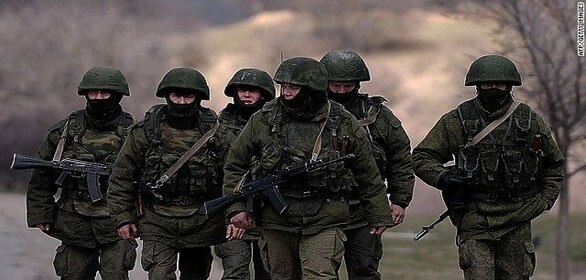
“Russia reinforced what Western and Ukrainian officials described as a stealth invasion on Wednesday [August 27], sending armored troops across the border as it expanded the conflict to a new section of Ukrainian territory. The latest incursion, which Ukraine’s military said included five armored personnel carriers, was at least the third movement of troops and weapons from Russia across the southeast part of the border this week.”
None of the photos accompanying this New York Times story online showed any of these Russian troops or armored vehicles.
“The Obama administration,” the story continued, “has asserted over the past week that the Russians had moved artillery, air-defense systems and armor to help the separatists in Donetsk and Luhansk. ‘These incursions indicate a Russian-directed counteroffensive is likely underway’, Jen Psaki, the State Department spokeswoman, said. At the department’s daily briefing in Washington, Ms. Psaki also criticized what she called the Russian government’s ‘unwillingness to tell the truth’ that its military had sent soldiers as deep as 30 miles inside Ukraine territory.”
Thirty miles inside Ukraine territory and not a single satellite photo, not a camera anywhere around, not even a one-minute video to show for it. “Ms. Psaki apparently [sic] was referring to videos of captured Russian soldiers, distributed by the Ukrainian government.” The Times apparently forgot to inform its readers where they could see these videos.
“The Russian aim, one Western official said, may possibly be to seize an outlet to the sea in the event that Russia tries to establish a separatist enclave in eastern Ukraine.”
This of course hasn’t taken place. So what happened to all these Russian soldiers 30 miles inside Ukraine? What happened to all the armored vehicles, weapons, and equipment?
“The United States has photographs that show the Russian artillery moved into Ukraine, American officials say. One photo dated last Thursday, shown to a New York Times reporter, shows Russian military units moving self-propelled artillery into Ukraine. Another photo, dated Saturday, shows the artillery in firing positions in Ukraine.”
Where are these photographs? And how will we know that these are Russian soldiers? And how will we know that the photos were taken in Ukraine? But most importantly, where are the fucking photographs?
Why am I so cynical? Because the Ukrainian and US governments have been feeding us these scare stories for eight months now, without clear visual or other evidence, often without even common sense. Here are a few of the many other examples, before and after the one above:
- The Wall Street Journal (March 28) reported: “Russian troops massing near Ukraine are actively concealing their positions and establishing supply lines that could be used in a prolonged deployment, ratcheting up concerns that Moscow is preparing for another [sic] major incursion and not conducting exercises as it claims, US officials said.”
- “The Ukrainian government charged that the Russian military was not only approaching but had actually crossed the border into rebel-held regions.” (Washington Post, November 7)
- “U.S. Air Force Gen. Philip M. Breedlove told reporters in Bulgaria that NATO had observed Russian tanks, Russian artillery, Russian air defense systems and Russian combat troops enter Ukraine across a completely wide-open border with Russia in the previous two days.” (Washington Post, November 13)
- “Ukraine accuses Russia of sending more soldiers and weapons to help rebels prepare for a new offensive. The Kremlin has repeatedly denied aiding the separatists.” (Reuters, November 16)
Since the February US-backed coup in Ukraine, the State Department has made one accusation after another about Russian military actions in Eastern Ukraine without presenting any kind of satellite imagery or other visual or documentary evidence; or they present something that’s very unclear and wholly inconclusive, such as unmarked vehicles, or unsourced reports, or citing “social media”; what we’re left with is often no more than just an accusation. The Ukrainian government has matched them.
On top of all this we should keep in mind that if Moscow decided to invade Ukraine they’d certainly provide air cover for their ground forces. There has been no mention of air cover.
This is all reminiscent of the numerous stories in the past three years of “Syrian planes bombing defenseless citizens”. Have you ever seen a photo or video of a Syrian government plane dropping bombs? Or of the bombs exploding? When the source of the story is mentioned, it’s almost invariably the rebels who are fighting against the Syrian government. Then there’s the “chemical weapon” attacks by the same evil Assad government. When a photo or video has accompanied the story I’ve never once seen grieving loved ones or media present; not one person can be seen wearing a gas mask. Is it only children killed or suffering? No rebels?
And then there’s the July 17 shootdown of Malaysia Flight MH17, over eastern Ukraine, taking 298 lives, which Washington would love to pin on Russia or the pro-Russian rebels. The US government – and therefore the US media, the EU, and NATO – want us all to believe it was the rebels and/or Russia behind it. The world is still waiting for any evidence. Or even a motivation. Anything at all. President Obama is not waiting. In a talk on November 15 in Australia, he spoke of “opposing Russia’s aggression against Ukraine – which is a threat to the world, as we saw in the appalling shoot-down of MH17”. Based on my reading, I’d guess that it was the Ukranian government behind the shootdown, mistaking it for Putin’s plane that reportedly was in the area.
Can it be said with certainty that all the above accusations were lies? No, but the burden of proof is on the accusers, and the world is still waiting. The accusers would like to create the impression that there are two sides to each question without actually having to supply one of them.
The United States punishing Cuba
For years American political leaders and media were fond of labeling Cuba an “international pariah”. We haven’t heard that for a very long time. Perhaps one reason is the annual vote in the United Nations General Assembly on the resolution which reads: “Necessity of ending the economic, commercial and financial embargo imposed by the United States of America against Cuba”. This is how the vote has gone (not including abstentions):
| Year | Votes (Yes-No) | No Votes |
|---|---|---|
| 1992 | 59-2 | US, Israel |
| 1993 | 88-4 | US, Israel, Albania, Paraguay |
| 1994 | 101-2 | US, Israel |
| 1995 | 117-3 | US, Israel, Uzbekistan |
| 1996 | 138-3 | US, Israel, Uzbekistan |
| 1997 | 143-3 | US, Israel, Uzbekistan |
| 1998 | 157-2 | US, Israel |
| 1999 | 155-2 | US, Israel |
| 2000 | 167-3 | US, Israel, Marshall Islands |
| 2001 | 167-3 | US, Israel, Marshall Islands |
| 2002 | 173-3 | US, Israel, Marshall Islands |
| 2003 | 179-3 | US, Israel, Marshall Islands |
| 2004 | 179-4 | US, Israel, Marshall Islands, Palau |
| 2005 | 182-4 | US, Israel, Marshall Islands, Palau |
| 2006 | 183-4 | US, Israel, Marshall Islands, Palau |
| 2007 | 184-4 | US, Israel, Marshall Islands, Palau |
| 2008 | 185-3 | US, Israel, Palau |
| 2009 | 187-3 | US, Israel, Palau |
| 2010 | 187-2 | US, Israel |
| 2011 | 186-2 | US, Israel |
| 2012 | 188-3 | US, Israel, Palau |
| 2013 | 188-2 | US, Israel |
| 2014 | 188-2 | US, Israel |
This year Washington’s policy may be subject to even more criticism than usual due to the widespread recognition of Cuba’s response to the Ebola outbreak in Africa.
Each fall the UN vote is a welcome reminder that the world has not completely lost its senses and that the American empire does not completely control the opinion of other governments.
Speaking before the General Assembly before last year’s vote, Cuban Foreign Minister Bruno Rodriguez declared: “The economic damages accumulated after half a century as a result of the implementation of the blockade amount to $1.126 trillion.” He added that the blockade “has been further tightened under President Obama’s administration”, some 30 US and foreign entities being hit with $2.446 billion in fines due to their interaction with Cuba.
However, the American envoy, Ronald Godard, in an appeal to other countries to oppose the resolution, said:
The international community … cannot in good conscience ignore the ease and frequency with which the Cuban regime silences critics, disrupts peaceful assembly, impedes independent journalism and, despite positive reforms, continues to prevent some Cubans from leaving or returning to the island. The Cuban government continues its tactics of politically motivated detentions, harassment and police violence against Cuban citizens.
So there you have it. That is why Cuba must be punished. One can only guess what Mr. Godard would respond if told that more than 7,000 people were arrested in the United States during the Occupy Movement’s first 8 months of protest in 2011-12 ; that many of them were physically abused by the police; and that their encampments were violently destroyed.
Does Mr. Godard have access to any news media? Hardly a day passes in America without a police officer shooting to death an unarmed person.
As to “independent journalism” – What would happen if Cuba announced that from now on anyone in the country could own any kind of media? How long would it be before CIA money – secret and unlimited CIA money financing all kinds of fronts in Cuba – would own or control most of the media worth owning or controlling?
The real reason for Washington’s eternal hostility toward Cuba has not changed since the revolution in 1959 – The fear of a good example of an alternative to the capitalist model; a fear that has been validated repeatedly over the years as many Third World countries have expressed their adulation of Cuba.
How the embargo began: On April 6, 1960, Lester D. Mallory, US Deputy Assistant Secretary of State for Inter-American Affairs, wrote in an internal memorandum: “The majority of Cubans support Castro … The only foreseeable means of alienating internal support is through disenchantment and disaffection based on economic dissatisfaction and hardship. … every possible means should be undertaken promptly to weaken the economic life of Cuba.” Mallory proposed “a line of action which … makes the greatest inroads in denying money and supplies to Cuba, to decrease monetary and real wages, to bring about hunger, desperation and overthrow of government.”
Later that year, the Eisenhower administration instituted its suffocating embargo against its everlasting enemy.
The United States judging and punishing the rest of the world
In addition to Cuba, Washington currently is imposing economic and other sanctions against Burma, Democratic Republic of the Congo, Iran, China, North Korea, South Korea, United Arab Emirates, Pakistan, Sri Lanka, Switzerland, Turkey, Germany, Malaysia, South Africa, Mexico, South Sudan, Sudan, Russia, Syria, Venezuela, India, and Zimbabwe. These are sanctions mainly against governments, but also against some private enterprises; there are also many other sanctions against individuals not included here.
Imbued with a sense of America’s moral superiority and “exceptionalism”, each year the State Department judges the world, issuing reports evaluating the behavior of all other nations, often accompanied by sanctions of one kind or another. There are different reports rating how each lesser nation has performed in the previous year in areas such as religious freedom, human rights, the war on drugs, trafficking in persons, and sponsors of terrorism. The criteria used in these reports are often political. Cuba, for example, is always listed as a sponsor of terrorism whereas anti-Castro exile groups in Florida, which have committed literally hundreds of terrorist acts over the years, are not listed as terrorist groups or supporters of such.
Cuba, which has been on the sponsor-of-terrorism list longer (since 1982) than any other country, is one of the most glaring anomalies. The most recent State Department report on this matter, in 2012, states that there is “no indication that the Cuban government provided weapons or paramilitary training to terrorist groups.” There are, however, some retirees of Spain’s Basque terrorist group ETA (which appears on the verge of disbanding) in Cuba, but the report notes that the Cuban government evidently is trying to distance itself from them by denying them services such as travel documents. Some members of the Revolutionary Armed Forces of Colombia (FARC) have been allowed into Cuba, but that was because Cuba was hosting peace talks between the FARC and the Colombian government, which the report notes.
The US sanctions mechanism is so effective and formidable that it strikes fear (of huge fines) into the hearts of banks and other private-sector organizations that might otherwise consider dealing with a listed state.
Some selected thoughts on American elections and democracy
In politics, as on the sickbed, people toss from one side to the other, thinking they will be more comfortable.
– Johann Wolfgang von Goethe (1749-1832)
- 2012 presidential election:
223,389,800 eligible to vote
128,449,140 actually voted
Obama got 65,443,674 votes
Obama was thus supported by 29.3% of eligible voters - There are 100 million adults in the United States who do not vote. This is a very large base from which an independent party can draw millions of new votes.
- If God had wanted more of us to vote in elections, he would give us better candidates.
- “The people can have anything they want. The trouble is, they do not want anything. At least they vote that way on election day.” – Eugene Debs, American socialist leader (1855-1926)
- “If persons over 60 are the only American age group voting at rates that begin to approximate European voting, it’s because they’re the only Americans who live in a welfare state – Medicare, Social Security, and earlier, GI loans, FHA loans.” – John Powers
- “The American political system is essentially a contract between the Republican and Democratic parties, enforced by federal and state two-party laws, all designed to guarantee the survival of both no matter how many people despise or ignore them.” – Richard Reeves (1936- )
- The American electoral system, once the object of much national and international pride, has slid inexorably from “one person, one vote”, to “one dollar, one vote”.
- Noam Chomsky: “It is important to bear in mind that political campaigns are designed by the same people who sell toothpaste and cars. Their professional concern in their regular vocation is not to provide information. Their goal, rather, is deceit.”
- If the Electoral College is such a good system, why don’t we have it for local and state elections?
- “All the props of a democracy remain intact – elections, legislatures, media – but they predominantly function at the service of the oligarchy.” – Richard Wolff
- The RepDem Party holds elections as if they were auctions; indeed, an outright auction for the presidency would be more efficient. To make the auction more interesting we need a second party, which must at a minimum be granted two privileges: getting on the ballot in all 50 states and taking part in television debates.
- The US does in fact have two parties: the Ins and the Outs … the evil of two lessers.
- Alexander Cockburn: “There was a time once when ‘lesser of two evils’ actually meant something momentous, like the choice between starving to death on a lifeboat, or eating the first mate.”
- Cornel West has suggested that it’s become difficult to even imagine what a free and democratic society, without great concentrations of corporate power, would look like, or how it would operate.
- The United States now resembles a police state punctuated by elections.
- How many voters does it take to change a light bulb? None. Because voters can’t change anything.
- H.L. Mencken (1880-1956): “As democracy is perfected, the office represents, more and more closely, the inner soul of the people. We move toward a lofty ideal. On some great and glorious day the plain folks of the land will reach their heart’s desire at last, and the White House will be adorned by a downright moron.”
- “All elections are distractions. Nothing conceals tyranny better than elections.” – Joel Hirschhorn
- In 1941, one of the country’s more acerbic editors, a priest named Edward Dowling, commented: “The two greatest obstacles to democracy in the United States are, first, the widespread delusion among the poor that we have a democracy, and second, the chronic terror among the rich, lest we get it.”
- “Elections are a necessary, but certainly not a sufficient, condition for democracy. Political participation is not just a casting of votes. It is a way of life.” – UN Human Development Report, 1993
- “If you don’t vote, you can’t complain!” I reply, “You have it backwards. If you DO vote, you can’t complain. You asked for it, and they’re going to give it to you, good and hard.”
- “How to get people to vote against their interests and to really think against their interests is very clever. It’s the cleverest ruling class that I have ever come across in history. It’s been 200 years at it. It’s superb.” – Gore Vidal
- We can’t use our democracy/our vote to change the way the economy functions. This is very anti-democratic.
- What does a majority vote mean other than that the sales campaign was successful?
- Roman Emperor Marcus Aurelius: “The opinion of 10,000 men is of no value if none of them know anything about the subject.”
- We do have representative government. The question is: Who does our government represent?
- “On the day after the 2002 election I watched a crawl on the bottom of the CNN news screen. It said, ‘Proprietary software may make inspection of electronic voting systems impossible.’ It was the final and absolute coronation of corporate rights over democracy; of money over truth.” – Mike Ruppert, RIP
- “It’s not that voting is useless or stupid; rather, it’s the exaggeration of the power of voting that has drained the meaning from American politics.” – Michael Ventura
- After going through the recent national, state and local elections, I am now convinced that taxation without representation would have been a much better system.
- “Ever since the Constitution was illegally foisted on the American people we have lived in a blatant plutocracy. The Constitution was drafted in secret by a self-appointed elite committee, and it was designed to bring three kinds of power under control: Royalty, the Church, and the People. All were to be subjugated to the interests of a wealthy elite. That’s what republics were all about. And that’s how they have functioned ever since.” – Richard K. Moore
- “As demonstrated in Russia and numerous other countries, when faced with a choice between democracy without capitalism or capitalism without democracy, Western elites unhesitatingly embrace the latter.” – Michael Parenti
- “The fact that a supposedly sophisticated electorate had been stampeded by the cynical propaganda of the day threw serious doubt on the validity of the assumptions underlying parliamentary democracy as a whole.” – British Superspy for the Soviets Kim Philby (1912-1988), explaining his reasons for becoming a Communist instead of turning to the Labour Party
- US Supreme Court Justice Louis Brandeis (1856-1941): “We may have democracy in this country, or we may have wealth concentrated in the hands of a few, but we cannot have both.”
- “We don’t need to run America like a business or like the military. We need to run America like a democracy.” – Jill Stein, Green Party presidential candidate 2012
Notes
- Democracy Now!, October 30, 2013
- Huffingfton Post, May 3, 2012
- Department of State, Foreign Relations of the United States, 1958-1960, Volume VI, Cuba(1991), p.885 (online here)
- For the complete detailed list, see U.S. Department of State, Nonproliferation Sanctions
- U.S. Department of State, “Country Reports on Terrorism 2012, Chapter 3: State Sponsors of Terrorism,” May 20, 2013
William Blum is the author of:
- Killing Hope: US Military and CIA Interventions Since World War 2
- Rogue State: A Guide to the World’s Only Superpower
- West-Bloc Dissident: A Cold War Memoir
- Freeing the World to Death: Essays on the American Empire
Portions of the books can be read, and signed copies purchased, at www.killinghope.org
Email to
Website: WilliamBlum.org
William Blum is a regular columnist for Veracity Voice
Globalism Free Trade Immigration Connection
November 21, 2014 by Administrator · Leave a Comment

How is your life going under the Global Empire? If you answer honestly, for non billionaires, the response must reflect disappointment if not immense distress. Middle America stands on the precipice of oblivion. While the recent past decades have shown steep declines in financial security and net wealth, the future looks much more ominous. The link between the shift to an internationalist de-industrialization economy and open border immigration has hit the United States hard. This harsh reality is routinely denied in the financial press, but the social chaos that engulfs society is largely caused by this betrayal mindset. Corporatists are waging war against the American public.
Summing up the battle lines is the quintessential voice of an America First philosophy. Pat Buchanan on Free Trade is a collection of quotations and references that should be a must read for every displaced citizen. And that group includes virtually everyone.
“Good for global business” isn’t necessarily good for US
“Global capitalists have become acolytes of global governance. They wish to see national sovereignty diminished and sanctions abolished. Where yesterday American businesses suffered damage to their good name for selling scrap iron to Japan before Pearl Harbor, today [war materiel is routinely exported] to potentially hostile nations. Once it was true that what was good the Fortune 500 was good for America. That is no longer true, and what is good for America must take precedence.”
Source: “A Republic, Not an Empire,” p.349 , Oct 9, 1999
The most puzzling malady that penetrates the “PC” culture is a fear of confronting the direct consequences of encouraging an invasion of illegal’s into the country. The disconnect that sweeps across national borders is not isolated just to the United States. Western Europe is not only in decay but is on the verge of social and economic collapse.
Demetrios Papademetriou, PhD, Director of the Migration Policy Institute, wrote in his Sep. 2005 Migration Policy Institute essay “The Global Struggle with Illegal Migration: No End in Sight”: How Are Illegal Immigration and Globalization Related?
“For nearly two decades now, capital and the market for goods, services, and workers of many types have weaved an ever more intricate web of global economic and social interdependence… No aspect of this interdependence seems to be more visible to the public of advanced industrial societies than the movement of people. And no part of that movement is proving pricklier to manage effectively, or more difficult for publics to come to terms with, than irregular (also known as unauthorized, undocumented, or illegal) migration…”
Dr. Papademetriou’s assumption that interdependency is the new normal may be supported with the procession of the Trilateral Commission’s “New International Economic Order”. Nonetheless, the destruction of national sovereignty is a price that no country can afford to adopt, much less pay and remain a nation. Interdependency is the death knell of traditional values, autonomous commerce and individual civil liberties. With the ringing of the bell at the NY Stock exchange, the sound of prosperity goes deaf for the populist, while globalist elites extract the last pound of flesh from an intentionally designed consolidation of a Corporatocracy economy.
The fate of the world is at stake if the forces of globalization are left to complete their total domination of monetary and financial control. It is just as important to prevent the next bipartisan arrangement to grant effective amnesty to millions of illegal foreigners, who have shown little interest to assimilate or adopt the heritage and values of our founding principles.
Warren Mass wrote over a year ago in Permanent Amnesty, Temporary Border.
“An important part of regulating legal immigration, in addition to evaluating each prospective immigrant’s ability to become a productive, law-abiding citizen, is to determine how many immigrants the United States is capable of absorbing each year, taking into consideration the impact on our nation’s economy and culture.”
If this standard needs to apply to those who apply for citizenship, by what absurd twist of logic or sanity pertains to President Obama’s intentions of issuing executive orders that are clearly unconstitutional? How insulting it is to hard press citizens, relegated to enduring impoverishment from off shoring livable wage jobs, while awarding effective amnesty to illegals.
Columnist Glenn R. Jackson review of author Kenneth Buchdahl’s book, hits the mark.
“First and foremost it is good to see the recognition by Buchdahl of American culture as critical to the building of the American Dream. As Buchdahl writes the development of a culture is grounded in a unique American personality and intricate system of values and beliefs that is responsible for America’s enviable situation. And it is that enviable situation that has contributed to creating the forces that are working rapidly, knowingly or not, to dismantle the American Dream.
Dismantling the American Dream chronicles the unintended impact of America’s pop culture belief in globalization as a force for good in our economy and the failure of leadership to recognize that belief gone awry. America’s political leaders continued belief in free trade and give-away trade deals, in the face of the near deathblow of NAFTA to American manufacturing is but one of the delusions of globalization that Buchdahl lays bare.”
The interjection of cultural aspects may well be the missing link that escapes most chronicles on current events. Documenting the actual results from Free Trade Treaties, should in and of itself win the intellectual argument that economic destruction of Middle America has already happened. Add in the deliberate call for mass migration and social incentives to cross the border has created the latest flood in undocumented aliens.
When Democracy Now asks, Obama & McConnell Pledge Cooperation; Will Fast-Tracking Secretive TPP Trade Deal Top Their Agenda?, and presents Ralph Nader on TPP and the “Unstoppable” Left-Right Anti-Corporate Movement, one has hope that the Buchanan Brigades message is being heard.
With the celebrity coronation that the Democrats are showering on their new favorite daughter, the “Pocahontas Princess”, Elizabeth Warren’s Crusade Against Disastrous “Free Trade” Agreements, is welcomed.
An inquiry was made to NY Senator Charles E. Schumer on the TPA, Trade Priorities Act of 2014 (S.1900). His reply can be read on this link.
An alliance among anti-free trade factions from all ideological camps is necessary to stop the globalist juggernaut. Even if such a coalition could be grown, the likelihood that linkage to the need to stop illegal immigration and opposition to amnesty, would be frosty.
This brings up the opportunity to interject the appeal, , by Frosty Wooldridge. ““Why would any member of Congress who opposes executive amnesty provide President Obama the funds to carry it out? A Republican majority must force congressional Democrats to answer this question through their votes”.
Likewise, why would as covered in the New American essay, Republicans to Obama: We Will Give You Trade Promotion Authority, patriots want to grant “fast track” authority to a President, who is defiant to congressional constitutional separation of powers?
“Fast track authority eventually expired on April 16, 1994, and was not reauthorized by Congress until the passage of the Bipartisan Trade Promotion Authority Act (BPTAA) of 2002. BPTAA reinstated fast track authority renamed as “trade promotion authority” (TPA), which expired in 2007. In 2012, President Obama requested renewal of TPA/fast track authority to complete negotiations for the TPP and TTIP.”
The answer should be apparent that any support of “fast track” or for TPP is a vote bought with globalist control. If it is so obvious that such influence is at play in trade deals, why are so many confused activists not able to see through the “Open Border” fraud and act upon the best interests for American workers and families?
That taboo culture factor, covered in the Buchdahl book explains the blind spot from the Loony Left. A review of a pro immigration site, Open Borders will demonstrate a systemic disconnect from reality. Often Libertarian purists, also fall under the spell of a transcendental fantasy. To their credit, Open Borders presents the concept of CITIZENISM and provides the following its key features.
Citizenism places substantially greater weight on the rights and interests of citizens than non-citizens, though it operates within moral side-constraints.
Citizenism is about current citizens, not about the people who may become citizens as a result of immigration or deportation policy.
Citizenism, as conceived by its original proponent Sailer, is both about the individual ethics of voters and about the responsibilities of elected representatives.
Citizenism is about loyalty, not admiration, toward one’s fellow citizens.
If you understand the destructive nature of corporatist trade agreements that only benefit transnational conglomerates, while poisoning economic commerce for Middle Americans, why would you not oppose the lunacy of unrestrictive mass migration? The imperative moral directive is to protect and defend your own nation, its traditional culture and responsible citizens.
Saving the world is a concept that resides in the sick minds of the Save the Planet Kill Yourself mindset. If they are so devoted to a globalist utopia, the influx of trespassers must be leaving their own homeland in better shape. Just how well is life south of the border doing?
Sartre is the publisher, editor, and writer for Breaking All The Rules. He can be reached at:
Sartre is a regular columnist for Veracity Voice
Do You Want The Facts? You Are Probably A Conspiracy Theorist
October 26, 2014 by Administrator · Leave a Comment
Conspiracy theorists, those who look for the facts, ignoring the pressure of jeers, flawed appeals to authority, and intimidation, are the sanest among us. The steady migration of investigative journalists, who turn their backs on more lucrative employment, is only one indication of this.
In a recent article, , the author, J. D. Hayes, cites a recent , published July 2013, by psychologists Michael J. Wood and Karen M. Douglas of the University of Kent in the UK. It was entitled “‘What about Building 7?’ A Social Psychological Study of Online Discussion of 9/11 Conspiracy Theories.”
Their conclusion is that, contrary to those mainstream media stereotypes, “conspiracy theorists” appear to be more sane than people who accept official versions of controversial and contested events.
Attempts to demonize our perception on conspiracy theorists erects barriers to protect those whose profits are endangered by the truth.
These techniques for manufacturing opinion were outlined by Edward Bernays, whose book, “Propaganda,” asserts those who rule should use the trust accorded them in exactly this way.
Interestingly, Leo Strauss, whose is in alignment with Bernays, asserted the same opinion. Strauss’ work was largely adopted by those who call themselves NeoConservatives who are anything but Conservative.
The opinion shared was that those in power are justified to lie, cheat and steal to keep and increase their power. The Kochs use these in business and politically.
The use of the term, “Conspiracy Theory” increased rapidly in the wake of the JFK assassination due to its pejorative use in the MSM. This worked to stifle questions already being raised.
The issue which underlies the article by William Saletan, Conspiracy Theorists Aren’t Really Skeptics attempts to validate intellectual bullying, a logical extension of the philosophies of Bernays and Strauss. You don’t get more MSM than the Washington Post.
In the original formulation of American society those in positions of authority were morally and ethically obligated to explain themselves. The facts were to be available to all. Journalists investigated and reported the truth, as they saw it. This changed.

Saletan raised the issue of human psychology but failed to mention a perplexing issue which has long troubled us. This is the presence of those without conscience. For most of the 20th Century therapists believed these individuals could change, the problem was psychological. Today we know this is a neurological issue.
Advances in neurobiology have brought objective understanding. Now, thousands of criminals have been identified as psychopaths using an fMRI. The scan identified malfunctions in areas of the amygdala, which is now known to be associated with conscience, empathy, and compassion.
According to Dr. Robert Hare, serial murderers and con-men are always psychopaths. But Hare has also noted many who are also psychopathic are not violent and well able to control their impulses to gain far more expansive goals.
These individuals are highly intelligent. At any time there are 20,000 psychopaths with I.Q.s over 180 at large in the United States.
It would be instructive to see test results from MRI scans done on Dick Cheney, Karl Rove, and their cadre.
The cost of psychopathy has been calculated at around 360 billion a year – in the US. This does not include the highly intelligent ones which, clearly cost far more, given the impact of Cheney and company on America. Could the people who so desperately wanted torture as a tool be emotionally normal?
Today, experts believe the explanation for the financial meltdown now ongoing can be explained by the concentration of psychopathic individuals in corporations, finance and government.
The characteristics of the condition include calloused unconcern for others. This accounts for the oil companies which routinely externalize their costs, leaving those harmed by the toxic waste they cause, to struggle and die.
Those without conscience, willing to lie for their own profit, have long been with us. But today they can avoid the troublesome issue of having their actions known and understood. They have learned to spin.
To ensure this continues they must continue manufacturing public opinion about their previous actions. This is why they began using the term, “Conspiracy Theory.” They work vigorously to ensure the facts remain hidden.
Refusing to accept the officially mandated opinion on any subject, be in the JFK assassination or whether or not to give your child pharmaceuticals as treatment for ADHD has been used to categorize individuals who refuse to accept predigested conclusions as crazy, stupid or paranoid. When this happens, rest assured, some corporation’s profits could be impacted.
This is a form of control intended to intimidate and inject fear. It also marginalizes vast numbers of people, keeping them in fear so they can be controlled.
To that end they, I call them , also use our love of each other, country, loyalty, and trust, to manipulate us into wars which profit them and place us in perpetual debt.
If you limit what is acceptable to hold as opinions and deny people full access to the facts you destroy the trust basis of our society. Emotionally normal people are not comfortable when they cannot trust those around them.
These are rational responses to existing conditions.
What is insane is trusting psychopaths. Yet these are now common in finance and government. You can be sure they will routinely act with a sublime lack of conscience, for your freedom, your assets and your very life.
To cope with these conditions many still refuse to think about it, thus avoiding extreme anxiety. Others, for instance those who look for the facts, and are demeaned as “conspiracy theorists.”
The presence of highly intelligent psychopaths among us, who generally avoid being prosecuted, is one of these explanations.
Saladan’s article passes today as investigative journalism. It pays well and explains why so many truly honest journalists left to work in the alternative media.
Melinda Pillsbury-Foster will soon begin her new weekly radio program on Surviving Meltdown. The program examines how government can be brought into alignment with the spiritual goal of decentralizing power and localizing control and links also to America Goes Home americagoeshome.org, a site dedicated to providing information and resources.
She is also the author of GREED: The NeoConning of America and A Tour of Old Yosemite. The former is a novel about the lives of the NeoCons with a strong autobiographical component. The latter is a non-fiction book about her father and grandfather.
Her blog is at: http://howtheneoconsstolefreedom.blogspot.com/ She is the founder of the Arthur C. Pillsbury Foundation. She is the mother of five children and three grandchildren.
Melinda Pillsbury-Foster is a regular columnist for Veracity Voice
The Fix Is In: Fed Stops Stock Slide With Talk of QE Extension
October 25, 2014 by Administrator · Leave a Comment

Unbelievable.
On Wednesday, stocks were hammered after economic data showed that the US and global economies were headed for a major slowdown. By mid-day, the Dow was down 460 points before clawing its way back to minus 173 points. It looked like the market was set for another triple-digit flogging on Thursday when the Fed stepped in and started talking-up an extension to QE3. That’s all it took to ease investors jitters, stop the meltdown and send equities rocketing back into space. By the end of Friday’s session, all the markets were back in the green with the Dow logging an impressive 263 points on the day. Here’s more background from Wolf Street:
“But just when some profusely sweating souls on Wall Street thought that the bottom was falling out, a savior appears. St. Louis Fed President James Bullard got on Bloomberg TV and pressed the red panic button (and) handed them what they wanted….That was enough.
Using declining inflation expectations as a pretext, he proposed to delay the end of QE. The Fed should continue buying $15 billion in securities a month…. it instantly turned around the markets. The spoiled brats on Wall Street were ecstatic to imagine that the Fed might continue to deliver the goodies they’ve become addicted to, and without which life seems unbearable.” (This Market is Driven by Psychology and Momentum,’ which ‘Works Really Painfully on the Way Down, Wolf Street)
For those readers who still think that the Fed doesn’t meddle in the markets: Think again. Friday’s stock surge had nothing to do with productivity, price, earnings, growth or any of the other so called fundamentals. It was all about manipulation; telling people what they want to hear, so they do exactly what you want them to do. The pundits calls this jawboning, and the Fed has turned it into an art-form. All Bullard did was assure investors that the Fed “has their back”, and , sure enough, another wild spending spree ensued. One can only imagine the backslapping and high-fives that broke out at the Central Bank following this latest flimflam.
As most people now realize, stocks haven’t tripled in the last 5 years because the economy is expanding. Heck, no. The economy is still on all-fours and everyone knows it. The reason stocks have been flying-high is because the Fed added a hefty $4 trillion in red ink to its balance sheet. Naturally, when someone buys $4 trillion in financial assets, the price of financial assets go up.
Who would’ve known?
And here’s something else to chew on: On Thursday I wrote an article titled “Stocks Plunge 460 Points on QE Exit”. Among the 2 or 3 thousand other articles on the topic in the mainstream, not one mentioned the fact that QE was set to end at the end of October. Instead, they pointed to sluggishness in Europe and China, and weaker-than-expected economic data in the US as the proximate causes of the downturn.
So let me ask you this, dear reader, if the end of QE was not the real trigger for the Dow’s 460 point bungee jump, then why did the markets do a quick 180 right after Bullard made his statement on Thursday? In fact, the media even admits that point now. Check out this article on Marketwatch on Friday titled “Bullard’s surprise suggestion of continuing QE lifts markets”:
“A comment from a hawkish Federal Reserve official on Thursday that central-bank bond buying should continue beyond its scheduled end lifted stock markets and surprised many observers.
The Federal Reserve should consider extending its bond-buying program beyond October due to the market selloff to see how the U.S. economic outlook evolves, said James Bullard, the president of the St. Louis Fed, on Thursday. …
If the economy is still as robust as I am describing it, then I think we could just end the program in December. But if the market is right, and this is portending something more serious for the U.S. economy, than the committee would have an option of ramping up QE at that point,” he said.
The S&P 500 SPX, +1.65% jumped from its session low of a 0.9% drop after Bullard’s remarks came out.” (Bullard’s surprise suggestion of continuing QE lifts markets, Marketwatch)
How do you like that? Just one word from the Fed and the markets do an immediate about-face. Now that’s power.
It’s too bad the Fed can’t put in a good word for the real economy while they’re at it. But, oh, I forgot that the real economy is stuffed with working stiffs who don’t warrant the same kind of treatment as the esteemed supermen who trade stocks for a living. Besides, the Fed doesn’t give a rip about the real economy. If it did, it would have loaded up on infrastructure bonds instead of funky mortgage backed securities (MBS). The difference between the two is pretty stark: Infrastructure bonds put people to work, circulate money, boost economic activity, and strengthen growth. In contrast, MBS purchases help to fatten the bank accounts of the fraudsters who created the financial crisis while doing bupkis for the economy. Guess who the Fed chose to help out?
Do you really want to know why the Fed isn’t going to end QE? Here’s how Nomura’s chief economist Bob Janjuah summed it up:
“I want to remind readers of a message that may be buried in the past: When QE1 ended, the S&P 500 fell just under 20% in a roughly three-month period before the QE2 recovery.
When the QE2 ended, the S&P 500 fell about 20% in a three-month period before the next Fed-inspired bounce (aided by the ECB). QE3 is ending this month…”
Is that why the Fed started jawboning QE4, to avoid the inevitable 20 percent correction?
You bet it is. But what’s odd is that stocks hadn’t even dropped 10 percent before the Fed hit the panic button. Why is that?
Could it be that they have no confidence in the market? Could it be that they know that their loosy-goosey monetary policies have inflated the biggest bubble of all time which has created a fragile, crisis prone system that can’t even withstand a measly 10 percent drop before bank balance sheets start going up in flames and the whole wobbly financial house of cards comes crashing to earth in a thud?
Of course, it is. They’re scared sh**less, which is why they dispatched bigmouth Bullard to promise investors the moon as long as they keep loading up on equities. Yellen an Co. are going to do everything in their power to keep this runaway train from going off the cliff, even if they kill us all in the process.
Now check out this blurb from Allianz ‘s chief economic adviser, Mohamed A. El-Erian, one of the few analysts who got it right:
“Due to excessive confidence in central banks, investors eagerly decoupled high market valuations from what was warranted by the sluggish fundamentals.”… That disconnect has been undermined over the last few weeks by signs that the global economy’s fundamentals are weaker than they seemed and concern that the European Central Bank will not adequately fight that continent’s economic drift…” (New York Times)
What El Erian is saying, is that, stocks are vastly overpriced given “sluggish fundamentals”. The only reason investors have been buying is because the Fed has been shoving money into the market hand-over-fist. That’s what’s kept equities airborne. But on Wednesday, investors woke up and said to themselves, “Hey, the economy’s circling the plughole, the Fed is bailing out, and I’m left with a boatload of dodgy stocks that might be worth $.30 on the dollar. Maybe I’ll get out now while I still can.” That’s why the market tanked.
So, what’s the lesson here?
The lesson is that the Fed is driving the markets. The whole “free market” trope is baloney. No one is loading up on stocks because they’re a good deal or because they think the economy is going gangbusters. Investors are buying stocks because they still believe in the power of money. They still think the Fed can pump a few more wisps of helium into the equities balloon and keep the rally going for a bit longer. And that’s why stocks surged on Friday, because, at least for now, greed still trumps fear.
But what’s the overall effect of this loony policy on the economy, or is that a fair question to ask after 6 years of falling incomes, flatlining wages, widening inequality and widespread economic stagnation?
The truth is, we already know what the impact is: The rich have gotten richer while the poor have been shunted off to tent cities, food pantries and under freeway off-ramps. Isn’t that what’s happened? Get a load of this brief summary in Friday’s WSWS:
“The richest one percent of the world’s population now controls 48.2 percent of global wealth, up from 46 percent last year, according to the most recent global wealth report issued by Credit Suisse, the Swiss-based financial services company.
Hypothetically, if the growth of inequality were to proceed at last year’s rate, the richest one percent for all intents and purposes would control all the wealth on the planet within 23 years.
The report found that the growth of global inequality has accelerated sharply since the 2008 financial crisis, as the values of financial assets have soared while wages have stagnated and declined…
The study revealed that the richest 8.6 percent of the world’s population—those with a net worth of more than $100,000—control 85 percent of the world’s wealth. Meanwhile, the bottom 70 percent of the world’s population—those with less than $10,000 in net worth—hold a mere 2.9 percent of global wealth.
The growth in inequality is bound up with a worldwide surge in paper wealth, fueled by the trillions of dollars pumped into the financial system by central banks via zero interest rate and “quantitative easing” policies…
As the report noted, “The overall global economy may remain sluggish, but this has not prevented personal wealth from surging ahead during the past year. Driven by … robust equity prices, total wealth grew by 8.3% worldwide … the first time household wealth has passed the $250 trillion threshold.” (Richest one percent controls nearly half of global wealth, Andre Damon)

That says it all, doesn’t it? The widening chasm between rich and poor is traceable to the policies that were adopted in 2008. That’s why things are so fu**ed up, it’s because the “surge in paper wealth, fueled by the trillions of dollars pumped into the financial system by central banks via zero interest rate and “quantitative easing” policies.”
In other words, it’s all deliberate. Robbing the poor and giving to the rich is all part of the plan.
That strikes me as an important point, and one that’s worth mulling over for awhile; that crushing the middle class isn’t an accident. It’s what they want. It’s the policy.
Mike Whitney is a regular columnist for Veracity Voice
Mike Whitney lives in Washington state. He can be reached at:
8 Facts About American Inequality
October 25, 2014 by Administrator · Leave a Comment
“…that dream of a land in which life should be better and richer and fuller for everyone, with opportunity for each according to ability or achievement. It is a difficult dream for the European upper classes to interpret adequately, and too many of us ourselves have grown weary and mistrustful of it. It is not a dream of motor cars and high wages merely, but a dream of social order in which each man and each woman shall be able to attain to the fullest stature of which they are innately capable, and be recognized by others for what they are, regardless of the fortuitous circumstances of birth or position.”
– James Truslow Adams, The Epic of America (1931)
The American Dream has been defined many ways by writers of both poetic and prosaic bent, but its essentials tend to involve life, liberty and the pursuit of happiness (or property, depending on your source).
The Declaration of Independence, upon which an entire nation was radically brought into existence, asserts that not only are all men created equal but that this is a “self-evident” truth. By this “unanimous Declaration of the thirteen united States of America,” a contract was agreed to, that their union would be founded on this principle. Thus, America was endowed with its dream at the moment of its conception: the freedom to succeed.
The United States has promoted a self-congratulating exceptionalism for decades, waving its Declaration and Constitution in the faces of other sovereign nations as if the latter had never considered such concepts. Our capital F “Freedom” sets us apart from the rest of the world, as the political rhetoric has repeated ad nauseam, no matter the freedoms enjoyed by democracies on almost every continent. And yet our basic freedom, the freedom to succeed, America’s contractual promise, has been shrinking for thirty years.
The freedom to succeed transcends economic systems but it is most potently expressed by capitalist gains. The ability to go “from rags to riches” is ingrained in this nation’s ethos and there is nothing intrinsically immoral about that goal. However, the current state of American inequality reveals a very real and expanding gap between the rich and poor that betrays the foundational endowment of this Union. When the freedom to succeed is denied every citizen, their equality is equally denied.
Recently, the Pew Research Center released a poll on what international citizens consider the greatest threat to the planet. Conducted between March 17 and June 5 of this year, the survey received answers from 48,643 respondents in 44 countries. In the U.S. and Europe, the growing gap between the rich and the poor was overwhelmingly considered the greatest danger to world prosperity. Over a quarter of Americans ranked “Inequality” as number one, above Religious & ethnic hatred, Pollution, Nuclear weapons and Infectious diseases.
This is hardly startling news considering that the median net worth of American households fell by 35 percent ($106,591 to $68,839) between 2005 and 2011, according to the U.S. Census Bureau. It is, however, disturbing that inequality remains so prevalent five years after the Great Recession.
Capitalism is not the problem. The problem is that we have let inequality advance in this country so gradually that its obviousness is masked by its familiarity. Below, I outline eight facts about inequality in America that every American should know.
1) 400 Americans have more wealth than half of all Americans combined. This ratio has been verified by Politifact and former Labor Secretary Robert Reich. To put it into context, last year the U.S. Census Bureau estimated that there were over 316 million people living in the United States. That means 400 Americans have more money than over 158 million of their fellow citizens. Their net worth is over$2 trillion, which is approximate to the Gross Domestic Product of Russia.
One explanation for the vast discrepancy in wealth is the definition of “worth,” which includes everything a person or household owns. This means savings and property but also mortgages, bills and debt. Poorer households can owe so much in debt that they possess a negative net worth.
2) America has the second-highest level of income inequality, after Chile. The Organization for Economic Cooperation and Development studies thirty-four developed countries and ranks them both before and after taxes and government transfers take effect (government transfers include Social Security, income tax credit and unemployment insurance). Before taxes and government transfers, America ranks tenth in income inequality. After taxes and transfers, it ranks second. Whereas its developed peers reduce inequality through government programs, the United States’ government exacerbates it.
3) The current state of inequality can be traced back to 1979. After the Stock Market Crash of 1929, the gap between the rich and the poor began to narrow. For fifty years, wages differed between the upper- and working-classes, but a robust middle-class took shape and there remained ample opportunity for working-class individuals to ascend.
In his book, “The Great Divergence,” journalist Timothy Noah traced today’s inequality to the beginning of the 1980s and the widening gap between the middle- and upper-classes. This gap was influenced by the following factors: the failure of American schools to prepare students for new technology; poor immigration policies that favor unskilled workers and drive down the price of already low-income labor; federally-mandated minimum wage that has failed to keep pace with inflation; and the decline of labor unions.
4) Non-union wages are also affected by the decline of unions. The Economic Policy Institute claims that 20 percent of the growth in the wage gap between high-school-educated and college-educated men can be attributed to deunionization.
Between 1978 and 2011, union representation for blue-collar and high-school educated workers declined by more than half. This has also diminished the “union wage effect,” whereby the existence of unions (more than 40 percent of blue-collar workers were union members in 1978) was enough to boost wages in non-union jobs – in high school graduates by as much as 8.2 percent. Not only did unions protect lower- and middle-class workers from unfair wages, they also established norms and practices that were then adopted by non-union employers. Two prime examples are employee pensions and healthcare.
Today, about 13 percent of workers belong to unions, which has reduced their bargaining power and influence.
5) There is less opportunity for intergenerational mobility. In December 2011, President Obama spoke at Osawatomie High School in Kansas. He was very clear about the prospects of the poor in today’s United States:
“[O]ver the last few decades, the rungs on the ladder of opportunity have grown farther and farther apart, and the middle class has shrunk. You know, a few years after World War II, a child who was born into poverty had a slightly better than 50-50 chance of becoming middle class as an adult. By 1980, that chance had fallen to around 40 percent. And if the trend of rising inequality over the last few decades continues, it’s estimated that a child born today will only have a one-in-three chance of making it to the middle class – 33 percent.”
As refreshing as that honesty is, Obama promised no fix beyond $1 trillion in spending cuts and a need to work toward an “innovation economy.”
In a speech one month later, Obama’s Chairman of Economic Advisers, Alan Krueger, elaborated on the dire state of America’s shrinking middle-class. The contraction, he stated, could partially be attributed to “skill-biased technical change”: work activities that have become automated over time, reducing the need for unskilled labor and favoring those with analytical training. He also highlighted the 50 year decline in tax rates for the top 0.1 percent, increased competition from overseas workers, and a lack of educational equality for children. Poor children are denied the private tutors, college prep and business network of family and friends available to their wealthier peers, which locks them into the class they are born into.
6) Tax cuts to the wealthiest have not improved the economy or created more jobs. Krueger also revealed that the tax cuts of the 2000s for top earners did not improve the economy any better than they did in the 1990s (meanwhile, income growth was stronger for lower- and middle-class families in the 1990s than in the last forty years).
Tax rates for the top income earners in America peaked in 1945 at 66.4 percent. Following decades of gradual reductions, they have since been cut in half. During the same time, the payroll tax has increased since the 1950s and individual income tax has bounced between 40-50 percent through the present day. Conversely, corporate tax declined from above 30 percent in the 1950s to under 10 percent in 2011.
All of these tax cuts are made ostensibly to improve the economy and create jobs. However, the National Bureau of Economic Research has concluded that it is young companies, “regardless of their size,” that are the real job creators in America. Tax cuts to the wealthiest do not create jobs.
7) Incomes for the top 1% have increased (but the top 0.01% make even more). Between 1979 and 2007, the average incomes of the 1 percent increased 241 percent. Compare that to 19 percent growth for the middle fifth of America and 11 percent for the bottom fifth. Put another way, in 1980 the average American CEO earned forty-two times as much as his average worker. In 2001, he earned 531 times as much.
Average income across the 1 percent is actually stratified into widely disparate echelons. Compare the $29,840 average income for the bottom 90 percent to the $161,139 of the top 10 percent. Compare the $1 million average income of the top 1 percent to the $2.8 million of the top 0.1 percent. Yet both still pale beside the $23 million average income of the top 0.01 percent.
If those numbers seem a bit overwhelming, Politizane has created a video that illustrates this staggering inequality:
8) The majority of Congress does not feel your pain. Empowered by the Constitution to represent their constituents, United States Congress members are, for the first time in history, mostly millionaires. The 2012 financial disclosure information of the 534 current Congress men and women reveals that over half of them have a net worth of $1 million or more.
After the past seven facts it is difficult to read this last one and believe that these 268 legislators have the best interests of the remaining 99 percent at heart. But if that is too presumptuous a leap, it is not too bold to say that wealthier donors, lobbyists and special interest groups enjoy greater access to these lawmakers than the average American.
In January, Congress failed to extend emergency benefits for unemployment, leaving 1.3 million people without federal aid. Congress then went on a weeklong recess that kept them from debating the issue until the end of the month. The bill was too divisive for Republicans and Democrats to reach an agreement on, though unemployment was then above 7 percent nationally.
Thankfully, the unemployed have their Congress working for them. And at $174,000 annual pay, those representatives are sure to return from their vacations committed to fresh solutions.
Pierce Nahigyan is a guest columnist for Veracity Voice
Pierce Nahigyan is a freelance journalist living in Long Beach, California. His work has appeared in several publications, including NationofChange, the Los Angeles Post-Examiner and SHK Magazine. A graduate of Northwestern University, he holds a B.A. in Sociology and History.
Stocks Plunge 460 Points On QE Exit
October 17, 2014 by Administrator · Leave a Comment

“Financial markets are faced with uncertainty that isn’t going away. The slowdown in Europe is probably in the early innings, the Fed hasn’t begun to raise interest rates, and geopolitical crises seem to pop up by the day.” Jeff Cox, Finance editor, CNBC
Six years of zero rates and trillions of dollars of asset purchases couldn’t stop stocks from falling sharply on Wednesday. All three major indices moved deep into the red, with the Dow Jones leading the pack, dropping an eye-watering 460 points before rebounding nearly 300 points by the end of the session. Risk-free assets, particularly US Treasuries, rallied hard on the flight-to-safety move with the benchmark 10-year Treasury yield slipping to a Depression era 1.87 percent before climbing back above the 2 percent mark. US financials were the worst hit sector, taking it on the chin for 9 percent by mid-day, while Brent crude was soundly walloped, falling to a 47-month low on oversupply and deflation fears. Stock market gains for the year had nearly been wiped out before a miraculous about-face turned Armageddon into a so-so day with survivable losses. Even so, analysts have already started paring back their estimates for 4th quarter growth while traders stocked up on antacid for Thursday’s opening bell.
The proximate cause of Wednesday’s bloodbath was weaker than expected economic data from Europe–which is sliding towards its third recession in five years– droopy retail sales in the US, and a report from Department of Labor showing that wholesale prices for producers are edging closer towards deflation, the opposite of what the Fed is trying to achieve via its aggressive monetary policy.
But the real trigger for the selloff was not the dismal data, but the policies that have been in place since the Financial Crisis of 2008. While the Obama administration has steadily decreased demand by shaving the deficits which provide vital fiscal stimulus for the economy, (On Wednesday, the USG announced the budget deficit fell to $483 billion, the lowest since 2008) the Federal Reserve has been providing trillions of dollars of cheap money to the banks and brokerages. The result of this one-two combo has not only been the biggest transfer of wealth in human history, but also “a fundamental breakdown in the functioning of the global capitalist economy.” As the International Monetary Fund (IMF) noted in a recent paper on the global recovery: “a pickup in investment has not yet materialized…reflecting concerns about low medium-term growth potential and subdued private consumption.” Demand shortfalls in the advanced countries “could lead to sustained global economic weakness over a five-year period.” (IMF report records global economic breakdown, Nick Beams, World Socialist Web Site)
Simply put: The Fed’s policies have made investors richer, but they haven’t created opportunities for recycling profits, which is a critical part of capitalism’s so called virtuous circle. Anemic investment, means less hiring, less spending, weaker demand and slower growth, all of which are visible in today’s sluggish, underperforming economy. Pumping money into financial assets (QE) can fatten the bank accounts of rich speculators, but it doesn’t do jack for the economy. It just creates bubbles that burst in a flurry of panic selling. Here’s more from Larry Elliot at the Guardian:
“Six years after the global banking system had its near-death experience, interest rates are still at emergency levels. Even attaining the mediocre levels of activity expected by the IMF in the developed countries requires central banks to continue providing large amounts of stimulus. The hope has been that copious amounts of dirt-cheap money will find its way into productive uses, with private investment leading to stronger and better balanced growth.
It hasn’t happened like that. Instead, as the IMF rightly pointed out, the money has not gone into economic risk-taking but into financial risk-taking. Animal spirits of entrepreneurs have remained weak but asset prices have been strong. Tighter controls on banks have been accompanied by the emergence of a powerful and largely unchecked shadow banking system. Investors have been piling into all sorts of dodgy-looking schemes, just as they did pre-2007. Recovery, such as it is, is once again reliant on rising debt levels. Central bankers know this but also know that jacking up interest rates would push their economies back into recession. They cross their fingers and hope for the best.” (World leaders play war games as the next financial crisis looms, Larry Elliot, Guardian)
The policies implemented by the Obama administration and Fed have achieved precisely what they were designed to achieve; they’ve enriched the voracious plutocrats who run the system but left everyone else scraping by on less and less. An article in the Washington Post explains what’s going on in greater detail. Here’s a short excerpt from the piece titled “Why is the recovery so weak? It’s the austerity, stupid”:
“Welcome to Austerity U.S.A., where the deficit is back below 3 percent of GDP and growth is still disappointing—which aren’t unrelated facts.
It started when the stimulus ran out. Then state and local governments had to balance their budgets amidst a still-weak economy. And finally, there was the debt ceiling deal with its staggered $2.1 trillion of cuts over the next decade. Add it all up, and there’s been a big fiscal tightening the past few years, something like 4 percent of potential GDP. Indeed, as Paul Krugman points out, real government spending per capita has been falling faster now than any time since the Korean War demobilization. (chart)

Fiscal Impact Measure
Source: Hutchins Center
And, as you can see above, all this austerity has been hurting GDP growth since 2011. It shows the Hutchins Center’s new “fiscal impact measure,” which looks at how much total government tax-and-spending decisions have helped or harmed growth. The dark blue line is what policy has actually done, and the light blue one is what a neutral policy would have done. So, in other words, if the dark blue line is below the light blue one, like it has the last three years, then policy has subtracted from growth.” (Why is the recovery so weak? It’s the austerity, stupid. Washington Post)
By cutting the deficits, Obama reduced the blood flow to the real economy and weakened demand. That’s what torpedoed the recovery. In contrast, stocks and bonds have done remarkably well, mainly because the Fed pumped $4 trillion into financial assets which was a taken as a greenlight by risk takers everywhere to load up on everything from overpriced equities to low-yield junk. Now, after more than three years without as much as a 10 percent correction, the momentum has shifted, volatility has returned, earnings are looking wobbly, and the fear is palpable. Stocks appear to be headed for a major repricing event. Here’s how investment guru John Hussman sums it up in his Weekly Market Comment:
“Our concerns at present mirror those that we expressed at the 2000 and 2007 peaks, as we again observe an overvalued, overbought, overbullish extreme that is now coupled with a clear deterioration in market internals, a widening of credit spreads, and a breakdown in our measures of trend uniformity…
…it has become urgent for investors to carefully examine all risk exposures. When extreme valuations on historically reliable measures, lopsided bullishness, and compressed risk premiums are joined by deteriorating market internals, widening credit spreads, and a breakdown in trend uniformity, it’s advisable to make certain that the long position you have is the long position you want over the remainder of the market cycle. As conditions stand, we currently observe the ingredients of a market crash.” (The Ingredients of a Market Crash, John P. Hussman, Ph.D., Hussman Funds)
Sounds ominous, doesn’t it? And Hussman is not alone either. The bearish mood on Wall Street is gaining pace even among those who focus more on geopolitical issues than fundamentals, like the Bank for International Settlements’ Guy Debelle who said in an interview on CNBC on Tuesday that he was concerned about the possibility of a “violent” market drop, particularly in bonds.
“If I had told you that there were heightened tensions in the Middle East and Eastern Europe, uncertainty about the turning point in U.S. monetary policy, a succession of strong U.S. job numbers, uncertainty about the future direction of policy in Europe and Japan, as well as increased concern about the strength of the Chinese economy, you would not be expecting that to make for a benign time in financial markets,” Guy Debelle of the BIS said. “But that is what we have seen for much of this year.” (CNBC)
But stocks aren’t cratering because of tensions in the Middle East or Eastern Europe. That’s baloney. And they’re not falling because of decelerating global growth, plunging oil prices or Ebola. They’re falling because no one knows what the heck is going to happen when QE stops at the end of October. That’s what has everyone in a lather.
Keep in mind, that 20 percent of the current market cap (more than $4 trillion) is stock buybacks, that is, corporations that have bought their own shares to juice prices. Do you really think that corporate bosses are going to play as fast and loose after the Fed stops its liquidity injections?
Not on your life. They’re going to pull in their horns and see what happens next. And if things go sideways, (which they very well could) they’re going to cash in and call it a day. That’s going to drive down stock prices and send markets reeling.
Stocks have nearly tripled since March 2009 when the Fed started this “credit easing” fiasco. So if stocks rode higher on an ocean of Fed liquidity, then how low are they going to go when the spigot is turned off? There are some, like technical strategist Abigail Doolittle, who think the S and P 500 could suffer a major heart attack, dropping as much as 60 percent before equities touch down. Check it out from CNBC:
“(Abigail) Doolittle, founder of Peak Theories Research, has made headlines lately suggesting a market correction worse than anyone thinks is ahead. The long-term possibility, she has said, is a 60 percent collapse for the S&P 500.
In early August, Doolittle was warning both of a looming “super spike” in the CBOE Volatility Index as well as a “death cross” in the 10-year Treasury note.
And so it’s come to pass at least for the VIX, which has jumped 74 percent over the past three months and crossed the 20 threshold that historically has served as a dividing line between complacency and fear. That’s its highest level in nearly two years. From Doolittle’s perspective, the spike represents a bad-news/bad-news scenario … that the near-term selling action is likely to continue and even accelerate…
…she thinks “violent waves of selling action” could send the VIX all the way to 90—even beyond its peak during the financial crisis.” (CNBC)
Now maybe Doolittle is just exaggerating or paranoid, but her conclusions do seem to square with CNN Money. Here’s a clip from yesterday’s article:
“CNNMoney’s Fear & Greed Index is a good indicator of market momentum. Today it hit zero. That’s a huge red flag and showcases extreme fear in the stock market. The only other time the index ever touched that low point is in August 2011 — shortly after Standard & Poor’s downgraded the U.S. debt.
Volatility — or what some are calling “market whiplash” — is clearly back in the market. The VIX, an index that measures volatility and is one of the factors that goes into the Fear & Greed Index — spiked again today. It’s up a whopping 60% in the past week alone.” (Extreme Fear in stock market, CNN Money)
So fear and volatility are back, but liquidity has suddenly gone missing. That sounds like a prescription for disaster to me. So what can we expect in the weeks to come?
Well, more of the same, at least that’s how Pimco’s former chief executive officer Mohamed El Erian sees it. Here’s how he summed it up on Wednesday in a Bloomberg editorial:
“Though unlikely to be as dramatic as today, market volatility can be expected to continue in the days and weeks to come as two forces compete: first, the forced deleveraging of certain investors, particularly overstretched hedge funds registering big October losses; second, central banks scrambling to say all sorts of reassuring things. All of this will serve to reinforce October’s longstanding reputation as a threatening month for investors around the world.” (October’s Wild Ride Isn’t Over Yet, Mohamed A. El-Erian, Bloomberg)
Did he say “forced deleveraging”?
Uh huh. So, after a 6 year bacchanal, the Fed is finally going to take away the punch bowl and force the revelers to pay down their debts, clean up their balance sheets, and take a few less risks. Is that it?
Yep. It sure looks like it. But, that could change in the blink of an eye, after all, the Fed has its friends to think of. Which means that Ms. Yellen could announce QE4 any day now.
Mike Whitney is a regular columnist for Veracity Voice
Mike Whitney lives in Washington state. He can be reached at:
A Frivolous, Open-Ended War
October 12, 2014 by Administrator · Leave a Comment
There has never been a war in American history so strategically ill-conceived as the one currently developing against the Islamic State (IS) in Iraq and Syria.
The Mexican war of 1846-47 was essentially an aggressive operation to take Alta California and New Mexico, and to cement the status of Texas. It was limited in its objectives, and it was conducted in a strategically sound manner. The goals – their legality apart – were achieved, and the balance between costs and benefits was never in doubt. Vae victis!
The Civil War (under whatever name) was a “rational” bid by Abraham Lincoln and his team – legal, moral, and humanitarian considerations notwithstanding – to create a centralized state. He won the war, and hugely expanded federal governmental power. This was a disaster for America, but it was a resounding success from the standpoint of its instigators.
The 1898 war against Spain was but another exercise in Realpolitik. It finally moved America from a republic to an empire, the “manifest destiny” now manifested in Admiral Mahan’s and Theodore Roosevelt’s geopolitical designs.
Woodrow Wilson’s 1917-1918 intervention against the Central Powers was the first overtly “ideological” war – to make the world safe for democracy etc. Its slogans were silly, but in the end it could be argued that the geopolitical purpose was well served: to prevent the dominance of the continent of Europe by a single hegemon. America did not make much difference to the outcome in the battlefield, but her entry signaled to the Germans that the Entente could not lose.
World War II was a convoluted affair that entailed FDR provoking Japan in order to provoke Germany. Considering Roosevelt’s Weltanschauung it worked beautifully. His goals were rational within that paradigm, and they were fulfilled beyond expectations.
The war in Korea was a prompt response to an outright act of aggression in the disputed “Rimland” of the early Cold War. Truman, for all his failings, was right in preventing Douglas McArthur from turning it into an existential struggle. The truce of 1953 still stands. It was a limited war, of limited duration, for limited objectives.
With Vietnam we enter a murky territory. By 1968 the gap between political objectives and military means had become painfully obvious, for the first time in American history. It took the courage and vision of Richard Nixon – a statesman par excellence unjustly maligned to this day – to end that military-political quagmire. Today’s Vietnam, far from being a bastion of Communist orthodoxy, is a flourishing capitalist economy and America’s de facto ally in curtailing Beijing’s ambitions in the South China Sea.
The 1990’s were a disaster. Bill Clinton bombed the Bosnian Serbs in 1994-95, thus making Sarajevo safe for the foreign jihadists who are now providing the foreign backbone for the Islamic State. He bombed Serbia in 1999, thus making Kosovo safe for their Albanian cohorts. The oft-stated intent, that America is helping “moderate” Muslims, has never paid any dividends.
The decade following 9/11 was even worse. After two failed wars, in Afghanistan the Taliban will eventually take over, period. Iraq is a failed state, with the new Shiite prime minister rearranging the deck chairs on the sinking ship. Trillions of dollars and thousands of American lives were utterly wasted.
And now we have a new war, against the Islamic State (IS, or ISIL, as Obama prefers to call it). There is no strategy, no operational tactical plan, no end-game. Air strikes with no boots on the ground. We are told, with disgusting complacency, that this war may last thirty years (Leon Panetta), or for ever (Newt Gingrich). Our “allies” in Ankara are watching calmly as the Kurds in Kobani succumb to IS attacks. The Turks and Saudi Arabia – our “allies” – want to finish off Bashar al-Assad first and foremost, the only man who has the viable fighting force ready and willing to confront the IS.
This is postmodernia at its best. God help us.
Srdja (Serge) Trifkovic, author, historian, foreign affairs analyst, and foreign affairs editor of “Chronicles.” He has a BA (Hon) in international relations from the University of Sussex (UK), a BA in political science from the University of Zagreb (Croatia), and a PhD in history from the University of Southampton (UK).
Dr. Srdja Trifkovic is a regular columnist for Veracity Voice
How Stable Is The Bond Market?
October 5, 2014 by Administrator · Leave a Comment

Seldom does the enormous bond market turn on the fate of a single trader. Well, the news that Bill Gross was leaving Pimco under suspicious circumstances did not go unnoticed. The WSJ writes:
“The yield on the 10-year benchmark Treasury note was hovering around 2.506% immediately before the disclosure that Mr. Gross was leaving the hundreds-of-billions of dollars in Treasurys and other debt he oversaw at Pimco to go to rival firm Janus Capital Group Inc.
Within a half-hour, the yield jumped to 2.546%. While a move of 0.04 percentage point may not seem like much in that period of time, it was perceptible enough in the $12 trillion Treasury market that several traders and strategists attributed it to the news about Mr. Gross.”
Attempting to explain the reasons for his departure, The Economist speculates in the essay, Overthrowing the Bond King. “There appear to be three main reasons behind Mr Gross’s abrupt exit. The immediate cause was his abrasive management style . . . Moreover, Mr. Gross’s public behavior has grown increasingly peculiar of late . . . Such mis-steps might have been forgiven had Mr. Gross’s charmed streak as an investor continued. But over the past three years, several misjudgments have caused his funds to lag.”
At this point What You Need to Know About SEC’s Investigation of Pimco, centers on a relatively small $3.6 billion ETF, exchange-traded fund.
“Apparently, Pimco went around buying up small blocks of bonds, known as “odd lots,” at discounts. Pimco then marked their prices upwards using estimates of their values derived from larger blocks of bonds.
If Pimco really couldn’t resell the bonds at the new, higher prices it seems off base. But it also seems plausible the bonds might genuinely be worth more in Pimco’s hands than they were in the hands of whoever sold them.”
The mystic that Pimco enjoyed in bond trading may have sunk from the implications of SEC snooping. Gross seems like he is sprinting for the exit, but is this all that is in play? Investor’s Business Daily paints a smiley face on the open door that Gross’ transfer of loyalties as a positive for Janus Capital Group.
Now step back from these headlines and examine the concerns that have been floated about the bond market for a very long time. Money Beat in an account suggests that aBond Bubble Will Burst in a ‘Very Bad Way’ and reports on the recent Bloomberg’s Markets Most Influential Summit.
“Bonds are at ridiculous levels,” Julian Robertson, founder of one of the earliest hedge funds in Tiger Management Corp., said on a panel at the Bloomberg Markets Most Influential Summit. “It’s a world-wide phenomenon that governments are buying bonds to keep their countries moving along economically.”
Howard Marks, the chairman of Oaktree Capital Group LLC, said interest rates are “unnaturally low today.” Leon Cooperman, founder of Omega Advisors Inc. and former partner at Goldman Sachs, said bonds are “very overvalued.”
Forecasting the direction of government bonds usually focuses on predicting what central banks will do to drive interest rates, either up or down. Since consensus in market watchers has long announced that U.S. Bonds yields are unnaturally low, the calls for a turn upward in interest rates seem ridiculously overdue in coming.
All that seems reasonable; however, the Federal Reserve is playing a much different game from the responding to the normal business cycle.
Since the financial meltdown of 2008-2009, the charts and metric gauges for predicting market movements require a complete overhaul. Betting on U.S. Bonds no longer is based solely on domestic factors.
ZeroHedge cites David Tepper Is Back, Sees “Beginning Of The End” Of Bond Bubble.
“Empirically, Tepper may be right: in the past every time a central bank has launched a massive easing program (think QE1, QE2, Twist, QE3, etc.) it resulted in aggressive stock buying offset by bond selling. The issue is when said programs came to an end, and led to major selloffs in equities, pushing bonds to newer and lower record low yields. So perhaps for the time being, we may have seen the lows in the 10Year and in the periphery. The question is what happens when Europe’s latest “Private QE” operation comes to an end: just how massive will the bond bid be when all the money currently invested in risk assets decided to shift out all in one move.
More importantly, it also explains why central banks now have to work in a constant, staggered basis when easing, as the global capital markets simply cannot exist in a world in which every single central bank stops cold turkey with the “market” manipulation and/or liquidity injections.”
Within this context, why all the hullabaloo over Bill Gross jumping ship? While price inflation is real and grossly underreported, currency deflation still persists over the last six years. Now some may claim this phenomenon proves that stability in the bond market exists. Conversely, if this measure is acceptable to institutional bondholders, are they not accepting very low returns out of fear that the economy still hangs on a precipice.
Always remember that bonds are loans that have an obligation for repayment. Stability is maintained in the core indebtedness with the reimbursement settlement of the principal. Most governments are able to string along the unavoidable roll over so that new funds are raised to refinance.
Not so in every case from private or corporate debt. Just ask the bond holders from GM, better known as “Government Motors”.
Government bonds make up the essential float in the paper trade. As long as the global collateralization of bonds is honored, the planet may be able to avoid the fate of Greece. Pimco is but a pimple when compared to the Federal Reserve’s monetization of U.S. Treasury debt.
Bond professional traders look for an edge. Firms may risk their own capital, but most brokers look to skim an easy commission. It’s the institutions who have the most at stake and need a stable bond market. When not if, the bubble busts or deflates, the air is going to escape and blow over average investors.
Sartre is the publisher, editor, and writer for Breaking All The Rules. He can be reached at:
Sartre is a regular columnist for Veracity Voice
America, For Sale Cheap: $2 Billion Oughta Do It
September 21, 2014 by Administrator · Leave a Comment
With election time almost upon us, here’s a rather sobering thought: By spending as little as a mere two billion dollars, anyone with that amount of money can now afford to buy an entire American election — Congress, the White House, governorships and all.
“But Jane,” you might ask, “why would anyone even want to do that?” Why? Just look at all the immense amount of loot you can score with just this tiny investment. Access to national park land, bank deregulation, profits from weapons production, corporate monopoly status, pro-pollution laws, judges’ rulings in your favor…need I go on?
For instance, eleven trillion dollars has been recently spent on escalating and pursuing fake wars. So if you “invest” in American elections and still only receive, say, just ten percent of those eleven trillion singles for your weapons-manufacturing services or whatever the heck else companies like Halliburton do, you still have just grown your measly two-billion-buck investment at least a thousand times over. Forever War really pays off!
Or if you are guys like Obama, Bush and Cheney — and can’t resist playing with war toys? Then you get to buy your very own wars! Lots and lots of wars. You get to play with actual life-sized GI Joe dolls and call yourself “Commander in Chief”. You get to bomb Libya and Ukraine and Iraq and Syria. What fun! Two billion dollars can buy you a hecka lot of war toys — eleven trillion dollars worth to be exact.
Or let’s say that your net worth is approximately 100 billion dollars, like, say, the Koch brothers’ worth is. You spend less than three percent of that money on buying elections — and voila! You too get over a thousand percent return on every dollar you spend. What kind of crazy-good investment is that!
Or let’s say you are a member of the notorious WalMart family, worth hundreds of billions of dollars. You spend just a few paltry billion on election buyouts — and suddenly us taxpayers are paying for all of your employees’ healthcare. And we’re throwing food stamps into the bargain too. Brilliant idea!
Or what if you own a giant coal company, oil company, car company, power company or some other major polluter? Common sense tells us voters that we need to cut down on polluting the atmosphere so as to avoid drastic climate change that even now threatens to kill off the whole human race.
We could have been using solar power all this time for instance — and also cleaned up our rivers and even eliminated the need for fossil fuel. But no. For a few (billion) dollars more at election time, you can potentially doom the entire human race. America, are we having fun yet?
Or let’s say for instance that you are AIPAC, that Israeli political action committee. Spend just two billion dollars to buy every election in America — up to and including the dog catcher? What a deal! And since Israel is already receiving three billion dollars every year from America, guaranteed, voted by Congress, you don’t even have to risk using your own moolah. You can use ours. Fabulous investment.
Plus you also get permission to bomb Gaza, take over the West Bank, design America’s stupid “Bomb Syria” policy, have red-carpet access to the entire Middle East (as in red carpets of blood) and get away with committing all kinds of other violations of the Nuremberg precedents and Geneva war crime conventions too.
According to Middle East expert Paul Larudee, “Israeli prime minister Benjamin Netanyahu infamously bragged that ‘America is a thing you can move very easily’.” Apparently all you need is just two billion bucks. Hell, Attila the Hun never even had that kind of power. Or even Josef Stalin. All he ever got out his American investments was the freaking Cold War.
But don’t worry, Josef! The Cold War is about to heat up again, thanks to AIPAC. Hell, now AIPAC is even an unofficial member of NATO (and apparently its most influential member too). And, as such, Israeli war hawks seem hell-bent on fomenting World War III. Does the American public really want to go there? I think not.
Or you could invest your capital in running America’s prison-industrial complex? Just think of all the cheap labor you’ll get! For much less than two billion in folding money, you don’t even have to ship your goods over from China any more. Plus you get to have them stamped “Made in America” too. Definitely a win-win for you.
Or what if you are Monsanto or Big Pharma or Bank of America or CitiCorp or Goldman Sachs or General Electric? For far less than two billion dollars, you can get rid of unions, create your own monopolies, write your own “regulations”, appoint your own “regulators” and rake in the profits. And if you are Big Media, our publicly-owned airwaves now belong to you. Think Rupert Murdock. Or net neutrality up in smoke. Think AT&T. Boo-yah!
Yep, America is for sale for really cheap these days. The total assets of the United States of America is currently 188 trillion dollars. And just think. For just a mere two billion simoleons, all that can be yours! Buy a little false advertizing, do a bit of voter-suppression, get your hands on a few electronic voting machines, tell a few lies on Fox News and CNN and, boom shake the room, you can own all of that. All $188,000,000,000,000.00 worth. “Worth playing for?” Yeah.
My country these days has become like some aging cheap whore, selling herself on street corners to the first two-bit John who comes along and offers her a couple of dollars.
America these days isn’t even a high-priced call girl any more.
Jane Stillwater is a regular columnist for Veracity Voice
She can be reached at:
ISIS, Scotland, And The Politics of Mimicry
September 21, 2014 by Administrator · Leave a Comment

Is the fact that half of the Scots want to split from Britain and the news that hundreds of young Muslim Brits are fighting with Jihadi militant groups in Syria connected?
Of course they are. These two social phenomena are intrinsically linked, yet in the intellectual desert in which we live, no one dares to address the subject. The boundaries of our curiosity are limited by our deference to political correctness and Zionist sensitivities.
From a political perspective, Jihadi enthusiasm amongst young Western Muslims is an outcome of the emergence of tribalism in the West; but isn’t the call for Scottish independence driven by a similar tribal urge? From both a philosophical and dialectic perspective, Jihadi identification and the Scottish call for independence are the antithesis of the New Left and its corrosive Identity (ID) politics that have been spread in our midst for too long.
In the last five decades we have witnessed a relentless attack on nationalism and patriotic values. These attacks are commonly associated with the ‘New Left’ and have been led in large part by the Jewish intelligencia. It was the Frankfurt School’s thesis on Authoritarian Personality (Adorno & co) and Wilhelm Reich’s take on ‘Mass Conservatism’ that suggested that there was something wrong, dangerous and even vile to be found among the masses and their ‘reactionist’ political orientation. Contemporary Left cosmopolitan icon Noam Chomsky has been calling for the abolishment of borders and states (except, of course, the Jewish State* for many years. Chomsky is proudly hostile to patriotism and nationalism. Yet we must examine the alternative offered by Chomsky, The Frankfurt School, The New Left and The Guardian – the media outlet that enthusiastically disseminates these ideas.
For reasons that I have discussed numerous times, the New ‘Left’ and the Jewish intelligencia have vigorously advocated the replacement of the national patriotic discourse with ID politics. In practice, this was intended to break the cohesiveness of the working class and the national bond and replace it with a score of marginal and sectarian discourses. The Left that once claimed to be a universal voice for the working people was hijacked. It became the mouthpiece of ID groups, most of them defined by biology (gender, skin color and race), sexual preferences (LGBT) and even religion (Jews only).
The outcome has been devastating. ID politics that initially purported to promote authentic thinking ended up promoting the opposite. It dismantled authenticity and replaced it with ‘Identification.’ Instead of being who we really are (John, Sue, Nahida or Abraham) we’ve been trained to identify with group ideology. We adopted a new manner of speech. We convey our thoughts ‘as a’; ‘as a Jew,’ ‘as a woman,’ ‘as a gay,’ ‘as a black,’ instead of expressing our own and very personal authentic feelings and beliefs as we experience them in an unmediated existential mode.
In practice, we have replaced authenticity with detachment, alienation and mimicry. Instead of celebrating Being in the most existential manner we learned to pre-mediate what being a ‘woman’, ‘Jew’, ‘black’, ‘gay’ should sound like. We learned to envisage what our identification ‘may entail’ and to react as our identification demands. What I describe above is the practical result of the ‘forgetfulness of Being,’ a term coined by the great German philosopher Martin Heidegger. But it is at this point that tribal awareness; nationalism and patriotism are reinvigorated and seem to be gaining ground.
In order to explain this shift, l would like first to examine the case presented by Zionism, Israel and Jewish progressive politics.
Those who attend progressive meetings become accustomed to the righteous Jewish manner of speech. Many Jews launch their speeches with the ‘as a Jew’ cliché. Needless to mention, neither I nor any other scholar of Jewish ID politics have ever managed to figure out what this cliché means. The reason is that it doesn’t mean a thing.
For years I have asked many Jews to address this question and haven’t received a sound reply. The ‘as a Jew’ seems to convey a meaningful logos, but in practice it is used to block critical discussion of the emptiness of the notion of Jewish progressive ID. In truth, there is no Jewish value system and as the great Israeli philosopher Yeshayahu Leibowitz observed in the 1970s, there is no such a thing as ‘Jewish ethics.’ The Jew is expected to follow Mitzvoth and laws (halakha) instead of acting upon his ethical judgment. The conclusion is devastating – ‘as a Jew’ is an empty expression. It is a deceptive mode used to convey an image of a Jewish ethical heritage that doesn’t exist.
This is where Zionism and Israel intervene. They offer the Jew an opportunity to rid himself of the sham of clichés and offer a glimpse of authentic redemption. Zionism and Israel say to the young Diaspora Jew – instead of speaking ‘as a Jew’ why don’t you just ‘Be a Jew?’ – take the first El Al flight, come to Israel, join the IDF, learn how to drive a tank. By the time your transformation is complete you will be able ‘to pour your wrath on the Goyim’ in the name of the Jewish people and in accordance with Jewish heritage (as the Zionist interpret this heritage).
Whether we like it or not, Israel and Zionism give meaning to Jewishness.
The Zionist call is very appealing to young Diaspora Jews (American, British, French, Australian). The IDF is saturated with lone soldiers who arrived in the ‘promised land’ just to wear the uniform and serve their people.
Israel and Zionism provide an authentic patriotic answer to the anti-patriotic mode that has become the voice of the New Left.
ISIS and other Jihadi groups offer the young Muslim a similar product. Instead of talking ‘as a Muslim,’ a statement that means very little within a consumerist, materialist, multi cultural society, the Islamic State and other Jihadi organizations offer their young Western followers the opportunity to Be a proper Muslim. Instead of participating in the inauthentic ‘as a’ game, ISIS calls on its followers to participate in a holy war, the ultimate form of true spiritual fulfillment.
It would be foolish to tag ISIS Western combatants as “bad Muslims” or ‘evil fundamentalists’ while turning a blind eye to the rising popularity of Jihadi culture within Muslim communities in the region and in the West. I recommend that we examine the popularity of ISIS amongst young Muslims in the light of the popularity of the Zionist cause within Western Jewish communities. I can’t see why a young British Muslim fighting in Iraq is worse than a Jewish British citizen serving in the IDF and ruining the lives of Palestinians in Gaza and the West Bank.
The rise of nationalism and tribalism is prevalent throughout Europe and much of the world. This week Britain is on the verge of breaking up. Half of the Scots prefer to split from the Kingdom. What is going on in Scotland is a repetition of the same pattern. Instead of subscribing to a watery meaningless British ‘collectivism;’ Scotland, as a unifying symbolic bond has much more to offer its people.
To sum up, it seems that the attempt by the New Left to weaken the Nation state by promoting ID politics has backfired. It has led toward a sharp rise of tribal orientation and local patriotism. This reading may also help us to grasp the historical failures of the New Left and its mentors at the Frankfurt School. As we know, the masses never joined the Left. The promised revolution never occurred either. And the reason is plain: real working people didn’t have cause to impersonate working people – they were the working people.
The Left’s advocacy of mimicry was not without its benefits. It brought itself some popularity amongst middle class Guardian readers and progressive Jews. But the current outburst of tribalism suggests that our society is changing direction. Society may never be the same, and this may be a very positive occurrence.
Gilad Atzmon was born in Israel in 1963 and had his musical training at the Rubin Academy of Music, Jerusalem (Composition and Jazz). As a multi-instrumentalist he plays Soprano, Alto, Tenor and Baritone Saxes, Clarinet and Flutes. His album Exile was the BBC jazz album of the year in 2003. He has been described by John Lewis on the Guardian as the “hardest-gigging man in British jazz”. His albums, of which he has recorded nine to date, often explore political themes and the music of the Middle East.
Until 1994 he was a producer-arranger for various Israeli Dance & Rock Projects, performing in Europe and the USA playing ethnic music as well as R&R and Jazz.
Coming to the UK in 1994, Atzmon recovered an interest in playing the music of the Middle East, North Africa and Eastern Europe that had been in the back of his mind for years. In 2000 he founded the Orient House Ensemble in London and started re-defining his own roots in the light of his emerging political awareness. Since then the Orient House Ensemble has toured all over the world. The Ensemble includes Eddie Hick on Drums, Yaron Stavi on Bass and Frank Harrison on piano & electronics.
Also, being a prolific writer, Atzmon’s essays are widely published. His novels ‘Guide to the perplexed’ and ‘My One And Only Love’ have been translated into 24 languages.
Gilad Atzmon is a regular columnist for Veracity Voice
Visit his web site at http://www.gilad.co.uk
Next Page »

