


Are You Mad Yet?
December 21, 2014 by Administrator · 4 Comments

In the poem, “The Masque of Pandora,” Henry Wadsworth Longfellow has Prometheus saying, “Whom the gods would destroy, they first make mad.” Accordingly, the would-be gods in the GOP leadership in Washington, D.C., must have rank-and-file Republicans slated for destruction, because they are MAD–and for good reason.
In an open letter, long-time Republican activist, Mike Scruggs, wrote, “I have been a Republican County Chairman in both North Carolina and Alabama. I have served countless hard-working hours as a volunteer for Republican candidates. I am therefore deeply grieved that the Republican Party leadership in both the U.S. House of Representatives and the U.S. Senate has seen fit to betray the principles and values of a substantial majority of Republican voters, and the majority of the American people. This last week witnessed both the House and Senate passing budget bills that essentially gave Obama’s unlawful amnesty for five million illegal immigrant workers an effective pass.
“The majorities that passed this essentially special interest budget may not be bothered by conscience, but American workers and taxpayers will suffer, lawlessness will abound, and public safety and national security undermined. Our liberty and freedoms are being traded for gold in the form of huge special interest political campaign donations.
“What kind of party leadership do we have, when they refuse to defend the Constitution, and thus allow President Obama to get away with an unlawful amnesty for at least five million illegal immigrant workers?
What kind of party leadership do we have, when they ignore the pain of over 18 million Americans who want a full time job and cannot find one? Yet GOP leaders continue to favor big business special interests that profit by flooding the labor market with foreign cheap labor, both legal and illegal. The wages of American workers have been stagnant for nearly 15 years, held down by an excess supply of foreign labor. The GOP leadership message to American workers is that the Republican Party is not concerned with them. Their message to grassroots conservatives is the same. The users of cheap foreign labor profit $437 billion a year, mostly at the expense of American workers–$402 billion annually, nearly $2,800 per year each for 147 million workers.
“According to the Heritage Foundation, the average unlawful immigrant household receives $14,387 more in government services and benefits paid than taxes paid. This will almost double with amnesty, because of more benefits. This is essentially a taxpayer subsidy to businesses using illegal immigrant labor. How long will we put up with this outrage for the benefit of big political donors. What kind of GOP leadership wants more of these injustices to American workers and taxpayers?
“Speaker of the House John Boehner did not give a pass to Obama’s amnesty and plans to double legal immigrant workers because he feared being blamed for a government shutdown. He wants amnesty so that establishment Republicans can continue to receive huge donations from the U.S. Chamber of Commerce and other cheap labor lobbying associations.”
Hear! Hear, Mike!
In addition, the Tea Party Patriots released a summary of the “Cromnibus” Bill just passed. It states:
{{*The bill fully funds President Obama’s illegal executive amnesty;
*The bill contains $1.1 trillion dollars in spending;
*The bill gives every federal employee a raise. That means that even the IRS employees who colluded to target tea party conservatives will receive a raise;
*The bill contains numerous crony deals, built-in bailouts, and payoffs to Wall Street, and large corporations;
*The bill continues to fund Obamacare.
|Tea Party Patriots Press Release
}}
Just as I predicted in this column, the Republican Party in Washington, D.C., has not only done NOTHING to stop Obamacare and Amnesty, it has SOLIDIFIED both into law via legislative action.
In the House of Representatives, only seventeen Republican congressmen were needed to keep the bill from going to the floor for a vote. Guess how many voted “Nay”? SIXTEEN! Had only one more Republican voted “Nay”, the bill would have been dead.
Here is the list of your sixteen Republican heroes who voted “Nay,” in the U.S. House:
Reps. Justin Amash (Mich.), Michele Bachmann (Minn.), Dave Brat (Va.), Mo Brooks (Ala.), Paul Broun (Ga.), Louie Gohmert (Texas), Paul Gosar (Ariz.), Tim Huelskamp (Kan.), Walter Jones (N.C.), Jim Jordan (Ohio), Steve King (Iowa), Raúl Labrador (Idaho), Thomas Massie (Ky.), Bill Posey (Fla.), Matt Salmon (Ariz.) and Steve Stockman (Texas).
See The Hill report here:
No, my fellow Montanans, our illustrious “conservative” House member (and now U.S. Senator-elect), Steve Daines, is not on the list. He voted “Yea” to bring the bill to the floor for a vote and then voted “Nay” on final passage. Typical political flip-flopping to pass big-government spending bills while claiming to oppose them. GAG!
Had Steve Daines voted “Nay” on the first vote, the bill would have never made it to final passage. The excuse he (and the rest of the Republican congressmen who voted for the bill) will use is that they didn’t want to risk a government “shutdown.” Horse Manure! Everyone on the planet knew this bill would fund Obamacare and Amnesty. House leaders could have taken the funding for Obamacare, and especially Amnesty, out of the bill before bringing it to members for a vote had they wanted to. But the truth is, John Boehner and the rest of the GOP leadership want Amnesty as much as Barack Obama and Harry Reid do. And congressmen like Steve Daines want to stay in the good graces of establishment leaders AND their conservative constituents back home. Hence, he played the Potomac Shuffle and voted FOR the bill when his vote could have killed it, then voted AGAINST the bill when he knew his “Nay” vote meant nothing.
No matter what you hear, folks, the ONLY Republican House members who truly voted AGAINST the Obamacare/Amnesty funding bill are the sixteen champions listed above.
ARE YOU MAD YET?
When will the U.S. electorate awaken to the fact that we do not have two parties in Washington, D.C.? And when will conservative Republicans awaken to the fact that their party in D.C. does NOT represent them–and has no intentions of representing them?
At the leadership level, both Democrats and Republicans represent big-money, globalist agendas. Neither party cares a hoot in hades about their constituents–much less liberty and constitutional government.
The toll that amnesty is going to take upon this republic will be horrific. No, more than that, it will forever change the future of our country. And it won’t take long.
Yes, I’m talking about the financial burden that will be placed on the backs of taxpayers at every level of government. I’m talking about escalating crime rates. I’m talking about federally-mandated expulsion of America’s historic Christian culture. I’m talking about rising unemployment for American citizens–especially African Americans. I’m talking about an exponential growth in the numbers of people who are increasingly dependent upon the government for subsistence. In fact, all of the above is ALREADY taking place at a rapid rate.
That African Americans will be among the hardest hit by the invasion of illegals is the dirty little secret that Democrat Party leaders are NOT telling their constituents. As the percentage of Hispanics mushrooms–due to Washington, D.C.’s amnesty provisions–the percentage of African Americans will shrink just as fast. Most experts agree that by 2040, Hispanics will be the majority race in this country. Thanks to the legalization of illegal immigration facilitated by both Democrats and Republicans in D.C., this is now inevitable. It may happen sooner.
But there is one more toll that the acceptance of illegal immigration will exact on this country: the breakup of the Continental United States. This is the toll hardly anyone wants to think about, much less talk about. But, it, too, is inevitable.
Virtually everyone south of the border (and in most American university classrooms) believes that the southwestern United States rightfully belongs to Mexico. Accordingly, the animosity and hatred against America runs very, very deep. If anyone truly believes that the influx of untold millions of Hispanics will NOT eventually lead to attempted secession, they are living in a dream world.
Can one imagine what will happen in the border states of California, Arizona, New Mexico, and Texas, when the Hispanic population outnumbers all others by significant percentages? For that matter, all of the southern states, including states as far north as Tennessee, are going to be in the crosshairs of La Raza-type “Reconquista.” For example, the State of Tennessee already is one of the southern states that is a favorite landing place for illegals. Just imagine how amnesty will affect states such as Tennessee, Louisiana, Alabama, and Florida?
Count on it: “The-Southern-United-States-
One does not have to think real far off to imagine what would happen to the rest of the Continental United States should an Hispanic secession movement take shape in earnest. According to recent surveys, nearly one-fourth of the U.S. citizenry already think favorably of secession.
See this report:
And this report summarizes secession sentiments by regions:
In any kind of breakup, big-government toadies in Washington, D.C., (from BOTH major parties) would doubtless attempt to suspend the Constitution and Bill of Rights (especially the Second Amendment) in much the same way Abraham Lincoln did during the War Between the States. And, for the life of me, I cannot imagine the Rocky Mountain States (for one region) submitting to such tyranny. Let your own imagination run wild from there.
Do Big-Government toadies such as John Boehner and Harry Reid envision a Hispanic secession movement as the result of amnesty? Probably not. I doubt seriously they have that much foresight. Reid and his fellow Democrats are thinking about votes, while Boehner and his fellow Chamber of Commerce Republicans are thinking about cheap labor. And, of course, all of them are thinking about pleasing their big-money masters. However, that blanket amnesty will eventually lead to a Hispanic secession movement is inevitable. Mark my words: it is inevitable. Whether those of us over fifty live to see it is irrelevant; it is inevitable.
Remember the words of Prometheus, “Whom the gods would destroy, they first make mad.” ARE YOU MAD YET?
Instead of waiting for an ugly Hispanic-driven secession movement, liberty-lovers within the GOP should get mad enough NOW and secede from the Republican Party, and join the millions of independents who got mad and left years ago. Even GOP-apologist Mark Levin said recently he is “inches” away from leaving the GOP.
The two-party duopoly is strangling the life and liberty out of America. If this latest betrayal by Republicans is not enough to make freedom-loving Americans realize that the “gods” in D.C., are targeting them for destruction, I doubt anything will.
SO, ARE YOU MAD YET?
Chuck Baldwin is a regular columnist for Veracity Voice
You can reach him at:
Please visit Chuck’s web site at: http://www.chuckbaldwinlive.com
American Exceptionalism and American Torture
December 20, 2014 by Administrator · 1 Comment

In 1964, the Brazilian military, in a US-designed coup, overthrew a liberal (not more to the left than that) government and proceeded to rule with an iron fist for the next 21 years. In 1979 the military regime passed an amnesty law blocking the prosecution of its members for torture and other crimes. The amnesty still holds.
That’s how they handle such matters in what used to be called The Third World. In the First World, however, they have no need for such legal niceties. In the United States, military torturers and their political godfathers are granted amnesty automatically, simply for being American, solely for belonging to the “Good Guys Club”.
So now, with the release of the Senate Intelligence Committee report on CIA torture, we have further depressing revelations about US foreign policy. But do Americans and the world need yet another reminder that the United States is a leading practitioner of torture? Yes. The message can not be broadcast too often because the indoctrination of the American people and Americophiles all around the world is so deeply embedded that it takes repeated shocks to the system to dislodge it. No one does brainwashing like the good ol’ Yankee inventors of advertising and public relations. And there is always a new generation just coming of age with stars (and stripes) in their eyes.
The public also has to be reminded yet again that – contrary to what most of the media and Mr. Obama would have us all believe – the president has never actually banned torture per se, despite saying recently that he had “unequivocally banned torture” after taking office.
Shortly after Obama’s first inauguration, both he and Leon Panetta, the new Director of the CIA, explicitly stated that “rendition” was not being ended. As the Los Angeles Times reported at the time: “Under executive orders issued by Obama recently, the CIA still has authority to carry out what are known as renditions, secret abductions and transfers of prisoners to countries that cooperate with the United States.”
The English translation of “cooperate” is “torture”. Rendition is simply outsourcing torture. There was no other reason to take prisoners to Lithuania, Poland, Romania, Egypt, Jordan, Kenya, Somalia, Kosovo, or the Indian Ocean island of Diego Garcia, amongst other torture centers employed by the United States. Kosovo and Diego Garcia – both of which house large and very secretive American military bases – if not some of the other locations, may well still be open for torture business, as is the Guantánamo Base in Cuba.
Moreover, the key Executive Order referred to, number 13491, issued January 22, 2009, “Ensuring Lawful Interrogations”, leaves a major loophole. It states repeatedly that humane treatment, including the absence of torture, is applicable only to prisoners detained in an “armed conflict”. Thus, torture by Americans outside an environment of “armed conflict” is not explicitly prohibited. But what about torture within an environment of “counter-terrorism”?
The Executive Order required the CIA to use only the interrogation methods outlined in a revised Army Field Manual. However, using the Army Field Manual as a guide to prisoner treatment and interrogation still allows solitary confinement, perceptual or sensory deprivation, sensory overload, sleep deprivation, the induction of fear and hopelessness, mind-altering drugs, environmental manipulation such as temperature and noise, and stress positions, amongst other charming examples of American Exceptionalism.
After Panetta was questioned by a Senate panel, the New York Times wrote that he had “left open the possibility that the agency could seek permission to use interrogation methods more aggressive than the limited menu that President Obama authorized under new rules … Mr. Panetta also said the agency would continue the Bush administration practice of ‘rendition’ … But he said the agency would refuse to deliver a suspect into the hands of a country known for torture or other actions ‘that violate our human values’.”
The last sentence is of course childishly absurd. The countries chosen to receive rendition prisoners were chosen precisely and solely because they were willing and able to torture them.
Four months after Obama and Panetta took office, the New York Times could report that renditions had reached new heights.
The present news reports indicate that Washington’s obsession with torture stems from 9/11, to prevent a repetition. The president speaks of “the fearful excesses of the post-9/11 era”. There’s something to that idea, but not a great deal. Torture in America is actually as old as the country. What government has been intimately involved with that horror more than the United States? Teaching it, supplying the manuals, supplying the equipment, creation of international torture centers, kidnaping people to these places, solitary confinement, forced feeding, Guantánamo, Abu Ghraib, Bagram, Chile, Brazil, Argentina, Chicago … Lord forgive us!
In 2011, Brazil instituted a National Truth Commission to officially investigate the crimes of the military government, which came to an end in 1985. But Mr. Obama has in fact rejected calls for a truth commission concerning CIA torture. On June 17 of this year, however, when Vice President Joseph Biden was in Brazil, he gave the Truth Commission 43 State Department cables and reports concerning the Brazilian military regime, including one entitled “Widespread Arrests and Psychophysical Interrogation of Suspected Subversives.”
Thus it is that once again the United States of America will not be subjected to any accountability for having broken US laws, international laws, and the fundamental laws of human decency. Obama can expect the same kindness from his successor as he has extended to George W.
“One of the strengths that makes America exceptional is our willingness to openly confront our past, face our imperfections, make changes and do better.” – Barack Obama, written statement issued moments after the Senate report was made public.
And if that pile of hypocrisy is not big enough or smelly enough, try adding to it Bidens’ remark re his visit to Brazil: “I hope that in taking steps to come to grips with our past we can find a way to focus on the immense promise of the future.”
If the torturers of the Bush and Obama administrations are not held accountable in the United States they must be pursued internationally under the principles of universal jurisdiction.
In 1984, an historic step was taken by the United Nations with the drafting of the “Convention Against Torture and Other Cruel, Inhuman or Degrading Treatment or Punishment” (came into force in 1987, ratified by the United States in 1994). Article 2, section 2 of the Convention states: “No exceptional circumstances whatsoever, whether a state of war or a threat of war, internal political instability or any other public emergency, may be invoked as a justification of torture.”
Such marvelously clear, unequivocal, and principled language, to set a single standard for a world that makes it increasingly difficult for one to feel proud of humanity. We cannot slide back. If today it’s deemed acceptable to torture the person who supposedly has the vital “ticking-bomb” information needed to save lives, tomorrow it will be acceptable to torture him to learn the identities of his alleged co-conspirators. Would we allow slavery to resume for just a short while to serve some “national emergency” or some other “higher purpose”?
If you open the window of torture, even just a crack, the cold air of the Dark Ages will fill the whole room.
Cuba … at long, long last … maybe …
Hopefully, it’s what it appears to be. Cuba will now be treated by the United States as a country worthy of at least as much respect as Washington offers to its highly oppressive, murdering, torturing allies in Saudi Arabia, Egypt, Honduras, Israel, Pakistan, Afghanistan, and elsewhere.
It’s a tough decision to normalize relations with a country whose police force murders its own innocent civilians on almost a daily basis, and even more abroad, but Cuba needs to do it. Maybe the Cubans can civilize the Americans a bit.
Let’s hope that America’s terrible economic embargo against the island will go the way of the dinosaurs, and Cuba will be able to demonstrate more than ever what a rational, democratic, socialist society can create. But they must not open the economy for the Yankee blood-suckers to play with as they have all over the world.
And I’ll be able to go to Cuba not as a thief in the night covering my tracks and risking a huge fine.
But with the Republicans taking over Congress next month, all of this may be just a pipe dream.
Barack Obama could have done this six years ago when he took office; or five years ago when American Alan Gross was first arrested and imprisoned in Cuba. It would have been even easier back then, with Obama’s popularity at its height and Congress not as captured by the Know-Nothings as now.
So, Cuba outlasted all the punishment, all the lies, all the insults, all the deprivations, all the murderous sabotage, all the assassination attempts against Fidel, all the policies to isolate the country. But for many years now, it’s the United States that has been isolated in the Western Hemisphere.
Reason Number 13,336 why capitalism will be the death of us.
Antibiotic-resistant bacteria – the “superbugs” – if left unchecked, could result in 10 million deaths a year by 2050. New drugs to fight the superbugs are desperately needed. But a panel advising President Obama warned in September that “there isn’t a sufficiently robust pipeline of new drugs to replace the ones rendered ineffective by antibiotic resistance.”
The problem, it appears, is that “Antibiotics generally provide low returns on investment, so they are not a highly attractive area for research and development.”
Aha! “Low returns on investment”! What could be simpler to understand? Is it not a concept worth killing and dying for? Just as millions of Americans died in the 20th century so corporations could optimize profits by not protecting the public from tobacco, lead, and asbestos.
Corporations are programmed to optimize profits without regard for the society in which they operate, in much the same way that cancer cells are programmed to proliferate without regard for the health of their host.
Happy New Year. Here’s what you have to look forward to in 2015.
- January 25: 467 people reported missing from a university in Mexico. US State Department blames Russia.
- February 1: Military junta overthrows President Nicolás Maduro in Venezuela. Washington decries the loss of democracy.
- February 2: US recognizes the new Venezuelan military junta, offers it 50 jet fighters and tanks.
- February 3: Revolution breaks out in Venezuela endangering the military junta; 40,000 American marines land in Caracas to quell the uprising.
- February 16: White police officer in Chicago fatally shoots a 6-year old black boy holding a toy gun.
- March 6: Congress passes a new law which states that to become president of the United States a person must have the surname Bush or Clinton.
- April 30: The Department of Homeland Security announces plan to record the DNA at birth of every child born in the United States.
- May 19: The Supreme Court rules that police may search anyone if they have reasonable grounds for believing that the person has pockets.
- May 27: The Transportation Security Administration declares that all airline passengers must strip completely nude at check-in and remain thus until arriving at their destination.
- June 6: White police officer in Oklahoma City tasers a 7-month-old black child, claiming the child was holding a gun; the gun turns out to be a rattle.
- July 19: Two subway trains collide in Manhattan. The United States demands that Moscow explain why there was a Russian citizen in each of the trains.
- September 5: The Democratic Party changes its name to the Republican Lite Party, and announces the opening of a joint bank account with the Republican Party so that corporate lobbyists need make out only one check.
- September 12: White police officer in Alabama shoots black newborn, confusing the umbilical cord for a noose.
- November 16: President Obama announces that Iran, Syria, Lebanon, Palestine, North Korea, Sudan, Nicaragua, Venezuela, Bolivia and Cuba all possess weapons of mass destruction; have close ties to the Islamic State, al Qaeda, and the Taliban; are aiding pro-Russian rebels in Ukraine; were involved in 9-11; played a role in the assassination of John F. Kennedy and the attack on Pearl Harbor; are an imminent threat to the United States and all that is decent and holy; and are all “really bad guys”, who even (choke, gasp) use torture!
- November 21: The United States invades Iran, Syria, Lebanon, Palestine, North Korea, Sudan, Nicaragua, Venezuela, Bolivia and Cuba.
- December 10: Barack Obama is awarded his second Nobel Peace Prize
- December 11: To celebrate his new peace prize, Obama sends out drones to assassinate wrong-thinking individuals in Somalia, Afghanistan and Yemen.
- December 13: Members of Ukraine’s neo-Nazi parties, which hold several high positions in the US-supported government, goose-step through the center of Kiev in full German Storm Trooper uniforms, carrying giant swastika flags, shouting “Heil Hitler”, and singing the Horst Wessel song. Not a word of this appears in any American mainstream media.
- December 15: US Secretary of State warns Russia to stop meddling in Ukraine, accusing Moscow of wanting to re-create the Soviet Union.
- December 16: White police officer shoots a black 98-year-old man sitting in a wheel chair, claiming the man pointed a rifle at him. The rifle turns out to be a cane.
- December 28: The Washington Redskins football team finish their season in last place. The White House blames Vladimir Putin.
Notes
- Associated Press, December 11, 2014
- New York Times, December 11, 2014
- Los Angeles Times, February 1, 2009
- New York Times, February 6, 2009
- New York Times, May 24, 2009
- Washington Post, December 11, 2014
- National Security Archive’s Brazil Documentation Project
- Washington Post, December 10, 2014
- See note 7
- Washington Post, December 13, 2014
William Blum is the author of:
- Killing Hope: US Military and CIA Interventions Since World War 2
- Rogue State: A Guide to the World’s Only Superpower
- West-Bloc Dissident: A Cold War Memoir
- Freeing the World to Death: Essays on the American Empire
Portions of the books can be read, and signed copies purchased, at www.killinghope.org
Email to
Website: WilliamBlum.org
William Blum is a regular columnist for Veracity Voice
Defending Dollar Imperialism
December 6, 2014 by Administrator · Leave a Comment
Ukraine War Driven by Gas-Dollar Link…
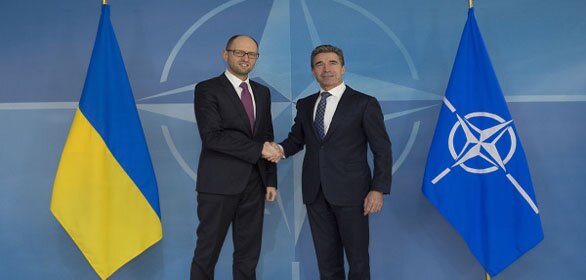
“The Fed’s ‘need’ to take on an even more active role as foreigners further slow the purchases of our paper is to put the pedal to the metal on the currency debasement race now being run in the developed world — a race which is speeding us all toward the end of the present currency regime.” Stephanie Pomboy, MacroMavens
“No matter what our Western counterparts tell us, we can see what’s going on. NATO is blatantly building up its forces in Eastern Europe, including the Black Sea and the Baltic Sea areas. Its operational and combat training activities are gaining in scale.” Russian President Vladimir Putin
If there was a way the United States could achieve its long-term strategic objectives and, at the same time, avoid a war with Russia, it would do so. Unfortunately, that is not an option, which is why there’s going to be a clash between the two nuclear-armed adversaries sometime in the near future.
Let me explain: The Obama administration is trying to rebalance US policy in a way that shifts the focus of attention from the Middle East to Asia, which is expected to be the fastest growing region in the coming century. This policy-change is called the “pivot” to Asia. In order to benefit from Asia’s surge of growth, the US plans to beef up its presence on the continent, expand its military bases, strengthen bilateral alliances and trade agreements, and assume the role of regional security kingpin. The not-so-secret purpose of the policy is China “containment”, that is, Washington wants to preserve its position as the world’s only superpower by controlling China’s explosive growth. (The US wants a weak, divided China that will do what it’s told.)
In order to achieve its goals in Asia, the US needs to push NATO further eastward, tighten its encirclement of Russia, and control the flow of oil and gas from east to west. These are the necessary preconditions for establishing US hegemonic rule over the continent. And this is why the Obama administration is so invested in Kiev’s blundering junta-government; it’s because Washington needs Poroshenko’s neo Nazi shock troops to draw Russia into a conflagration in Ukraine that will drain its resources, discredit Putin in the eyes of his EU trading partners, and create the pretext for deploying NATO to Russia’s western border.
The idea that Obama’s proxy army in Ukraine is defending the country’s sovereignty is pure bunkum. What’s going on below the surface is the US is trying to stave off irreversible economic decline and an ever-shrinking share of global GDP through military force. What we’re seeing in Ukraine today, is a 21st century version of the Great Game implemented by political fantasists and Koolaid drinkers who think they can turn the clock back to the post WW2 heyday of the US Empire when the world was America’s oyster. Thankfully, that period is over.
Keep in mind, the glorious US military has spent the last 13 years fighting sheep herders in flip-flops in Afghanistan in a conflict that, at best, could be characterized as a stalemate. And now the White House wants to take on Russia?
Can you appreciate the insanity of the policy?
This is why Secretary of Defense Chuck Hagel was sacked last week, because he wasn’t sufficiently eager to pursue this madcap policy of escalating the wars in Afghanistan, Iraq, Syria and Ukraine. Everyone knows it’s true, the administration hasn’t even tried to deny it. They’d rather stick with foam-at-the-mouth buffoons, like Susan Rice and Samantha Powers, then a decorated veteran who has more credibility and intelligence in his little finger than Obama’s whole National Security team put together.
So now Obama is completely surrounded by rabid warmongering imbeciles, all of whom ascribe to the same fairytale that the US is going to dust-off Russia, remove Assad, redraw the map of the Middle East, control the flow of gas and oil from the ME to markets in the EU, and establish myriad beachheads across Asia where they can keep a tight grip on China’s growth.
Tell me, dear reader, doesn’t that strike you as a bit improbable?
But, of course, the Obama claque think it’s all within their grasp, because, well, because that’s what they’ve been told to think, and because that’s what the US has to do if it wants to maintain its exalted position as the world’s lone superpower when its economic significance in the world is steadily declining. You see, here’s the thing: The exceptional nation is becoming more unexceptional all the time, and that’s what has the political class worried, because they see the handwriting on the wall, and the writing says, “Enjoy it while it lasts, buddy, cuz you ain’t gonna be numero uno much longer.”
And the US has allies in this wacky crusade too, notably Israel and Saudi Arabia. The Saudis have been particularly helpful lately by flooding the market with oil to push down prices and crush the Russian economy. (On Friday, Benchmark crude oil prices plummeted to a four-year low, with Brent crude sinking to $69.11 a barrel.) The Obama administration is using the classic one-two punch of economic sanctions and plunging oil revenues to bully Moscow into withdrawing from Crimea so Washington can move its nuclear arsenal to within spitting distance of Moscow. Here’s a bit of background from the Guardian:
“Think about how the Obama administration sees the state of the world. It wants Tehran to come to heel over its nuclear programme. It wants Vladimir Putin to back off in eastern Ukraine. But after recent experiences in Iraq and Afghanistan, the White House has no desire to put American boots on the ground. Instead, with the help of its Saudi ally, Washington is trying to drive down the oil price by flooding an already weak market with crude. As the Russians and the Iranians are heavily dependent on oil exports, the assumption is that they will become easier to deal with.
John Kerry, the US secretary of state, allegedly struck a deal with King Abdullah in September under which the Saudis would sell crude at below the prevailing market price. That would help explain why the price has been falling at a time when, given the turmoil in Iraq and Syria caused by Islamic State, it would normally have been rising.” (Stakes are high as US plays the oil card against Iran and Russia, Larry Eliot, Guardian)
And here’s more from Salon’s Patrick L. Smith at Salon:
“Less than a week after the Minsk Protocol was signed, Kerry made a little-noted trip to Jeddah to see King Abdullah at his summer residence. When it was reported at all, this was put across as part of Kerry’s campaign to secure Arab support in the fight against the Islamic State.
Stop right there. That is not all there was to the visit, my trustworthy sources tell me. The other half of the visit had to do with Washington’s unabated desire to ruin the Russian economy. To do this, Kerry told the Saudis 1) to raise production and 2) to cut its crude price. Keep in mind these pertinent numbers: The Saudis produce a barrel of oil for less than $30 as break-even in the national budget; the Russians need $105.
Shortly after Kerry’s visit, the Saudis began increasing production, sure enough — by more than 100,000 barrels daily during the rest of September, more apparently to come…
Think about this. Winter is coming, there are serious production outages now in Iraq, Nigeria, Venezuela and Libya, other OPEC members are screaming for relief, and the Saudis make back-to-back moves certain to push falling prices still lower? You do the math, with Kerry’s unreported itinerary in mind, and to help you along I offer this from an extremely well-positioned source in the commodities markets: “There are very big hands pushing oil into global supply now,” this source wrote in an e-mail note the other day.” (What Really Happened in Beijing: Putin, Obama, Xi And The Back Story The Media Won’t Tell You, Patrick L. Smith, Salon)
The Obama team managed to persuade our good buddies the Saudis to flood the market with oil, drive down prices, and put the Russian economy into a nosedive. At the same time, the US has intensified its economic sanctions, done everything in its power to sabotage Gazprom’s South Stream pipeline (that would bypass Ukraine and deliver natural gas to Europe via a southern route), and cajole the Ukrainian parliament into auctioning off 49 percent of the leasing rights and underground storage facilities to privately-owned foreign corporations.
How do you like that? So the US has launched a full-blown economic war against Russia that’s been completely omitted in the western media. Are you surprised?
Washington is determined to block further Russo-EU economic integration in order to collapse the Russian economy and put foreign capital in control of regional energy distribution. It’s all about the pivot. The big money guys figure the US has to pivot to Asia to be a player in the next century. All of these unprovoked attacks on Moscow are based on that one lunatic strategy.
But aren’t people in the EU going to be angry when they can’t get the energy they need (at the prices they want) to run their businesses and heat their homes?
Washington doesn’t think so. Washington thinks its allies in the Middle East can meet the EU’s energy needs without any difficulty. Check out this clip from an article by analyst F. William Engdahl:
“…details are emerging of a new secret and quite stupid Saudi-US deal on Syria and the so-called IS. It involves oil and gas control of the entire region and the weakening of Russia and Iran by Saudi Arabian flooding the world market with cheap oil. ….
On September 11, US Secretary of State Kerry met Saudi King Abdullah at his palace on the Red Sea. The King invited former head of Saudi intelligence, Prince Bandar to attend. There a deal was hammered out which saw Saudi support for the Syrian airstrikes against ISIS on condition Washington backed the Saudis in toppling Assad, a firm ally of Russia and de facto of Iran and an obstacle to Saudi and UAE plans to control the emerging EU natural gas market and destroy Russia’s lucrative EU trade. A report in the Wall Street Journal noted there had been “months of behind-the-scenes work by the US and Arab leaders, who agreed on the need to cooperate against Islamic State, but not how or when.
The process gave the Saudis leverage to extract a fresh US commitment to beef up training for rebels fighting Mr. Assad, whose demise the Saudis still see as a top priority.”
(The Secret Stupid Saudi-US Deal on Syria, F. William Engdahl, BFP)
So the wars in Ukraine and Syria are not really separate conflicts at all. They’re both part of the same global resource war the US has been prosecuting for the last decade and a half. The US plans to cut off the flow of Russian gas and replace it with gas from Qatar which will flow through Syria and onto the EU market after Assad is toppled.
Here’s what’s going on: Syria’s troubles began shortly after it announced that it was going to be part of an “Islamic pipeline” that would transfer natural gas from the South Pars gas field off the coast of Iran across Iraq and Syria, eventually connecting to Greece and the lucrative EU market. According to author Dmitri Minin:
“A gas pipeline from Iran would be highly profitable for Syria. Europe would gain from it as well, but clearly someone in the West didn’t like it. The West’s gas-supplying allies in the Persian Gulf weren’t happy with it either, nor was would-be no. 1 gas transporter Turkey, as it would then be out of the game.” (The Geopolitics of Gas and the Syrian Crisis: Syrian “Opposition” Armed to Thwart Construction of Iran-Iraq-Syria Gas Pipeline, Dmitri Minin, Global Research)
Two months after Assad signed the deal with Iraq and Iran, the rebellion broke out in Syria. That’s quite a coincidence, don’t you think? Funny how frequently those kinds of things happen when foreign leaders don’t march to Washington’s tune.
Here’s more from Minin:
“Qatar is doing all it can to thwart the construction of the pipeline, including arming the opposition fighters in Syria, many of whom come from Saudi Arabia, Pakistan and Libya…
The Arabic newspaper Al-Akhbar cites information according to which there is a plan approved by the U.S. government to create a new pipeline for transporting gas from Qatar to Europe involving Turkey and Israel…
This new pipeline is to begin in Qatar, cross Saudi territory and then the territory of Jordan, thus bypassing Shiite Iraq, and reach Syria. Near Homs the pipeline is to branch in three directions: to Latakia, Tripoli in northern Lebanon, and Turkey. Homs, where there are also hydrocarbon reserves, is the project’s main crossroads, and it is not surprising… that the fiercest fighting is taking place. Here the fate of Syria is being decided. The parts of Syrian territory where detachments of rebels are operating with the support of the U.S., Qatar and Turkey, that is, the north, Homs and the environs of Damascus, coincide with the route that the pipeline is to follow to Turkey and Tripoli, Lebanon. A comparison of a map of armed hostilities and a map of the Qatar pipeline route indicates a link between armed activities and the desire to control these Syrian territories. Qatar’s allies are trying to accomplish three goals: to break Russia’s gas monopoly in Europe; to free Turkey from its dependence on Iranian gas; and to give Israel the chance to export its gas to Europe by land at less cost.”
How do you like that; another coincidence: “The fiercest fighting (in Syria) is taking place” where there’s massive “hydrocarbon reserves” and along the planned pipeline route.
So the conflict in Syria isn’t really about terrorism at all. It’s about natural gas, competing pipelines and access to markets in the EU. It’s about money and power. The whole ISIS-thing is a big hoax to conceal what’s really going on, which is a global war for resources, more blood for oil.
But how does the US benefit from all of this, after all, won’t the gas revenues go to Qatar and the transit countries rather than the US?
Yep, they sure will. But the gas will also be denominated in dollars which will shore up demand for USDs thus perpetuating the petrodollar recycling system which creates a vast market for US debt and which helps to keep US stocks and bonds in the nosebleed section. And that’s what this is all about, preserving dollar supremacy by forcing nations to hold excessive amounts of USDs to use in their energy transactions and to service their dollar-denominated debts.
As long as Washington can control the world’s energy supplies and force the world to trade in dollars, it can spend well in excess of what it produces and not be held to account. It’s like having a credit card you never have to pay off.
That’s a racket Uncle Sam is prepared to defend with everything he’s got, even nukes.
Mike Whitney is a regular columnist for Veracity Voice
Mike Whitney lives in Washington state. He can be reached at:
A New Push For Peace In Syria?
November 16, 2014 by Administrator · Leave a Comment

Why are there no serious peace talks to end the war in Syria? After robbing over 130,000 people of their lives, and evicting over 9 million refugees from their homes, the Syrian war has infected nearly every region of the Middle East. Yet among the U.S. and its regional allies there are no public discussions about a viable peace plan, only war talk.
It’s hard to talk peace when the United States is still maneuvering for war, having recently given $500 million to arm and train Syrian rebels, while also brokering a deal with Saudi Arabia to open a new Syrian rebel training camp, in addition to the one already functioning in Jordan. Instead of using Obama’s vast Middle East influence for peace he has used it to push war.
The brilliant failure of the U.S.-led Geneva peace talks on Syria was done without the seriousness demanded by the wholesale destruction of a nation. Obama used the talks to pursue “U.S. interests,” having purposely excluded Iran from the talks while trying to leverage disproportionate power for Obama’s “Free Syrian Army” rebels, who enjoy minuscule power on the ground as they used peace talks to make unrealistic demands.
Obama played a passive role in the peace talks, allowing them to flounder instead of publicly putting forth serious proposals that reflected the situation on the ground. There have been no talks since January and Geneva III is yet unscheduled, as Obama seems committed only to giving the rebels more bargaining power via more war, the logic being that if the rebels are armed and trained appropriately, they’ll eventually be able to win back enough land to force the Assad government to bargain on equal terms.
The giant void in the market for peace has opened up opportunities for Russia and Egypt, who reportedly are attempting to insert themselves as leaders in Middle East diplomacy, in part to expand their influence, in part to protect themselves from the conflagration of Islamic extremism the conflict is producing.
Mint Press reports on the still-developing story:
“Moscow and Cairo are preparing for a conference between the Syrian regime and the opposition in the hope of bringing them together in a transitional government that ‘fights terrorism’…the agenda of the conference to be held between the two sides includes establishing a transitional Syrian government with extensive powers while maintaining Syrian President Bashar al-Assad’s authority over the army and security institutions.”
If such a proposal comes to fruition its merits must be seriously debated on the world stage, where Obama would very likely do his best to sabotage the peace. This is because Obama’s rebels on the ground in Syria — loosely organized under the “Free Syrian Army” banner — are powerless, and a Russia-led peace process would reveal this fact and apply it to a peace treaty, leaving little influence for the Obama administration in the new government. This is a peace deal Obama would rather kill.
Obama’s rebels are weak while the Syrian Government has made substantial military gains. Most notably a recent peace deal was won in Syria’s largest city Aleppo, modeled after the peace deal in Homs that allowed rebels to leave unarmed while giving de-facto control of the city to the government.
Interestingly, veteran Middle East journalist Robert Fisk recently questioned not only the relevance of Obama’s Free Syrian Army, but it’s very existence. Fisk explains:
“The Free Syrian Army I think drinks a lot of coffee in Istanbul. I have never come across it – except in the first months of the fighting, I’ve never come across even prisoners from the Free Syrian Army…You know, the FSA, in the eyes of the Syrians, doesn’t really exist. They’ve got al-Qaeda, Nusrah, various other Islamist groups, and now of course ISIS…But I don’t think they care very much about the Free Syrian Army. One officer told me that some have been accepted back into the Syrian Army, so they could go home. Others had been allowed to go home and they were not permitted to serve in the Syrian Army anymore. I think that the Free Syrian Army is a complete myth and I don’t believe it really exists and nor do the Syrians…”
Fisk’s analysis of the FSA punctuates the perspective of many who have long questioned whether the FSA had been totally absorbed by the Islamic extremist militias. At most the FSA exists in tiny irrelevant pockets, though Fisk thinks the FSA might be an Obama administration fantasy used to justify the ongoing Syrian war.
Aside from Obama’s weakness on the ground, there are broader geo-political reasons Obama would reject a Russia/Egypt-led peace. For one, the Obama Administration only recently made a long term investment in war, by giving the $500 billion to the Syrian rebels and training thousands more in Saudi Arabia, actions that effectively dismissed any meaningful reconciliation with Iran.
Obama chose instead to reinforce the close alliances with pariah states Saudi Arabia and Israel, and both are demanding that Syria be destroyed. By re-committing himself to Saudi Arabia, Turkey, and Israel, Obama has essentially abandoned peace with Syria and Iran, since Obama’s allies want Syria and Iran destroyed.
If Obama followed the lead of Russia and Egypt in the peace process, his allies would abandon him, since they’ve invested huge sums of money, arms, and their political livelihoods on making sure their governments and domestic companies profit off of the demise of the Syrian government.
This is the basis for the complete geo-political stalemate in the Middle East. Of course the giant U.S. corporations that benefit from Middle East dominance are applying maximum pressure to continue war. The stalemate has become so obvious and destructive in Syria that Russia and Egypt haveinserted themselves as power brokers, which would act to bolster their political-economic leverage while pushing the U.S. out.
Regional power scrambling aside, if a rational peace deal were put forth —whether it’s brokered by Russia, Egypt, or whomever — the world must demand that peace be pursued, lest the Syrian catastrophe continue.
Obama and his regional allies have proven totally incapable of producing any realistic peace proposal — they’ve been too consumed with war. Obama has yet another chance to recognize the results of this failed proxy war and accept a peace that is a 100,000 lives overdue, or it can forge ahead to expand the killing. Stopping the war is as easy as acknowledging the reality, and to forge a treaty that reflects it.
Shamus Cooke is a regular columnist for Veracity Voice
He can be reached at
Sick Man of Europe: Turkey’s Infection With The Cancer of ISIS
October 25, 2014 by Administrator · Leave a Comment

American journalist Serena Shim was beheaded — and “not with a sword but a cement truck,” to paraphrase T.S. Elliott.
Right before she lost her head in a brutal “accidental” collision with a cement truck the size of a freight train, Shim had reported that not only was Turkey supplying ISIS foreign fighters and terrorists from such places as Pakistan and Chechnya with weapons and material, but Turkey was also spiriting wounded ISIS terrorists back over the Syrian border into Turkey, hidden in NGO aid trucks, so they could be treated in Turkish hospitals.
Turkish Intelligence is highly suspected of setting up this tragic hit on Shim, hoping to silence her — but its actions have backfired and all it has really accomplished is to make the whole world put Turkey under a microscope, asking questions about Shim’s bloody death and the role that the Turkish intelligence agency played in this beheading.
“Turkey. how could you have sunk so low?” the whole world now asks.
“Hey, it was easy,” Turkey replies. “What else could we do?” What else could Turkey do indeed — when the usual crew of polished and professional American and Israeli neo-con con-men (not to be mistaken for actual honest, hardworking and sorely hoodwinked Americans and Israelis) simply showed up at its doorstep, waved their magic wands over Turkish president Erdogan’s head and promised to get him the old Ottoman Empire back if only he would attack Syria. (Or else.)
And then with his eyes dazzled by dreams of glittering booty, Erdogan fell for the con — hook, line and sinker. Of course he did. And then he opened .
According to Middle East expert Judith Bello, the Washington Post published a map “of the flow of 15,000 fighters flowing into Syria from more than 80 nations, hardly the foot soldiers of a civil war. Most of these fighters have entered Syria through Turkey.”
A sorry cancer-like epidemic of death, destruction and deceit has spread over the Middle East in the last few decades. And Turkey, the “Sick Man of Europe,” has been the latest nation to catch it.
Welcome to the cancer ward, President Erdogan.
On Thanksgiving this year, Turkey will obviously have nothing to be thankful for, what with ISIS sitting at its table and expecting its dinner — unless Turkey starts “chemotherapy” immediately. My prescription for Turkey? “Stop messing around with ISIS, stop believing the empty promises of American and Israeli neo-con-men, and start behaving in Turkey’s citizens’ best interests instead.”
Turkey has been trying to join the European Union for years now. But who wants a Turkey in the EU that has already proven itself to be just another Middle Eastern “soiled dove” for American and Israeli con-men? Erdogan has thrown the baby out with the bathwater here.
Just because Iraq, Libya, Egypt, Jordan, Qatar, Yemen, Kuwait and Saudi Arabia have all been diagnosed with the kind of fuzzy thinking that can only be caused by cancer of the part of the brain that governs common sense and self-preservation, this doesn’t mean that Turkey has to waste away too. Beheading a journalist is common in these other neo-con infected countries. But one would expect that a sophisticated and modern country like Turkey, a potential member of the EU even, might be immune. But apparently not.
President Erdogan, what were you THINKING!
PS: Looks like the average American and Israeli isn’t immune from catching the cancer of stupid thinking either. If we aren’t a lot more careful and watchful and vigilant than we are right now, then we too may soon be contracting this Turkish and Middle Eastern disease — and then watch our own journalists get beheaded too.
Sparking Anger In Syria
October 25, 2014 by Administrator · Leave a Comment
Avoidable Humanitarian Crisis at Lebanon Border Crossing…

Chest high metal crowd control barriers manned by armed guards—since late September they have stood outside the Arrivals Hall on the Lebanon side of the Masnaa border crossing with Syria. For Syrian and Palestinian refugees fleeing the continuing violence next door and trying to get into Lebanon the message is clear:
Don’t come within 40 meters of the Immigration building, and don’t even dream about coming to the staffed counter with any documents. None of you is welcome. Ninety eight percent of you will not be allowed in, and those who are better leave within 24 hours and have a valid airline ticket to prove your intention to depart.
Over the past few years, this observer has crossed at the Masnaa border crossing fairly frequently. Yet never have I seen such an avoidable humanitarian disaster for families seeking to get out of war-torn Syria. And it is reportedly much the same at the Jordanian border. Many refugees have found themselves squatting here—first in the heat, and now in the cold autumnal nights that increasingly are seeing cold rainfall. No other option seems available to them than to try to enter Lebanon, this as they express the forlorn hope that God in his mercy will help them.
And so here they sit, bewildered, outside the Immigration building, exhausted, little if any money in their pockets or purses, with their children thirsty, hungry, and often crying. Nearby are the local offices of the UN High Commissioner for Refugees (UNHCR), but the staff are overwhelmed, and the fact that Lebanon hasn’t signed the 1951 Refugee Convention doesn’t make things any easier for them. Extending humanitarian assistance to refugees has never been embraced by certain anti-Palestinian politicians in Lebanon, who apparently see no value in it for themselves, but that being said, it is a fact that the sheer numbers of refugees entering Lebanon now has added to pre-existing problems with respect to infrastructure, chronic water and electricity shortages, massive unemployment, exploding sectarian conflicts, and the like.
All of which can make for some harrowing scenes at the border checkpoint. During this observer’s most recent crossing, a Syrian gentleman sat on the roadside with his wife, five children, and one grandchild, explaining to me how the family had lost everything in Homs. No other choice had they than to try and seek safety in Lebanon, since Egypt and Jordan are refusing entry to Syrian refugees. His oldest child, a lovely girl named ‘Rasha,’ who appeared to be in her mid-20s, sat nursing her infant son as we talked. Rasha’s husband, he informed me, had been killed by a mortar last spring on a day he had gone out shopping for food near the old city of Homs. In desperation, the gentleman suggested that I purchase his daughter and her baby, because he saw no future for them and he could no longer provide a home for them. Plus the baby appeared ill.
After my long explanation of why, for several reasons, this was not possible, he stated his belief that my being an American meant that the Lebanese guards would allow me to enter with Rasha and her baby; they in turn could live with me until the crisis ended, and on second thought, I did not even have to pay him anything. Just save her and her baby. With respect to the Lebanese border guards, his idea was unrealistic. Most Americans do tend to be liked around these parts, and most of us try to be goodwill ambassadors because we love our country and her ideals. But it is not the case that Americans can bend immigration regulations, nor should it be. Before the crisis, Syrians and Lebanese could simply take a road not patrolled, avoiding border crossings and formalities altogether, but these days that is very dangerous.
I gave the gentleman my card and a little money in case his family and he were somehow able to get over the border, and promised him that if they were successful I and friends would try to help. I have heard nothing more from him. But I have learned, from a couple of NGOs, that encounters such as I experienced are not all that uncommon these days, with women and children stuck at the Syrian-Lebanese border being bought and sold—and with bribes sometimes offered, and occasionally paid. The frequency of this is difficult to assess, and the reality may be exaggerated, but certainly not exaggerated are the facts of the increasingly inhumane conditions that Syrian and Palestinian refugees face in Lebanon—a country in which they are denied some of the most basic, elementary rights by the government, and where they also run the risk of harmful brushes with various militias and hooligans.
Discussions I have had—with staff at the central.
Immigration office in Damascus as well as Syrian human rights associations and Syria-based Arab journalists who have researched and written about this subject—reveal not only a bleak picture of the humanitarian situation, but also a growing level of disgust in Syria over what is happening to their countrymen in Lebanon. Cases of Lebanese discrimination and harassment targeting Syrian refugees, including violations of international customary law and the 1951 Refugee Convention, have become commonplace. In addition, Syrians increasingly are falling prey to violence. Human Rights Watch said it had documented a string of attacks by Lebanese residents against Syrian refugees in August and September. Those interviewed described being stabbed, shot and beaten, and several claimed that they were either too afraid to report the crimes, or that they had and their stories had been dismissed by security forces when they did. HRW said that attacks it documented were most often carried out by private citizens, but in several cases they appeared to have “the tacit support” of authorities, and the international organization has urged security forces and local authorities to step up protection of Syrian refugees.
“Lebanon’s security forces should protect everyone on Lebanese soil, not turn a blind eye to vigilante groups who are terrorizing refugees,” said HRW Deputy Middle East Director Nadim Houry.
One especially taxing problem is the financial cost exacted by Lebanon for Syrian refugees to register a baby. In Syria, anyone from Lebanon, or from any country for that matter, can register a newborn for the equivalent of 1,000 Lebanese lire (around 66 US cents). The process takes around fifteen minutes. But not so in Lebanon. According to a report by the Taanayel General Hospital in central Bekaa, the number of new babies born to Syrian refugees, since March 2011 when the crisis began, has exceeded 15,000, just in the Bekaa Valley alone. In North Lebanon, the UNHCR estimates more than 5,000 births, and the Syrian Embassy in Beirut says there are now approximately 6,000 births per year among displaced Syrians in Lebanon. But for many of these parents, the registration process is nearly impossible.
First they must obtain a certificate from the hospital or midwife indicating the date of birth—generally not a big problem, but then the baby must be registered at the office of the local Muktar. That is if they can prove legal residence, and if the local Muktar is willing to help, which is not always the case. Sometimes he wants a fee, and in some reported cases a bribe, in order to forward the paperwork to the Directorate of Personal Status. If the parents are lucky, their application might then be sent to the Exterior Ministry for another approval, and finally may reach the Syrian Embassy to complete the process of registering the newborn. But the process can be delayed or scuttled along the tortuous procedural path for any number of reasons, including escalating anti-Syrian sentiment in government offices and among certain confessions and political parties. According to one Syrian refugee, the minimal fees charged by Lebanon, plus the traveling back and forth to different offices and locations so as to follow up on the procedures, can cost close to $500, with no success guaranteed. The amount is a fortune for most refugees, but an even greater concern for Syrian parents is having no nationality for their children. Says Joelle Eid, of the UNHCR press office, the offspring risk being added to “the stateless Kurds of Syria, since 1960, whose number of births in Lebanon is currently around 840 children.”
One chilling reason that the Kafkaesque procedures violate basic humanitarian principles is that they are forcing Syrian refugees to smuggle their babies into Syria in bags, since of course the infants would not be allowed to cross the border from Lebanon without full documentation. It is estimated that over the past 24 months more than 50 Syrian newborns, passing through Masnaa, have died from suffocation or drug overdose while being hidden from immigration officials. Parents usually are not sure how much of what drug to give their babies in order to keep them quiet and sleeping as they sneak them through the border, and too many are not waking up—all so that the parents can make it back over the border, back into their perilous, war-torn homeland, so that they may register their children’s births—in Syria, since it’s practically impossible to do so in Lebanon.
It is but one of the current abuses that are causing outrage in Syria and among advocates of human rights everywhere but it is not the only one. Both the UNHCR and HRW are accusing the Lebanese Army of committing “serious” violations against refugees, including in Ersal, where more than 200 Syrian refugees, including minors, were arrested without charge. The arrests took place September 19-24. Other reports accuse the Army of evicting, without any pretense of due process, a large number of refugees living in private homes. Then on September 25, the retaliatory measures reached a peak with a crackdown in the area of Ras al-Jafar, affecting nine informal communities with a total population of around 5000. One report states that during the raids, tents were burned in one of the random communities, completely destroying 96 tents. The raids were coupled with a large campaign of arrests targeting especially males. Some 300-500 people were detained, and while most, though not all, have been released, reports have emerged of physical and verbal assault, intimidation, and humiliation—claims that are corroborated by UNHCR photographs, including of shackled Syrian refugees laying on the ground exposed to the elements.
An Army spokesperson has dismissed as “lies” another allegation about the torching of tents in Ersal last week, yet random raids are becoming commonplace at scores of these “informal tent settlements,” as UNHCR refers to the fetid, sewage-soaked camps—camps which soon will be covered in snow and ice. Often in these camps more than 20 people will live in a tent that is intended for one family. Most of the tents are covered with nothing more than nylon, and more than 50,000 Syrian refugees in the Bekaa Valley are now living in these kinds of settlements—that’s 50,000 out of a registered total 275,000 in the area.
In addition to these calamities, more than 45 municipalities have imposed curfews on Syrian nationals, a move widely seen as a racist practice and one also in violation of international humanitarian law and the 1951 Convention. HRW comments that the curfews “contribute to a climate of discriminatory and retaliatory practices against” the refugees. Curfew violators are reportedly given a warning or, in some cases, are “taken to the municipality for questioning” where they may be detained for hours.
The reports have fueled anger among lawyers in Damascus, at the Lawyers Syndicate across from the Cham Palace Hotel, where seminars have discussed the legal problems facing Syrian refugees in Lebanon. In addition, the Faculty of Law at Damascus University is considering setting up a legal defense team to help Syrians in Lebanon challenge arbitrary and discriminatory applications of Lebanese laws.
“Syria helped them (the Lebanese) many times during their 15-year civil war and during the 2006 July war!” commented a teacher at a government primary school visited by this observer last week. “We gave them everything they needed. Our government buildings, social services, free medical care, free education, schools, hygienic conditions, peace and quiet, food and sometimes cash stipends. What about us? Is this the Lebanese way of saying ‘thanks’ to the people of Syria?”
She then exclaimed, “Someone must stop these attacks on our families.”
A savvy graduate student in Damascus by the name of “Ahmad” commented to this observer and to his Palestinian friend from Yarmouk camp, who having lost her own home due to shelling, now volunteers helping Syrian refugees forced to live in some of the parks in Damascus, that ISIS (Da’ish) and al-Nusra will almost assuredly be cognizant of these problems, and poised to capitalize on them, as they prepare to extend their caliphate into Lebanon—and he probably has a point.
Among the many reasons Lebanon should immediately desist in the targeting of Syrian and Palestinian refugees is that they are pushing many toward supporting those that the Lebanese government claims to be opposing.
Dr. Franklin Lamb is Director, Americans Concerned for Middle East Peace, Beirut-Washington DC, Board Member of The Sabra Shatila Foundation, and a volunteer with the Palestine Civil Rights Campaign, Lebanon. He is the author of and is doing research in Lebanon for his next book. He can be reached at
Dr. Franklin Lamb is a regular columnist for Veracity Voice
The Islamist State
October 18, 2014 by Administrator · Leave a Comment

You can’t believe a word the United States or its mainstream media say about the current conflict involving The Islamic State (ISIS).
You can’t believe a word France or the United Kingdom say about ISIS.
You can’t believe a word Turkey, Saudi Arabia, Qatar, Kuwait, Jordan, or the United Arab Emirates say about ISIS. Can you say for sure which side of the conflict any of these mideast countries actually finances, arms, or trains, if in fact it’s only one side? Why do they allow their angry young men to join Islamic extremists? Why has NATO-member Turkey allowed so many Islamic extremists to cross into Syria? Is Turkey more concerned with wiping out the Islamic State or the Kurds under siege by ISIS? Are these countries, or the Western powers, more concerned with overthrowing ISIS or overthrowing the Syrian government of Bashar al-Assad?
You can’t believe the so-called “moderate” Syrian rebels. You can’t even believe that they are moderate. They have their hands in everything, and everyone has their hands in them.
Iran, Hezbollah and Syria have been fighting ISIS or its precursors for years, but the United States refuses to join forces with any of these entities in the struggle. Nor does Washington impose sanctions on any country for supporting ISIS as it quickly did against Russia for its alleged role in Ukraine.
The groundwork for this awful mess of political and religious horrors sweeping through the Middle East was laid – laid deeply – by the United States during 35 years (1979-2014) of overthrowing the secular governments of Afghanistan, Iraq, Libya, and Syria. (Adding to the mess in the same period we should not forget the US endlessly bombing Pakistan, Somalia and Yemen.) You cannot destroy modern, relatively developed and educated societies, ripping apart the social, political, economic and legal fabric, torturing thousands, killing millions, and expect civilization and human decency to survive.
Particularly crucial in this groundwork was the US decision to essentially throw 400,000 Iraqis with military training, including a full officer corps, out onto the streets of its cities, jobless. It was a formula for creating an insurgency. Humiliated and embittered, some of those men would later join various resistance groups operating against the American military occupation. It’s safe to say that the majority of armored vehicles, weapons, ammunition, and explosives taking lives every minute in the Middle East are stamped “Made in USA”.
And all of Washington’s horses, all of Washington’s men, cannot put this world back together again. The world now knows these places as “failed states”.
Meanwhile, the United States bombs Syria daily, ostensibly because the US is at war with ISIS, but at the same time seriously damaging the oil capacity of the country (a third of the Syrian government’s budget), the government’s military capabilities, its infrastructure, even its granaries, taking countless innocent lives, destroying ancient sites; all making the recovery of an Assad-led Syria, or any Syria, highly unlikely. Washington is undoubtedly looking for ways to devastate Iran as well under the cover of fighting ISIS.
Nothing good can be said about this whole beastly situation. All the options are awful. All the participants, on all sides, are very suspect, if not criminally insane. It may be the end of the world. To which I say … Good riddance. Nice try, humans; in fact, GREAT TRY … but good riddance. ISIS … Ebola … Climate Change … nuclear radiation … The Empire … Which one will do us in first? … Have a nice day.
Is the world actually so much more evil and scary today than it was in the 1950s of my upbringing, for which I grow more nostalgic with each new horror? Or is it that the horrors of today are so much better reported, as we swim in a sea of news and videos?
After seeing several ISIS videos on the Internet, filled with the most disgusting scenes, particularly against women, my thought is this: Give them their own country; everyone who’s in that place now who wants to leave, will be helped to do so; everyone from all over the world who wants to go there will be helped to get there. Once they’re there, they can all do whatever they want, but they can’t leave without going through a rigorous interview at a neighboring border to ascertain whether they’ve recovered their attachment to humanity. However, since very few women, presumably, would go there, the country would not last very long.
The Berlin Wall – Another Cold War Myth
November 9 will mark the 25th anniversary of the tearing down of the Berlin Wall. The extravagant hoopla began months ago in Berlin. In the United States we can expect all the Cold War clichés about The Free World vs. Communist Tyranny to be trotted out and the simple tale of how the wall came to be will be repeated: In 1961, the East Berlin communists built a wall to keep their oppressed citizens from escaping to West Berlin and freedom. Why? Because commies don’t like people to be free, to learn the “truth”. What other reason could there have been?
First of all, before the wall went up in 1961 thousands of East Germans had been commuting to the West for jobs each day and then returning to the East in the evening; many others went back and forth for shopping or other reasons. So they were clearly not being held in the East against their will. Why then was the wall built? There were two major reasons:
1) The West was bedeviling the East with a vigorous campaign of recruiting East German professionals and skilled workers, who had been educated at the expense of the Communist government. This eventually led to a serious labor and production crisis in the East. As one indication of this, the New York Times reported in 1963: “West Berlin suffered economically from the wall by the loss of about 60,000 skilled workmen who had commuted daily from their homes in East Berlin to their places of work in West Berlin.”
It should be noted that in 1999, USA Today reported: “When the Berlin Wall crumbled [1989], East Germans imagined a life of freedom where consumer goods were abundant and hardships would fade. Ten years later, a remarkable 51% say they were happier with communism.” Earlier polls would likely have shown even more than 51% expressing such a sentiment, for in the ten years many of those who remembered life in East Germany with some fondness had passed away; although even 10 years later, in 2009, the Washington Post could report: “Westerners [in Berlin] say they are fed up with the tendency of their eastern counterparts to wax nostalgic about communist times.”
It was in the post-unification period that a new Russian and eastern Europe proverb was born: “Everything the Communists said about Communism was a lie, but everything they said about capitalism turned out to be the truth.”
It should be further noted that the division of Germany into two states in 1949 – setting the stage for 40 years of Cold War hostility – was an American decision, not a Soviet one.
2) During the 1950s, American coldwarriors in West Germany instituted a crude campaign of sabotage and subversion against East Germany designed to throw that country’s economic and administrative machinery out of gear. The CIA and other US intelligence and military services recruited, equipped, trained and financed German activist groups and individuals, of West and East, to carry out actions which ran the spectrum from juvenile delinquency to terrorism; anything to make life difficult for the East German people and weaken their support of the government; anything to make the commies look bad.
It was a remarkable undertaking. The United States and its agents used explosives, arson, short circuiting, and other methods to damage power stations, shipyards, canals, docks, public buildings, gas stations, public transportation, bridges, etc; they derailed freight trains, seriously injuring workers; burned 12 cars of a freight train and destroyed air pressure hoses of others; used acids to damage vital factory machinery; put sand in the turbine of a factory, bringing it to a standstill; set fire to a tile-producing factory; promoted work slow-downs in factories; killed 7,000 cows of a co-operative dairy through poisoning; added soap to powdered milk destined for East German schools; were in possession, when arrested, of a large quantity of the poison cantharidin with which it was planned to produce poisoned cigarettes to kill leading East Germans; set off stink bombs to disrupt political meetings; attempted to disrupt the World Youth Festival in East Berlin by sending out forged invitations, false promises of free bed and board, false notices of cancellations, etc.; carried out attacks on participants with explosives, firebombs, and tire-puncturing equipment; forged and distributed large quantities of food ration cards to cause confusion, shortages and resentment; sent out forged tax notices and other government directives and documents to foster disorganization and inefficiency within industry and unions … all this and much more.
The Woodrow Wilson International Center for Scholars, of Washington, DC, conservative coldwarriors, in one of their Cold War International History Project Working Papers (#58, p.9) states: “The open border in Berlin exposed the GDR [East Germany] to massive espionage and subversion and, as the two documents in the appendices show, its closure gave the Communist state greater security.”
Throughout the 1950s, the East Germans and the Soviet Union repeatedly lodged complaints with the Soviets’ erstwhile allies in the West and with the United Nations about specific sabotage and espionage activities and called for the closure of the offices in West Germany they claimed were responsible, and for which they provided names and addresses. Their complaints fell on deaf ears. Inevitably, the East Germans began to tighten up entry into the country from the West, leading eventually to the infamous wall. However, even after the wall was built there was regular, albeit limited, legal emigration from east to west. In 1984, for example, East Germany allowed 40,000 people to leave. In 1985, East German newspapers claimed that more than 20,000 former citizens who had settled in the West wanted to return home after becoming disillusioned with the capitalist system. The West German government said that 14,300 East Germans had gone back over the previous 10 years.
Let’s also not forget that while East Germany completely denazified, in West Germany for more than a decade after the war, the highest government positions in the executive, legislative, and judicial branches contained numerous former and “former” Nazis.
Finally, it must be remembered, that Eastern Europe became communist because Hitler, with the approval of the West, used it as a highway to reach the Soviet Union to wipe out Bolshevism forever, and that the Russians in World War I and II, lost about 40 million people because the West had used this highway to invade Russia. It should not be surprising that after World War II the Soviet Union was determined to close down the highway.
For an additional and very interesting view of the Berlin Wall anniversary, see the article “Humpty Dumpty and the Fall of Berlin’s Wall” by Victor Grossman. Grossman (née Steve Wechsler) fled the US Army in Germany under pressure from McCarthy-era threats and became a journalist and author during his years in the (East) German Democratic Republic. He still lives in Berlin and mails out his “Berlin Bulletin” on German developments on an irregular basis. You can subscribe to it at. His autobiography: “Crossing the River: a Memoir of the American Left, the Cold War and Life in East Germany” was published by University of Massachusetts Press. He claims to be the only person in the world with diplomas from both Harvard University and Karl Marx University in Leipzig.
Al Franken, the liberal’s darling
I receive a continuous stream of emails from “progressive” organizations asking me to vote for Senator Franken or contribute to his re-election campaign this November, and I don’t even live in Minnesota. Even if I could vote for him, I wouldn’t. No one who was a supporter of the war in Iraq will get my vote unless they unequivocally renounce that support. And I don’t mean renounce it like Hillary Clinton’s nonsense about not having known enough.
Franken, the former Saturday Night Live comedian, would like you to believe that he’s been against the war in Iraq since it began. But he went to Iraq at least four times to entertain the troops. Does that make sense? Why does the military bring entertainers to soldiers? To lift the soldiers’ spirits of course. And why does the military want to lift the soldiers’ spirits? Because a happier soldier does his job better. And what is the soldier’s job? All the charming war crimes and human-rights violations that I and others have documented in great detail for many years. Doesn’t Franken know what American soldiers do for a living?
A year after the US invasion in 2003, Franken criticized the Bush administration because they “failed to send enough troops to do the job right.” What “job” did the man think the troops were sent to do that had not been performed to his standards because of lack of manpower? Did he want them to be more efficient at killing Iraqis who resisted the occupation? The volunteer American troops in Iraq did not even have the defense of having been drafted against their wishes.
Franken has been lifting soldiers’ spirits for a long time. In 2009 he was honored by the United Service Organization (USO) for his ten years of entertaining troops abroad. That includes Kosovo in 1999, as imperialist an occupation as you’ll want to see. He called his USO experience “one of the best things I’ve ever done.” Franken has also spoken at West Point (2005), encouraging the next generation of imperialist warriors. Is this a man to challenge the militarization of America at home and abroad? No more so than Barack Obama.
Tom Hayden wrote this about Franken in 2005 when Franken had a regular program on the Air America radio network: “Is anyone else disappointed with Al Franken’s daily defense of the continued war in Iraq? Not Bush’s version of the war, because that would undermine Air America’s laudable purpose of rallying an anti-Bush audience. But, well, Kerry’s version of the war, one that can be better managed and won, somehow with better body armor and fewer torture cells.”
While in Iraq to entertain the troops, Franken declared that the Bush administration “blew the diplomacy so we didn’t have a real coalition,” then failed to send enough troops to do the job right. “Out of sheer hubris, they have put the lives of these guys in jeopardy.”
Franken was implying that if the United States had been more successful in bribing and threatening other countries to lend their name to the coalition fighting the war in Iraq the United States would have had a better chance of WINNING the war.
Is this the sentiment of someone opposed to the war? Or in support of it? It is the mind of an American liberal in all its beautiful mushiness.
Notes
- Derived from William Astore, “Investing in Junk Armies”, TomDispatch, October 14, 2014
- New York Times, June 27, 1963, p.12
- USA Today, October 11, 1999, p.1
- Washington Post, May 12, 2009; see a similar story November 5, 2009
- Carolyn Eisenberg, “Drawing the Line: The American Decision to Divide Germany, 1944-1949” (1996); or see a concise review of this book by Kai Bird in The Nation, December 16, 1996
- See William Blum, “Killing Hope: US Military and CIA Interventions Since World War II”, p.400, note 8, for a list of sources for the details of the sabotage and subversion.
- The Guardian (London), March 7, 1985
- Washington Post, February 16, 2004
- Star Tribune, Minneapolis, March 26, 2009
- Huffington Post, June 2005
- Washington Post, February 16, 2004
William Blum is the author of:
- Killing Hope: US Military and CIA Interventions Since World War 2
- Rogue State: A Guide to the World’s Only Superpower
- West-Bloc Dissident: A Cold War Memoir
- Freeing the World to Death: Essays on the American Empire
Portions of the books can be read, and signed copies purchased, at www.killinghope.org
Email to
Website: WilliamBlum.org
William Blum is a regular columnist for Veracity Voice
Has Obama Changed His Mind About Syria?
October 11, 2014 by Administrator · Leave a Comment

The ISIS siege of Kobane continued overnight while cities across Turkey were set ablaze by Kurdish protestors. At least 19 civilians were killed by Turkish riot police who were trying to disperse angry crowds that had gathered to protest the government’s unwillingness to defend the predominantly Kurdish city. According to Hurriyet, “The worst violence was seen in Diyarbakır during a reported gunfight between the Kurdistan Workers Party (PKK) supporters and Hizbullah, a radical Islamist group whose members are mostly Kurdish and who allegedly aided the state in the torture and killing of Kurdish activists in the 1990s.” (Hurriyet)
Although the Turkish Parliament approved a measure to allow the government to carry out cross-border attacks on ISIS, President Recep Tayyip Erdogan has not yet ordered its tanks and troops into battle. Erdogan has been dragging his feet so that ISIS will prevail over Kobane’s Kurdish fighters thus ending their struggle for autonomy and independence. This is why the reaction among Turkish Kurds has been so ferocious; it’s because Erdogan is using the Sunni radicals as a proxy army to batter the Kurds into submission. A scathing op-ed in last night’s Hurriyet summarized Erdogan’s tacit support for ISIS like this:
“Naturally, one has to ask who fathered, breastfed and nourished these Islamist terrorists in hopes and aspirations of creating a Sunni Muslim Brotherhood Khalifat state? Even when Kobane and many Turkish cities were on fire, did not the Turkish prime minister talk in his interview with CNN about his readiness to order land troops into the Syrian quagmire if Washington agreed to also target al-Assad?
This is a dirty game….” (Editorial, “Kobane and Turkey are Burning“, Hurriyet Daily News)
This is true, Turkey has “fathered, breastfed and nourished” Sunni extremism which is what makes the country a particularly untrustworthy ally in a war intended to defeat ISIS. According to author Nafeez Ahmed:
“With their command and control centre based in Istanbul, Turkey, military supplies from Saudi Arabia and Qatar in particular were transported by Turkish intelligence to the border for rebel acquisition. CIA operatives along with Israeli and Jordanian commandos were also training FSA rebels on the Jordanian-Syrian border with anti-tank and anti-aircraft weapons. In addition, other reports show that British and French military were also involved in these secret training programmes. It appears that the same FSA rebels receiving this elite training went straight into ISIS – last month one ISIS commander, Abu Yusaf, said, “Many of the FSA people who the west has trained are actually joining us.”
(“How the West Created the Islamic State“, Nafeez Ahmed, CounterPunch
Then there’s this from Tuesday’s USA Today:
“Militants have funneled weapons and fighters through Turkey into Syria. The Islamic State and Jabhat al-Nusra, an al-Qaeda affiliate in Syria, have networks in Turkey….
Turkish security and intelligence services may have ties to Islamic State militants. The group released 46 Turkish diplomats it had abducted the day before the United States launched airstrikes against it. Turkey, a NATO member, may have known the airstrikes were about to begin and pressured its contacts in the Islamic State to release its diplomats.
“This implies Turkey has more influence or stronger ties to ISIS than people would think,” Tanir said.”
(“5 reasons Turkey isn’t attacking Islamic State in Syria”, USA Today)
So while the connection between ISIS and Turkish Intelligence remains murky, it’s safe to say there is a connection which makes Turkey an unreliable partner in a prospective war against the same group. So why is Erdogan so eager to lead the charge into Syria?
It’s because Erdogan thinks he can use ISIS as cover for his real objective, which is seize Damascus, topple Assad and replace him with a Sunni stooge who will tilt in Ankara’s direction. This is from a post by Stratfor at Zero Hedge:
“This is why Turkey is placing conditions on its involvement in the battle against the Islamic State: It is trying to convince the United States and its Sunni Arab coalition partners that it will inevitably be the power administering this region. Therefore, according to Ankara, all players must conform to its priorities, beginning with replacing Syria’s Iran-backed Alawite government with a Sunni administration that will look first to Ankara for guidance.” (“Turkey, The Kurds And Iraq – The Prize & Peril Of Kirkuk”, zero hedge)
So this is why Turkey wants to spearhead the invasion into Syria, so it can expand its power in the region?
It appears so, but there’s more to it than just that. As is true with most conflicts in the Middle East, oil is also a major factor. The Turks expect to be big players in the regional energy market after Assad is removed and pipeline corridors are established from the giant South Pars/North Dome gas field off Qatar. The pipeline will run from Qatar, to Iraq, to Syria and on to Turkey, providing vital supplies for the voracious EU market. There are also plans for an Israel to Turkey pipeline accessing gas from the massive Leviathan gas field located off the coast of Gaza. Both of these projects will strengthen Turkey’s flagging economy as well as bolster its stature and influence in the region.
Naturally, the allure of wealth and power has been a decisive factor in shaping Ankara’s Syria policy. But there’s a good chance that Erdogan’s strategy will backfire and Turkey will get bogged down in a protracted conflict in which there are no clear winners and no easy way out. In this respect, Erdogan follows a long line of equally aggressive leaders whose ambitions clouded their judgment precipitating their downfall. Only a fool would think that Syria will be a cakewalk.
Turkey has made it clear that it will not go-it-alone in Syria. According to CNN report on Thursday:
“Turkey’s foreign minister insisted Thursday that it is not “realistic” for the world to expect it alone to launch a ground operation against ISIS, even as a monitoring group said the extremists had seized a chunk of a key battleground town near its border.” (CNN)
Erdogan wants US support although, so far, he has not stipulated whether that means ground troops or not. He has said repeatedly, however, that bombing ISIS from the air won’t achieve their purpose. And even on that score, the US has been AWOL. So far, the US has launched a mere six aerial attacks on ISIS positions on the outskirts of the city, not nearly enough to deter battle-hardened jihadis from pressing deeper into Kurdish territory. Could it be that Obama made a deal with Erdogan to allow Kobane to be overrun in exchange for concessions on the use of Turkish military bases that will be used to carry out attacks on Syria?
It could be, although there’s no way of knowing for sure. What’s clear is that Obama doesn’t really care what happens to the Kurds in Kobane or not. What matters to Obama is toppling Assad and replacing him with a US puppet. The death of innocent civilians at the hands of homicidal maniacs doesn’t even factor into Washington’s calculations. It’s just more grist for the mill. Now check out this excerpt from an article by Patrick Cockburn:
”The leader of the (Kurdish) PYD, Salih Muslim, is reported to have met officials from Turkish military intelligence to plead for aid but was told this would only be available if the Syrian Kurds abandoned their claim for self-determination, gave up their self-governing cantons, and agreed to a Turkish buffer zone inside Syria. Mr Muslim turned down the demands and returned to Kobani.” (ISIS on the Verge of Victory at Kobani”, Patrick Cockburn, Counterpunch)
Is this blackmail or what? Doesn’t this explain why Kurds are rioting and setting buildings ablaze across Turkey? How would you react, dear reader, if your people were told to either ‘Give up your dreams of independence or face a violent death at the hands of religious fanatics’? Would you think that was an unreasonable demand?
Erdogan wants to defeat the Kurdish fighters in Kobane and put an end to Kurdish nationalism. And he doesn’t care how he does it.
Keep in mind, that just this week, Turkish Prime Minister Ahmet Davutoglu said in a CNN interview that the US must agree that Assad will be removed before Turkey will commit ground troops to the war against ISIS. To his credit, Obama has not yet agreed to Erdogan’s terms although pressure in Congress and the media is steadily building. And this is just one of Erdogan’s many demands. He also wants the US to implement a no-fly zone over Syria and to create buffer zone along the Turkish border. In exchange, Turkey will provide boots on the ground and the use of its military bases. The US can expect to pay a heavy price for Turkey’s help in Syria.
OBAMA: “Don’t do stupid shit”
US policy towards Syria is not yet set in stone, in fact, the Obama administration appears to be in a state of turmoil. It could be that Obama’s chief advisors see the potential pitfalls of an invasion of Syria or of persisting with the same lame policy of arming, training and funding Islamic radicals. Or it could it be that the administration doesn’t want to team up with an unreliable ally like Turkey whose Intel agencies have helped create the present crisis? Or it could simply be that Obama has decided to follow his own advice and “Don’t do stupid shit”. Whatever the reason, the administration seems to be vacillating on the way forward.
One can only hope that Obama will grasp the inherent risks of the poring more gas on the Middle East, reject the orders of his deep state handlers, and seek a peaceful solution to the crisis in Syria. That, of course, would require cooperation with Syria’s allies, Russia and Iran, to settle on a way to defeat the jihadis, strengthen Syria’s sovereign control over its own territory, and restore peace across the country. No doubt Assad would be more than willing to make democratic concessions if he believed it would save his country from the destruction of a full-blown war.
Mike Whitney is a regular columnist for Veracity Voice
Mike Whitney lives in Washington state. He can be reached at:
Question For ISIS: Where’d You Get All Those Swords?
October 11, 2014 by Administrator · Leave a Comment
Okay, so what? So what if you’ve just joined ISIS, been given a sword and been sent off to Syria and Iraq. So what if you now have a huge bloody sword in your hand and you’ve just cut off somebody’s head? Big freaking deal. You’re the one that will be going to Hell, not me. But what I want to know is this: Where, exactly, did you get that huge bloody sword in the first place? “Swords R Us”?
From your local “Samurai of the Desert” katana convenience store?
To find out who is really financing, training and supplying ISIS, just check out who is supplying its swords.
“Made in China”? Of course. Isn’t everything these days. But who are the swords being shipped to?
Syrians aren’t supplying the swords. Syrians stand solidly behind Assad — as evidenced by their June elections, and also by the fact that almost all Syrian internal refugees flee to Assad refugee camps, and no one, I repeat, no one ever flees off to ISIS.
Syrians hate ISIS — almost as much as they hate being beheaded! Plus ISIS is still beheading their fathers and mothers and nephews and cousins and aunts. How can you possibly become BFFs with someone like that? Let alone give them more swords so that they can go after your wives and kids too?
According to a new Tweet just sent out from Kurdish Syria, “Hoped American planes will help us. Instead American tanks in the hands of ISIS are killing us.”
And Libya isn’t supplying the swords either. Why? Because Libya itself just had its head handed to it on a platter too — courtesy of the dread Sword of NATO. All that those American-backed “rebels” now in charge of the failed state of Libya are supplying ISIS with currently are some used American rocket launchers and RPGs left over from Benghazi, and a bunch of guys trained by the US to behead Gaddafi.
But perhaps Saudi Arabia is supplying the swords? After all, their state symbol is two swords and a palm tree. But I still don’t understand why the Saudis would do such a dumb thing — buy entire shipments of swords to give to creepy guys hovering right outside their borders? Aren’t the Saudis afraid of blow-back?
Aren’t the Saudi princes afraid that “Behead like a Pirate” day might be coming to Riyadh too?
And isn’t it bad enough already that a bunch of Saudis got their hands on those box-cutters over on the other side of the Atlantic back in 2001 — and just look at all the mischief that caused! Can Saudis really be trusted to play well with swords right in their very own backyards? Saudi Arabia is about to find out.
And how about Turkey? Seen any bloody swords stamped “Made in Istanbul” lately? But why would the Turks want to do that? The blow-back there would be even more immense. You’d have to be crazy to arm a horde of ISIS madmen to go next door and cut off your Syrian neighbors’ heads — no matter how much you hate Syrians. Oops, too late. Turkey has already supplied ISIS with every kind of weapon you can think of — and then naively hired ISIS to be its Neighborhood Watch.
But apparently Turkey thinks that by supplying weapons to ISIS (and also establishing a no-fly zone over Syria) that Syria will fail too and then Turkey will get the Ottoman empire back.
Sorry, Turkey. It’s heads. You lose.
But what about Israel? Did Israeli neo-cons supply all those swords? Who will ever know? Who the freak ever knows what Israeli neo-cons are up to? Certainly not the Jews who first hired them. And definitely not me. Ask the Mossad. But a fly on the wall at Mossad headquarters would probably hear something like this: “Those stupid Americans actually think that we are their only friends in the Middle East. However, before we came along America had no enemies there at all. Good job, guys!” Followed by a high-five.
The nightmare of having ISIS swordsmen let loose to create panic and havoc in the Arab world sounds like an Israeli neo-con wet dream to me.
And what about American neo-cons? Nah. Their most important product is weapons, sure, but they prefer selling Tomahawks rather than swords.
“But Jane,” you might say, “American weapons-manufacturers will sell anything to anyone, even swords to ISIS, if it will make them a buck.” Hell, they’d even sell drones to the Taliban if they thought that money was involved. They’d sell out America in a heartbeat for money. They’d probably even behead their own mothers for a few dollars more.
According to former Austrian general Matthias Ghalem, several years ago Al Qaeda wannabes “signed a financial-military contract to confront upcoming military and security challenges in southern Syria in the future…and that two deputies of Robert Stephen Ford, US former ambassador to Syria, were also present at the meeting…. And according to the Los Angeles Times, since the opening of a new US base in the desert in southwest of Jordan in November 2012, CIA operatives and US special operations troops have covertly trained these militants in groups of 20 to 45 at a time in two-week courses.”
But , the Saudis are to blame for arming ISIS. Of course they are. But it is American weapons that these ISIS cutthroats are firing — and it is American humvees that ISIS is doing donuts with out in the desert too. So why not brandish American swords as well? American neo-cons suddenly draw a line in the sand against swords? But RPGs are okay?
And then there’s Russia. Russia stood silently by while the “Coalition of the Willing” beheaded Iraq and Libya. Would it really be in their best interests to let Syria and Iran get beheaded next? Or is Russia playing the “Afghanistan Game” with the US instead — wherein America slowly but surely beheads its own economy by trying to put eleven trillion dollars worth of “boots on the ground” all over the freaking world where they don’t belong?
Or did Iran sell ISIS the swords? With the American military-industrial complex and Israeli neo-cons using every trick in the book to try to find an excuse to put Iran’s head on the chopping block for fun and profit even as we speak? I think not.
And a friend of mine just asked me the following question: “Or else could it be that Libya and Syria are/were among the few remaining countries that have resisted the imposition of a central bank associated with the Bank of England/Federal Reserve?” Hadn’t thought of that. Hell, maybe the banksters bought ISIS their swords!
And now we get to the next question. Who the freak would ever even want to behead anyone in the first place? That takes a whole bunch of work. Not to mention all that blood-splatter involved — and with no laundromats in sight either.
You’ve got to be really really angry or crazy or both to cut off someone’s head. So what got these ISIS fruitcakes so pissed off in the first place? Perhaps it might have been all these past 60 or 70 years that they, their parents and their grandparents have spent trying to survive the constant “War on Arabs” by American colonialists and Israeli neo-cons? Perhaps this is what has finally sent them around the bend and into horror-movie mode?
Just be glad that ISIS got their inspiration for weapons from watching the “Walking Dead” and not from watching the “Texas Chainsaw Massacre”. But I’m sure that the weapons industry would far rather prefer to produce chainsaws than swords. Chainsaws are a bit more profitable to make, more effectively bloody and just a bit less Old School.
Jane Stillwater is a regular columnist for Veracity Voice
She can be reached at:
America’s “Terrorist Academy” In Iraq Produced ISIS Leaders
October 11, 2014 by Administrator · Leave a Comment
The University of Al-Qaeda?

“Since 2003, Anglo-American power has secretly and openly coordinated direct and indirect support for Islamist terrorist groups linked to al-Qaeda across the Middle East and North Africa. This ill-conceived patchwork geostrategy is a legacy of the persistent influence of neoconservative ideology, motivated by longstanding but often contradictory ambitions to dominate regional oil resources, defend an expansionist Israel, and in pursuit of these, re-draw the map of the Middle East.” Nafeez Ahmed, “How the West Created the Islamic State“, CounterPunch
“The US created these terrorist organizations. America does not have the moral authority to lead a coalition against terrorism.” Hassan Nasralla, Secretary General of Hezbollah
October 06, 2014 “ICH” – “Counterpunch” – The Obama administration’s determination to topple Syrian President Bashar al-Assad is pushing the Middle East towards a regional war that could lead to a confrontation between the two nuclear-armed rivals, Russia and the United States.
Last week, Turkey joined the US-led coalition following a vote in parliament approving a measure to give the government the authority to launch military action against Isis in Syria. Turkish President Recep Tayyip Erdogan made it clear that Turkish involvement would come at a price, and that price would be the removal of al Assad. According to Turkey’s Hurriyet Daily News:
“Turkey will not allow coalition members to use its military bases or its territory in the fight against the Islamic State of Iraq and the Levant (ISIL) if the objective does not also include ousting the Bashar al-Assad regime, President Recep Tayyip Erdoğan hinted on Oct. 1…
“We are open and ready for any cooperation in the fight against terrorism. However, it should be understood by everybody that Turkey is not a country in pursuit of temporary solutions, nor will Turkey allow others to take advantage of it,” Erdoğan said in his lengthy address to Parliament.”..
“Turkey cannot be content with the current situation and cannot be a by-stander and spectator in the face of such developments.” (“Turkey will fight terror but not for temporary solutions: Erdoğan“, Hurriyet)
Officials in the Obama administration applauded Turkey’s decision to join the makeshift coalition. U.S. Secretary of Defense Chuck Hagel hailed the vote as a “very positive development” while State Department spokeswoman Jen Psaki said, “We welcome the Turkish Parliament’s vote to authorize Turkish military action…We’ve had numerous high-level discussions with Turkish officials to discuss how to advance our cooperation in countering the threat posed by ISIL in Iraq and Syria.”
In the last week, “Turkish tanks and other military units have taken position on the Syrian border.” Did the Obama administration strike a deal with Turkey to spearhead an attack on Syria pushing south towards Damascus while a small army of so called “moderate” jihadis– who are presently on the Israeli border– move north towards the Capital? If that is the case, then the US would probably deploy some or all of its 15,000 troops currently stationed in Kuwait “including an entire armored brigade” to assist in the invasion or to provide backup if Turkish forces get bogged down. The timeline for such an invasion is uncertain, but it does appear that the decision to go to war has already been made.
Turkish involvement greatly increases the chances of a broader regional war. It’s unlikely that Syria’s allies, Russia and Iran, will remain on the sidelines while Turkish tanks stream across the country on their way to Damascus. And while the response from Tehran and Moscow may be measured at first, it is bound to escalate as the fighting intensifies and tempers flare. The struggle for Syria will be a long, hard slog that will probably produce no clear winner. If Damascus falls, the conflict will morph into a protracted guerilla war that could spill over borders engulfing both Lebanon and Jordan. Apparently, the Obama administration feels the potential rewards from such a reckless and homicidal gambit are worth the risks.
No-Fly Zone Fakery
The Obama administration has made little effort to conceal its real objectives in Syria. The fight against Isis is merely a pretext for regime change. The fact that Major General Martin Dempsey, chairman of the Joint Chiefs of Staff, and Chuck Hagel are angling for a no-fly zone over Syria exposes the “war against Isis” as a fraud. Why does the US need a no-fly zone against a group of Sunni militants who have no air force? The idea is ridiculous. The obvious purpose of the no-fly zone is to put Assad on notice that the US is planning to take control of Syrian airspace on its way to toppling the regime. Clearly, Congress could have figured this out before rubber stamping Obama’s request for $500 million dollars to arm and train “moderate” militants. Instead, they decided to add more fuel to the fire. If Congress seriously believes that Assad is a threat to US national security and “must go”, then they should have the courage to vote for sending US troops to Syria to do the heavy lifting. The idea of funding shadowy terrorist groups that pretend to be moderate rebels is lunacy in the extreme. It merely compounds the problem and increases the prospects of another Iraq-type bloodbath. Is it any wonder why Congress’s public approval rating is stuck in single digits?
TURKEY: A Major Player
According to many sources, Turkey has played a pivotal role in the present crisis, perhaps more than Saudi Arabia or Qatar. Consider the comments made by Vice President Joe Biden in an exchange with students at the John F. Kennedy Jr. Forum at the Institute of Politics at Harvard University last week. Biden was asked: “In retrospect do you believe the United States should have acted earlier in Syria, and if not why is now the right moment?” Here’s part of what he said:
“…my constant cry was that our biggest problem is our allies – our allies in the region were our largest problem in Syria. The Turks were great friends – and I have the greatest relationship with Erdogan, which I just spent a lot of time with – the Saudis, the Emiratis, etc. What were they doing? They were so determined to take down Assad and essentially have a proxy Sunni-Shia war, what did they do? They poured hundreds of millions of dollars and tens, thousands of tons of weapons into anyone who would fight against Assad except that the people who were being supplied were Al Nusra and Al Qaeda and the extremist elements of jihadis coming from other parts of the world…
So now what’s happening? All of a sudden everybody’s awakened because this outfit called ISIL which was Al Qaeda in Iraq, which when they were essentially thrown out of Iraq, found open space in territory in eastern Syria, work with Al Nusra who we declared a terrorist group early on and we could not convince our colleagues to stop supplying them. So what happened? Now all of a sudden – I don’t want to be too facetious – but they had seen the Lord. Now we have – the President’s been able to put together a coalition of our Sunni neighbors, because America can’t once again go into a Muslim nation and be seen as the aggressor – it has to be led by Sunnis to go and attack a Sunni organization.”
Biden apologized for his remarks on Sunday, but he basically let the cat out of the bag. Actually, what he said wasn’t new at all, but it did lend credibility to what many of the critics have been saying since the very beginning, that Washington’s allies in the region have been arming and funding this terrorist Frankenstein from the onset without seriously weighing the risks involved. Here’s more background on Turkey’s role in the current troubles from author Nafeez Ahmed:
“With their command and control centre based in Istanbul, Turkey, military supplies from Saudi Arabia and Qatar in particular were transported by Turkish intelligence to the border for rebel acquisition. CIA operatives along with Israeli and Jordanian commandos were also training FSA rebels on the Jordanian-Syrian border with anti-tank and anti-aircraft weapons. In addition, other reports show that British and French military were also involved in these secret training programmes. It appears that the same FSA rebels receiving this elite training went straight into ISIS – last month one ISIS commander, Abu Yusaf, said, “Many of the FSA people who the west has trained are actually joining us.” (“How the West Created the Islamic State“, Nafeez Ahmed, CounterPunch
Notice how the author points out the involvement of “CIA operatives”. While Biden’s comments were an obvious attempt to absolve the administration from blame, it’s clear US Intel agencies knew what was going on and were at least tangentially involved. Here’s more from the same article:
“Classified assessments of the military assistance supplied by US allies Saudi Arabia and Qatar obtained by the New York Times showed that “most of the arms shipped at the behest of Saudi Arabia and Qatar to supply Syrian rebel groups… are going to hardline Islamic jihadists, and not the more secular opposition groups that the West wants to bolster.”
Once again, classified documents prove that the US officialdom knew what was going on and simply looked the other way. All the while, the hardcore takfiri troublemakers were loading up on weapons and munitions preparing for their own crusade. Here’s a clip that Congress should have read before approving $500 million more for this fiasco:
” … Mother Jones found that the US government has “little oversight over whether US supplies are falling prey to corruption – or into the hands of extremists,” and relies “on too much good faith.” The US government keeps track of rebels receiving assistance purely through “handwritten receipts provided by rebel commanders in the field,” and the judgment of its allies. Countries supporting the rebels – the very same which have empowered al-Qaeda affiliated Islamists – “are doing audits of the delivery of lethal and nonlethal supplies.”…
the government’s vetting procedures to block Islamist extremists from receiving US weapons have never worked.” (“How the West Created the Islamic State”, Nafeez Ahmed, CounterPunch)
These few excerpts should help to connect the dots in what is really a very hard-to-grasp situation presently unfolding in Syria. Yes, the US is ultimately responsible for Isis because it knew what was going on and played a significant part in arming and training jihadi recruits. And, no, Isis does not take its orders directly from Washington (or Langley) although its actions have conveniently coincided with US strategic goals in the region. (Many readers will undoubtedly disagree with my views on this.) Here’s one last clip on Turkey from an article in the Telegraph. The story ran a full year ago in October 2013:
“Hundreds of al-Qaeda recruits are being kept in safe houses in southern Turkey, before being smuggled over the border to wage “jihad” in Syria, The Daily Telegraph has learned.
The network of hideouts is enabling a steady flow of foreign fighters – including Britons – to join the country’s civil war, according to some of the volunteers involved.
These foreign jihadists have now largely eclipsed the “moderate” wing of the rebel Free Syrian Army, which is supported by the West. Al-Qaeda’s ability to use Turkish territory will raise questions about the role the Nato member is playing in Syria’s civil war.
Turkey has backed the rebels from the beginning – and its government has been assumed to share the West’s concerns about al-Qaeda. But experts say there are growing fears over whether the Turkish authorities may have lost control of the movement of new al-Qaeda recruits – or may even be turning a blind eye.” (“Al-Qaeda recruits entering Syria from Turkey safehouses“, Telegraph)
Get the picture? This is a major region-shaping operation that the Turks, the Saudis, the Qataris, the Americans etc are in on. Sure, maybe some of the jihadis went off the reservation and started doing their own thing, but even that’s not certain. After all, Isis has already achieved many of Washington’s implicit objectives: Dump Nuri al Maliki and replace him with a US stooge who will amend the Status of Forces Agreement. (SOFA), allow Sunni militants and Kurds to create their own de facto mini-states within Iraq (thus, eliminating the threat of a strong, unified Iraq that will challenge Israeli hegemony), and create a tangible threat to regional security (Isis) thereby justifying US meddling and occupation for the foreseeable future. So far, arming terrorists has been a winning strategy for Obama and Co. Unfortunately for the president, we are still in the early rounds of the emerging crisis. Things could backfire quite badly, and probably will.
(NOTE: According to Iran’s Press TV: “The ISIL terrorists have purportedly opened a consulate in Ankara, Turkey and use it to issue visas for those who want to join the fight against the Syrian and Iraqi governments….The militants are said to be operating freely inside the country without much problem.” I have my doubts about this report which is why I have put parentheses around it, but it is interesting all the same.)
CAMP BUCCA: University of Al-Qaeda
So where do the Sunni extremists in Isis come from?
There are varying theories on this, the least likely of which is that they responded to promotional videos and propaganda on social media. The whole “Isis advertising campaign” nonsense strikes me as a clever disinformation ploy to conceal what’s really going on, which is, that the various western Intel agencies have been recruiting these jokers from other (former) hotspots like Afghanistan, Libya, Chechnya, Kosovo, Somalia and prisons in Iraq. Isis not a spontaneous amalgam of Caliphate-aspiring revolutionaries who spend their off-hours trolling the Internet, but a collection of ex Baathists and religious zealots who have been painstakingly gathered to perform the task at hand, which is to lob off heads, spread mayhem, and create the pretext for US-proxy war. Check out this illuminating article on Alakhbar English titled “The mysterious link between the US military prison Camp Bucca and ISIS leaders”. It helps explain what’s really been going on behind the scenes:
“We have to ask why the majority of the leaders of the Islamic State (IS), formerly the Islamic State in Iraq and Syria (ISIS), had all been incarcerated in the same prison at Camp Bucca, which was run by the US occupation forces near Omm Qasr in southeastern Iraq….. First of all, most IS leaders had passed through the former U.S. detention facility at Camp Bucca in Iraq. So who were the most prominent of these detainees?
The leader of IS, Abu Bakr al-Baghdadi, tops the list. He was detained from 2004 until mid-2006. After he was released, he formed the Army of Sunnis, which later merged with the so-called Mujahideen Shura Council…
Another prominent IS leader today is Abu Ayman al-Iraqi, who was a former officer in the Iraqi army under Saddam Hussein. This man also “graduated” from Camp Bucca, and currently serves as a member on IS’ military council.
Another member of the military council who was in Bucca is Adnan Ismail Najm. … He was detained on January 2005 in Bucca, and was also a former officer in Saddam’s army. He was the head of a shura council in IS, before he was killed by the Iraqi army near Mosul on June 4, 2014.
Camp Bucca was also home to Haji Samir, aka Haji Bakr, whose real name is Samir Abed Hamad al-Obeidi al-Dulaimi. He was a colonel in the army of the former Iraqi regime. He was detained in Bucca, and after his release, he joined al-Qaeda. He was the top man in ISIS in Syria…
According to the testimonies of US officers who worked in the prison, the administration of Camp Bucca had taken measures including the segregation of prisoners on the basis of their ideology. This, according to experts, made it possible to recruit people directly and indirectly.
Former detainees had said in documented television interviews that Bucca…was akin to an “al-Qaeda school,” where senior extremist gave lessons on explosives and suicide attacks to younger prisoners. A former prisoner named Adel Jassem Mohammed said that one of the extremists remained in the prison for two weeks only, but even so was able to recruit 25 out of 34 inmates who were there. Mohammed also said that U.S. military officials did nothing to stop the extremists from mentoring the other detainees…
No doubt, we will one day discover that many more leaders in the group had been detained in Bucca as well, which seems to have been more of a “terrorist academy” than a prison.” (“The mysterious link between the US military prison Camp Bucca and ISIS leaders“, Alakhbar English)
US foreign policy is tailored to meet US strategic objectives, which in this case are regime change, installing a US puppet in Damascus, erasing the existing borders, establishing forward-operating bases across the country, opening up vital pipeline corridors between Qatar and the Mediterranean so the western energy giants can rake in bigger profits off gas sales to the EU market, and reducing Syria to a condition of “permanent colonial dependency.” (Chomsky)
Would the United States oversee what-amounts-to a “terrorist academy” if they thought their jihadi graduates would act in a way that served US interests?
Indeed, they would. In fact, they’d probably pat themselves on the back for coming up with such a clever idea.
Mike Whitney is a regular columnist for Veracity Voice
Mike Whitney lives in Washington state. He can be reached at:
Obama’s “Strategy” And The Ensuing Non-Coalition
September 21, 2014 by Administrator · Leave a Comment
“French aircraft were due to begin their first reconnaissance flights over Iraq,” France’s Foreign Minister Laurent Fabius announced on September 15. Britain is already flying reconnaissance missions over Iraq. Several other countries – Arab ones included – say they are willing to support the air campaign. None seem interested in pledging any ground troops, however.
“Well, you will hear from Secretary Kerry on this over the coming days. And what he has said is that others have suggested that they’re willing to do that. But we’re not looking for that right now,” Chief of Staff Denis McDonough waffled on “Meet the Press” on Sunday, September 14. “We’re trying to put together the specifics of what we expect from each of the members,” he added, which is one way of saying the United States is finding it hard to persuade other countries to provide ground forces – something the self-designed leader of the “coalition” is unwilling to do. Also on “Meet the Press” James Baker noted that the biggest problem “of course, is who are our, quote, ‘partners on the ground’ that the president referred to in his speech. And I don’t know where they come from.” Let it be noted that Baker put forth an ad-hoc strategic plan that was, in fact, far better than the one outlined by Obama. He suggested joining forces with China, Russia, Iran, Syria and others, following a non-UN-sponsored international conference of genuine international leaders.
There are no “partners on the ground” for now, and those that the Administration wants to groom for the role are worse than none: McDonough conceded that ground troops are needed, “that’s why we want this program to train the [Syrian] opposition that’s currently pending in Congress.” In my curtain-raiser on President Obama’s much-heralded speech of September 10, posted two days before he delivered it (“Obama’s Non-Strategy”), I warned that he – disastrously – still counts on the non-existent “moderate rebels” in Syria to come on board, and still refuses to talk to Bashar al-Assad, whose army is the only viable force capable of confronting the IS now and for many years to come. In short, “he has no plan to systematically degrade the IS capabilities, no means to shrink the territory that they control, and certainly no strategy to defeat them.”
Obama’s address to the nation on September 10 confirmed all of the above, but it also contained numerous non sequiturs, falsehoods, and delusional assertions that need to be addressed one by one. (The President’s words are in italics.)
I want to speak to you about what the United States will do with our friends and allies to degrade and ultimately destroy the terrorist group known as ISIL.
This is an audacious statement of intent: not what the U.S. and America’s unnamed “friends and allies” will try to do, but what they will do to destroy an effective fighting force of some 30,000 fanatical jihadists at the time of this writing, and rapidly rising – an army, in fact, which is well armed and equipped, solvent, and highly motivated. Regardless of the coherence of Obama’s proposed methods – more of that later – what he announced is the beginning of yet another open-ended Middle Eastern war in which the United States will be fully committed and in which the “job” will not be considered “done” until and unless the IS is “destroyed.” Newt Gingrich is already salivating at the prospect of America spending “half of a century or more hunting down radicals, growing reliable self-governing allies, and convincing friends and neutrals to be anti-radical.” This nightmare is good news – at home – only for the military-industrial complex, and abroad for the jihadists of all color and hue. “Half a century or more” of such idiocy can only accelerate this country’s road to bankruptcy, financial as well as moral.
Over the last several years, we have consistently taken the fight to terrorists who threaten our country. We took out Osama bin Laden and much of al Qaeda’s leadership in Afghanistan and Pakistan.
Osama bin Laden’s death did not make one scintilla of difference. Al Qaeda’s (AQ) leadership is not a snake but a hydra: you can “take out” a hundred of its leaders today, and another hundred will take their place tomorrow. Successfully killing scores or thousandsof jihadists should not be confused with winning against jihad. More importantly – and Obama seems to be oblivious to the fact – al Qaeda is not a hierarchical organization, but a state of mind and a blueprint for action. Its non-affiliates, too – in Nigeria, Libya, Syria, the Philippines, Kashmir etc. – follow the same guiding principles and seek the same millenarian objectives. As any counterterrorism expert can tell you, “targeted” drone killings are doing more damage than good by angering local populations – which suffer “collateral damage” – thus providing an inexhaustible pool of fresh recruits for the jihadists (quite apart from legal and moral considerations).
We’ve targeted al Qaeda’s affiliate in Yemen, and recently eliminated the top commander of its affiliate in Somalia.
It is breathtaking that Obama should imply that Yemen and Somalia are his administration’s success stories that should be emulated in the campaign against the IS. As Nicholas Kristof noted in The New York Times, “Obama may be the only person in the world who would cite conflict-torn Yemen and Somalia as triumphs.”
Yemen is an ever-growing hotbed of terrorist activity regardless of (and more likely partly due to) more than 100 American airstrikes since 2002, which killed some 500 militants and over a hundred civilians. (When Yemeni kids are disobedient, their parents have a new tool of enforcing discipline: “A big American drone will come and get you!”) The Department of state admitted in its most recent worldwide terrorism report that “of the AQ affiliates, AQAP (Al Qaeda in the Arabian Peninsula) continues to pose the most significant threat to the United States and U.S. citizens and interests in Yemen.” Its success, according to the report, is “due to an ongoing political and security restructuring within the government itself” [i.e. no effective government and no reliable security forces]. “AQAP continued to exhibit its capability by targeting government installations and security and intelligence officials, but also struck at soft targets, such as hospitals,” and it continues to expand territory under its control. Somalia is an utterly failed state with no functioning government, and al-Shabaab’s terrorist base from which complex operations are launched against soft targets in neighboring countries (notably last year’s attack on Nairobi’s Westgate mall, which killed at least 67 people).
If this is the model for the anti-IS campaign, then even a century of Newt’s “hunting down radicals, growing reliable self-governing allies, and convincing friends and neutrals to be anti-radical” will be a fiasco – albeit on an infinitely grander scale.
We’ve done so while bringing more than 140,000 American troops home from Iraq, and drawing down our forces in Afghanistan, where our combat mission will end later this year. Thanks to our military and counterterrorism professionals, America is safer.
The fruits of the war in Iraq are all too visible. It cannot be stated often enough that America’s war against Saddam – who never threatened the United States, and opposed Islamic terrorism – produced the IS, which is now treated as an existential threat which requires another American war to eliminate.
In Afghanistan the Taliban is well poised to make a comeback one, two, at most three years after the end of the American combat mission. It is able to carry out attacks in the center of the capital, Kabul, the latest of which – on September 16 – killed three members of NATO’s International Security Assistance Force. Safer, indeed.
Now let’s make two things clear: ISIL is not “Islamic.” No religion condones the killing of innocents, and the vast majority of ISIL’s victims have been Muslim.
This is surreal. Obama may have been born and raised a Muslim, but he claims not to be a Muslim now; it is therefore as preposterous for him to pass judgments on the Islamic bona fides of Muslim entities as it would be for the Saudi king to decide whether the Orange Order of Ulster or the Episcopal Church are “Christian” (a purely technical parallel, of course). In any event, Obama’s theological credentials were established with clarity in the aftermath of James Foley’s beheading by the IS, when he declared (also in the context of absolving Islam of any connection with the IS) that “no just God would stand for what they did yesterday and what they do every single day.” Since they did what they did, this unambiguous statement means that – in Obama’s opinion – either there is no God, or God is not just.
Contrary to Obama’s assurances, Islam does condone the killing of infidels (non-Muslims) and apostates (Shiites) – they are not “innocents” by definition. And of course Muslims have been killing other Muslims – often on a massive scale – ever since three of the four early caliphs, Muhammad’s immediate successors, were murdered by their Muslim foes. It is immaterial whether ISIS is true to “Islam” as Obama chooses to define it. It is undeniable that it is true to the principles and practices of historical Islam.
Obama either does not know what he is talking about, or . As Nonie Darwish put it bluntly in the American Thinker on September 12, Obama does not want to go down in history as the one who destroyed and extinguished the dream of resurrecting the Islamic State. Under his watch Islam was placed on a pedestal and that helped revive the Islamic dream of the Caliphate:
Muslims felt that Obama was their man, under whom they had a chance to achieve their powerful Islamic state. Obama himself was not happy with the military takeover and destruction of the Muslim Brotherhood in Egypt. Jihadist ambition had to move away from Egypt to war-torn Syria and Iraq. For more than two years, Islamists have carried out flagrant and barbaric mass terrorism – beheadings, torture, kidnapping, and sexual slavery of women, men, and children. Obama ignored the problem until it blew up in our faces with the beheading of two Americans.
Even if he could defeat ISIS, Darwish argues, that would turn him into an infidel enemy number one of Islam – one who supported Muslims in their dream of the Caliphate by looking the other way, only to later crush it. Obama therefore cannot be honest about this dilemma regarding ISIS; “a dilemma between his duty to the USA, the country he chose to lead, and his dream of becoming the hero of the Muslim World who taught the West a lesson on how to treat Muslims. Obama will not obliterate ISIS but will contain it, as he said. He will eventually kick the can to the next administration, not only because he hates wars as he claims, but because he does not want to be enemy number one of Islam and the Muslims.” That is Obama’s dirty little secret that explains his paralysis before ISIS, Darwish concludes: “Ironically, the man who claimed to have healed the relationship between the West and the Muslim world will go down in history as the one who helped the rise and the bloody fall of the Islamic State and perhaps America itself.”
And ISIL is certainly not a state… It is recognized by no government, nor the people it subjugates.
Obama does not know the feelings of some ten million people under IS control. Many of those who did not cherish life under its black banner have already fled to Damascus, Baghdad, or Erbil. There is no doubt that it is successful in attracting thousands upon thousands of new recruits every month. And as I wrote in the current issue of Chronicles, the Caliphate is a “state” whether we like it or not:
Traditional international law postulates the possession of population, of territory, and the existence of a government that exercises effective control over that population and territory: a state exists if it enjoys a monopoly on coercive mechanisms within its domain, which the caliphate does. After all, unrecognized state entities such as Transnistria, Abkhazia, Northern Cyprus, South Ossetia, and Nagorno-Karabakh command their denizens’ overwhelming loyalty and exercise effectively undisputed control over their entire territory. Some international jurists may cite the ability of the self-proclaimed state’s authority to engage in international discourse, but that is a moot point. The capacity to control a putative state’s territory and population almost invariably leads to such ability, regardless of the circumstances of that state’s inception: South Sudan is a recent case in point, and the creation of Israel in 1947 also comes to mind.
ISIS controls an area the size of Montana in northeastern Syria and western and northwestern Iraq. It has substantial funds at its disposal, initially given it by the Saudis, Kuwaitis, Turks, Qataris, Bahrainis, UAE donors, et al., and augmented to the tune of half a billion dollars looted from the Iraqi government vaults in Mosul and Tikrit. It is effective in collecting taxes, tolls, and excise duties. With no debts or liabilities, the existing stash and ongoing cash flow makes the emerging Caliphate more solvent than dozens of states currently represented in the UN. It has enough oil and derivatives not only for its own needs, but also to earn the foreign exchange needed to buy all the food and other goods it needs from abroad.
ISIL is a terrorist organization, pure and simple.
It is not that (see above). This statement reflects a conceptual delusion which ab initio cannot provide the basis for a sound strategy. Obama’s own State Department declared as far back as July 23 that “ISIL is no longer simply a terrorist organization” – or at least that is what Brett McGurk, deputy assistant secretary for Iraq and Iran, told a House Foreign Affairs Committee hearing on that day. “It is now a full-blown army seeking to establish a self-governing state through the Tigris and Euphrates Valley in what is now Syria and Iraq.”
And it has no vision other than the slaughter of all who stand in its way.
It does have a vision. That vision is eminently Islamic in its millenarian strategic objectives, in its tactics, and in its methods. It is no more utopian than Obama’s vision of an “indispensable” America, which – as he put it at the very end of his speech – stands for “freedom, justice and dignity,” an America which defends those “timeless ideals that will endure long after those who offer only hate and destruction have been vanquished from the Earth.”
In its self-proclaimed status as a caliphate, the IS claims – in principle – religious authority over all Muslims in the world, and ultimately aspires to bring all Muslim-inhabited lands of the world under its political control. Last June ISIS published a document which announced that “the legality of all emirates, groups, states and organizations becomes null by the expansion of the khilafah’s authority and arrival of its troops to their areas.” It rejects the political divisions established by Western powers in the Sykes–Picot Agreement of 1917. Its self-declared immediate-to-medium-term goal is to conquer Iraq, Syria and other parts of al-Sham – the loosely-defined Levant region – including Jordan, Israel, Palestine, Lebanon, Cyprus and southeastern Turkey. It is a bold, even audacious vision, but a vision it most certainly is.
In a region that has known so much bloodshed, these terrorists are unique in their brutality. They execute captured prisoners. They kill children. They enslave, rape, and force women into marriage. They threatened a religious minority with genocide.
There is absolutely nothing “unique” in the IS fighters’ brutality. They are only following the example of their prophet. Muhammad executed Meccan prisoners after the battle of Badr in 624AD. He condoned the killing of women and children besieged in Ta’if in 630. He and his followers enslaved, raped and forced into marriage Jewish women after he massacred the men of the Jewish tribes of Banu Qurayzain 627 and Banu Nadir in 629. He even “married” one of the captured Banu Nadir women, Safiyya bint Huyayy captured after the men Banu Nadir were massacred. He did not “threaten” the Jews of the Arabian peninsula with genocide, he carried that genocide so thoroughly that not a trace of them remains to this day. Christians living in the IS who want to remain in the “caliphate” face three options according to IS officials: converting to Islam, paying a religious tax (jizya), or “the sword.” This choice is as conventionally Islamic as it gets, having been stipulated many times in the Quran and hadith.
But this is not our fight alone. American power can make a decisive difference, but we cannot do for Iraqis what they must do for themselves, nor can we take the place of Arab partners in securing their region. That’s why I’ve insisted that additional U.S. action depended upon Iraqis forming an inclusive government, which they have now done in recent days… I can announce that America will lead a broad coalition to roll back this terrorist threat.
The would-be coalition of Sunni Muslim “partners” includes those who had been aiding and abetting ISIS for years, and who have neither the will nor the resources to fight it. As I wrote here last week, those countries’ military forces are unable to confront an enemy which consists of highly motivated light infantry, knows the terrain, enjoys considerable popular support, and operates in small motorized formations:
On the basis of its poor showing in Yemen it is clear that the Saudis in particular are no better than the Iraqi army which performed so miserably last June. Even when united in their overall strategic objectives, Arab armies are notoriously unable to develop integrated command and control systems – as was manifested in 1947-48, in the Seven-Day War of 1967, and in the Yom Kippur War of 1973. Their junior officers are discouraged from making independent tactical decisions by their inept superiors who hate delegating authority. Both are, inevitably, products of a culture steeped in strictly hierarchical modes of thought and action. Furthermore, their expensive hardware integrated into hard to maneuver brigade-sized units is likely to be useless against an elusive enemy who will avoid pitched battles.
An additional unresolved problem is Turkey, which is staying aloof and will not allow even U.S. facilities in its territory to be used for the air campaign. Erdogan is definitely not a “partner,” and Turkey continues to tolerate steady recruiting of ISIS volunteers in its territory as well as the passage of foreign jihadists across the 550-mile borderit shares with Syria and Iraq.
The most important problem in creating a coalition with Obama’s “Arab partners” is religious, however. The leaders of all Sunni Arab countries and Turkey are well aware that, contrary to Obama’s claims, ISIS is a Muslim group firmly rooted in the teachings and practices of orthodox Sunni Islam. They are loath to ally themselves with the kuffar in fighting those who want to fulfill the divine commandment to strive to create the Sharia-based universal caliphate. Those leaders are for the most part serious believers, and they do not want to go to hell.
Our objective is clear: we will degrade, and ultimately destroy, ISIL through a comprehensive and sustained counter-terrorism strategy. First, we will conduct a systematic campaign of airstrikes against these terrorists. Working with the Iraqi government, we will expand our efforts … so that we’re hitting ISIL targets as Iraqi forces go on offense.
The Shia-dominated Iraqi army is not to be counted upon, as attested by its flight from Mosul, and it cannot be counted upon to cooperate with the armed forces of the overtly anti-Shia regimes, even if in the fullness of time they provided ground troops. The Kurdish pershmerga also would be loath to treat Saudis or Qataris as brothers-in-arms. Even if they were capable of major operations, which they are not, both the Iraqi army and the peshmerga would be perceived by the Sunni Arab majority in northwestern Iraq as an occupying force with the predictable result that the “caliphate” could count on thousands of fresh volunteers. Obama’s “regional allies” could end up helping their Sunni coreligionists fight the Shia “apostates.” They regard the IS in western Iraq and northeastern Syria as a welcome buffer against the putative Shia crescent extending from Iran to the Lebanese coast. As for the “Iraqi forces,” they are devoid of any offensive potential now and that will not change for years to come.
Across the border, in Syria, we have ramped up our military assistance to the Syrian opposition… In the fight against ISIL, we cannot rely on an Assad regime that terrorizes its people; a regime that will never regain the legitimacy it has lost. Instead, we must strengthen the opposition as the best counterweight to extremists like ISIL, while pursuing the political solution necessary to solve Syria’s crisis once and for all.
“The Syrian opposition” is ideologically indistinguishable from the IS, militarily ineffective, internally divided, and far keener to renew its stalled fight against Bashar al-Assad than to fight the Caliphate. America’s would-be “coalition” partners have indirectly indicated that they are aware of this fact: several mentioned Iraq when announcing the proposed military measures last Monday, but none made any mention of the challenge next door.
Obama’s present heavy reliance on the “Syrian opposition” is at odds with his own doubts about its viability, which were openly expressed in an interview with New York Times’s Tom Friedman only a month earlier:
“With ‘respect to Syria,’ said the president, the notion that arming the rebels would have made a difference has ‘always been a fantasy. This idea that we could provide some light arms or even more sophisticated arms to what was essentially an opposition made up of former doctors, farmers, pharmacists and so forth, and that they were going to be able to battle not only a well-armed state but also a well-armed state backed by Russia, backed by Iran, a battle-hardened Hezbollah, that was never in the cards.’”
Now, however, Obama is rejecting cooperation with Damascus – the only realist course with any chance of success – and is relying on a “fantasy” scenario to create some boots on the ground. No lessons have been drawn from Libya’s collapse into bloody anarchy, or from the failure of America’s decade-long effort to train and equip the Iraqi army, which disintegrated when faced with the IS three months ago. Such fiascos notwithstanding, Obama wants to build up a Syrian rebel force as one of the pillars of his strategy – that same force of which he said to Friedman on August 8 that “there’s not as much capacity as you would hope.”
We will continue providing humanitarian assistance to innocent civilians who have been displaced by this terrorist organization. This includes Sunni and Shia Muslims who are at grave risk, as well as tens of thousands of Christians and other religious minorities. We cannot allow these communities to be driven from their ancient homelands.
“Tens of thousands of Christians” is a hundred-fold reduction of the magnitude of the problem that long-suffering community has faced in the region since the start of the Iraqi war in 2003. Obama’s statement is the exact numerical and moral equivalent to saying that “hundreds of thousands of European Jews” were at grave risk at the time of the Wannsee conference. As Peggy Noonan wrote the other day in the Wall Street Journal, “genocide” is the right word to describe the plight of the region’s Christians, noting that “for all his crimes and failings, Syria’s justly maligned Assad was not attempting to crush his country’s Christians. His enemies were – the jihadists, including those who became the Islamic State.” As well as those, let us add, who are now being groomed by the President of the United States to fight the Islamic State. No wonder he is deliberately and cynically minimizing the plight of his protégés’ Christian victims.
This is our strategy.
Lord have mercy!
This is American leadership at its best: we stand with people who fight for their own freedom; and we rally other nations on behalf of our common security and common humanity.
Cringe.
My Administration has also secured bipartisan support for this approach here at home. I have the authority to address the threat from ISIL.
This is disputable. Obama refers to the authorization originally concerning action against al-Qaeda, treating as a blank check for starting a new war of unknown magnitude and duration.
This counter-terrorism campaign will be waged through a steady, relentless effort to take out ISIL wherever they exist, using our air power and our support for partner forces on the ground. This strategy of taking out terrorists who threaten us, while supporting partners on the front lines, is one that we have successfully pursued in Yemen and Somalia for years.
Deja-vu all over again. On the grimly positive note, more Yemeni and Somali-like “successes” may be needed to accelerate America’s eventual return home.
America is better positioned today to seize the future than any other nation on Earth.
It would be a cliché to state that Obama is either deluded or stunningly cynical. He is both, of course, I’d say roughly 60:40.
Our technology companies and universities are unmatched; our manufacturing and auto industries are thriving. Energy independence is closer than it’s been in decades. For all the work that remains, our businesses are in the longest uninterrupted stretch of job creation in our history.
Cringe again: tasteless, self-serving inanities that have nothing to do with ISIS or strategy. Obama’s psychopatic narcissism trumps that of the Clintons, impossible as it may have seemed.
Abroad, American leadership is the one constant in an uncertain world. It is America that has the capacity and the will to mobilize the world against terrorists.
“The world,” indeed, minus Russia, China, India, Brazil, Argentina, Iran, South Africa, and scores of lesser powers on all continents (save Australia) which have the capacity and the will to reject Obama’s audacious and increasingly absurd notions of global leadership.
It is America that has rallied the world against Russian aggression, and in support of the Ukrainian peoples’ right to determine their own destiny. It is America – our scientists, our doctors, our know-how – that can help contain and cure the outbreak of Ebola. It is America that helped remove and destroy Syria’s declared chemical weapons so they cannot pose a threat to the Syrian people – or the world – again.
There is no “Russian aggression,” and “the Ukrainian peoples’ right to determine their own destiny” was brazenly undermined by the State Department/CIA-engineered coup d’etat in Kiev last February. It is preposterous for Obama to take credit for the destruction of Syria’s chemical weapons – it was Vladimir Putin’s diplomatic coup which got Obama off the hook when Congress and the public at large expressed their opposition to the intended bombing of Syria. But yes, American scientists and doctors definitely “can help contain and cure the outbreak of Ebola.” That was the only true statement in Obama’s address. Its relevance to his anti-IS strategy is unclear.
And it is America that is helping Muslim communities around the world not just in the fight against terrorism, but in the fight for opportunity, tolerance, and a more hopeful future.
… especially in places like Marseilles, Antwerp, Malmo, Dortmund, and Dearborn, Michigan.
America, our endless blessings bestow an enduring burden. But as Americans, we welcome our responsibility to lead. From Europe to Asia – from the far reaches of Africa to war-torn capitals of the Middle East – we stand for freedom, for justice, for dignity. These are values that have guided our nation since its founding.
Obama wouldn’t know the founding values if they hit him in the head. He is the worst president of the United States in history after all. That is no mean feat, considering the competition.
Srdja (Serge) Trifkovic, author, historian, foreign affairs analyst, and foreign affairs editor of “Chronicles.” He has a BA (Hon) in international relations from the University of Sussex (UK), a BA in political science from the University of Zagreb (Croatia), and a PhD in history from the University of Southampton (UK).
Dr. Srdja Trifkovic is a regular columnist for Veracity Voice
The Monopoly of the Government Education Cartel
August 30, 2014 by Administrator · Leave a Comment

Learning is a noble pursuit, but the ancient Greek text is one of the few places where the Socratic Method survives. Sanctioned political doctrine of required thinking is the mainstay in today’s august temples of purification. Forget about a classroom, the curriculum core of New Age studies has no room for the classics, much less instructions into the process of thinking itself. Except, of course for the need to electronically check off the loan applications and assign grants to the business office. In the end, university is big business and developing intelligent graduates happens as an afterthought, if at all.
College Education Economics has become a black hole for most students. Even wealthy families bear a heavy burden to ship their offspring to an experience that continually produces diminished cash flow benefits to offset the costs. Parents know there is a profound disconnect. However, when attempts for making significant changes to the way the higher learning cartel does business, the usual suspects ride to the rescue of the established order.
Jordan Weissmann in a Slate article, Smash the System?, slams Senator Mike Lee for proposing “A dangerous plan to make college cheaper by busting “the college cartel.” What else would you expect from a DC Metro and Associate Editor at The Atlantic? Nothing is more important than defending a failed system and attacking innovative ideas on how to re-create a viable and relevant education model. Quoting Mr. Weissmann,
“In January, Lee introduced legislation that would give states a major role in the accreditation process. The bill has nods of approval from potential presidential contenders Marco Rubio, who has his own proposal on the issue, and Paul Ryan, who dedicated a little-discussed section of his anti-poverty plan to “shaking up the accreditation status quo.”
The hope is that once Washington breaks the hold of today’s accrediting agencies, new, high-tech approaches to education can flourish.”
Nor dare challenge the sacred philistines of detached inculcation, might be a more appropriate title.
Over a year ago, the Washington Examiner looked at the Higher education is a government-created cartel and focused upon how the Federal Government exerts dominance over the accreditation process.
“The Department of Education has deputized eight regional accreditation entities that serve as gate keepers for the entire higher education industry. If you are not approved by one of the Department of Education approved eight regional accreditation agencies, then none of your students can qualify for Pell grants or federally subsidized student loans. With the federal government alone pumping almost $30 billion into higher education every year, if a school is not approved by a regional accreditor, it is essentially dead.”
Why is the issue and control of accreditation of such importance? Even the most naive believer in the ritual of dunking your sheep into the college culture wants to obtain some kind of gradation certification, in the end when the money runs out. Accordingly, the Federal Government uses their time test method of bribes and sanction to shape the kind of education expected from the degree mill. Inducements of low cost loans to the students and embargos to any institution of higher learning, who dares waver from the accepted low standards of fleecing enrollees.
Debating if it is worth the investment to jump through the hoops of perpetual financial indebtedness, for the implied promise that future earning power will be the reward has certainly come into doubt in the last few decades.
Going back twenty-five years, Professor Thomas J. DiLorenzo wrote the Americas OPEC: The Public School Cartel, which describes the monopoly of state and local public school districts. When he cites a case in point of how the public schools have been a cartel designed primarily to benefit the public school bureaucracy, not the public; he could substitute the corporate trust of allied Association of American Colleges and Universities in place of public schools. The primary difference is that government schools primarily operates for the benefit of teachers unions, while a federation of colleges and universities lobby for their own profit advantages in complete cooperation with the federal government.The parents and students are stuck with the bill, just as the property owner gets to pay their school tax. The only saving difference is that attending higher learning sessions are voluntary, if you have the courage to ignore all the guilt-ridden advertisement that pushes ill equipped and confused students into financial ruin, paying for overpriced and useless schooling.
The cartel of higher learning has infected the minds of “PC” conditioned meatheads. Government bureaucrats love pushing innocent adolescents into circumstance of useless education so the acclimation process adapts them to working their lives at minimum wage.
It is crucial to separate the academia component of an educational school with their financial planning and business operations. Courses vary in content and quality depending on the skills and dedication of the instructors. However, the fiscal stability and future expansion opportunities often depend upon perpetuating the myth of the indispensible necessity of becoming an alumnus.
More families become aware of this hoax and start searching for other alternatives. Teaching, once was the staple and primary purpose of renowned traditions, now are shifting towards research as reported in the UK, Universities putting research before teaching. Major US research institutions grow into closer associations with government projects and their accompanying budgets. Distinction between the gift of teaching falls short to the science of commercialization or defense.As long as the student loan bubble keeps expanding, the windbags in the liberal press will keep defending the inept higher education establishment. The true accreditation one seeks to learn comes from the success from your own learning experience, not from some, hand- picked government board that has a budget increase when additional student loans are booked.
If cartels are bad in business, they are even worse when run as a tag team effort between universities and government. Accreditation is a state matter and the federal government has no lawful authority to curtail competition in higher learning.
Sartre is the publisher, editor, and writer for Breaking All The Rules. He can be reached at:
Sartre is a regular columnist for Veracity Voice
The Latest In The New Cold War
August 13, 2014 by Administrator · Leave a Comment
My Money’s On Putin…
“History shows that the United States has benefited politically and economically from wars in Europe. The huge outflow of capital from Europe following the First and Second World Wars, transformed the U.S. into a superpower … Today, faced with economic decline, the US is trying to precipitate another European war to achieve the same objective.”… Sergey Glazyev,
“The discovery of the world’s largest, known gas reserves in the Persian Gulf, shared by Qatar and Iran, and new assessments which found 70 percent more gas in the Levantine in 2007, are key to understanding the dynamics of the conflicts we see today. After a completion of the PARS pipeline, from Iran, through Iraq and Syria to the Eastern Mediterranean coast, the European Union would receive more than an estimated 45 percent of the gas it consumes over the next 100 – 120 years from Russian and Iranian sources. Under non-conflict circumstances, this would warrant an increased integration of the European, Russian and Iranian energy sectors and national economies.” Christof Lehmann,Interview with Route Magazine
The United States failed operation in Syria, has led to an intensification of Washington’s proxy war in Ukraine. What the Obama administration hoped to achieve in Syria through its support of so called “moderate” Islamic militants was to topple the regime of Bashar al Assad, replace him with a US-backed puppet, and prevent the construction of the critical Iran-Iraq-Syria pipeline. That plan hasn’t succeeded nor will it in the near future, which means that the plan for the prospective pipeline will eventually go forward.
Why is that a problem?
It’s a problem because–according to Dr. Lehmann–”Together with the Russian gas… the EU would be able to cover some 50 percent of its requirements for natural gas via Iranian and Russian sources.” As the primary suppliers of critical resources to Europe, Moscow and Tehran would grow stronger both economically and politically which would significantly undermine the influence of the US and its allies in the region, particularly Qatar and Israel. This is why opponents of the pipeline developed a plan to sabotage the project by fomenting a civil war in Syria. Here’s Lehmann again:
“In 2007, Qatar sent USD 10 billion to Turkey´s Foreign Minister Davotoglu to prepare Turkey´s and Syria´s Muslim Brotherhood for the subversion of Syria. As we recently learned from former French Foreign Minister Dumas, it was also about that time, that actors in the United Kingdom began planning the subversion of Syria with the help of “rebels”’ (Christof Lehmann, Interview with Route Magazine)
In other words, the idea to arm, train and fund an army of jihadi militants, to oust al Assad and open up Syria to western interests, had its origins in an evolving energy picture that clearly tilted in the favor of US rivals in the region. (Note: We’re not sure why Lehmann leaves out Saudi Arabia, Kuwait or the other Gulf States that have also been implicated.)
Lehmann’s thesis is supported by other analysts including the Guardian’s Nafeez Ahmed who explains what was going on behind the scenes of the fake civil uprising in Syria. Here’s a clip from an article by Ahmed titled “Syria intervention plan fueled by oil interests, not chemical weapon concern”:
“In May 2007, a presidential finding revealed that Bush had authorised CIA operations against Iran. Anti-Syria operations were also in full swing around this time as part of this covert programme, according to Seymour Hersh in the New Yorker. A range of US government and intelligence sources told him that the Bush administration had “cooperated with Saudi Arabia’s government, which is Sunni, in clandestine operations” intended to weaken the Shi’ite Hezbollah in Lebanon. “The US has also taken part in clandestine operations aimed at Iran and its ally Syria,” wrote Hersh, “a byproduct” of which is “the bolstering of Sunni extremist groups” hostile to the United States and “sympathetic to al-Qaeda.” He noted that “the Saudi government, with Washington’s approval, would provide funds and logistical aid to weaken the government of President Bashir Assad, of Syria”…
According to former French foreign minister Roland Dumas, Britain had planned covert action in Syria as early as 2009: “I was in England two years before the violence in Syria on other business”, he told French television:
“I met with top British officials, who confessed to me that they were preparing something in Syria. This was in Britain not in America. Britain was preparing gunmen to invade Syria.”
… Leaked emails from the private intelligence firm Stratfor including notes from a meeting with Pentagon officials confirmed US-UK training of Syrian opposition forces since 2011 aimed at eliciting “collapse” of Assad’s regime “from within.”So what was this unfolding strategy to undermine Syria and Iran all about? According to retired NATO Secretary General Wesley Clark, a memo from the Office of the US Secretary of Defense just a few weeks after 9/11 revealed plans to “attack and destroy the governments in 7 countries in five years”, starting with Iraq and moving on to “Syria, Lebanon, Libya, Somalia, Sudan and Iran.” In a subsequent interview, Clark argues that this strategy is fundamentally about control of the region’s vast oil and gas resources.”
(“Syria intervention plan fueled by oil interests, not chemical weapon concern“, The Guardian)
Apparently, Assad was approached by Qatar on the pipeline issue in 2009, but he refused to cooperate in order “to protect the interests of [his] Russian ally.” Had Assad fallen in line and agreed to Qatar’s offer, then the effort to remove him from office probably would have been called off. In any event, it was the developments in Syria that triggered the frenzied reaction in Ukraine. According to Lehmann:
“The war in Ukraine became predictable (unavoidable?) when the great Muslim Brotherhood Project in Syria failed during the summer of 2012. …In June and July 2012 some 20,000 NATO mercenaries who had been recruited and trained in Libya and then staged in the Jordanian border town Al-Mafraq, launched two massive campaigns aimed at seizing the Syrian city of Aleppo. Both campaigns failed and the ”Libyan Brigade” was literally wiped out by the Syrian Arab Army.
It was after this decisive defeat that Saudi Arabia began a massive campaign for the recruitment of jihadi fighters via the network of the Muslim Brotherhoods evil twin sister Al-Qaeda.
The International Crisis Group responded by publishing its report ”Tentative Jihad”. Washington had to make an attempt to distance itself ”politically” from the ”extremists”. Plan B, the chemical weapons plan was hedged but it became obvious that the war on Syria was not winnable anymore.” (“The Atlantic Axis and the Making of a War in Ukraine“, New eastern Outlook)
There were other factors that pushed the US towards a conflagration with Moscow in Ukraine, but the driving force was the fact that US rivals (Russia and Iran) stood to be the dominant players in an energy war that would increasingly erode Washington’s power. Further economic integration between Europe and Russia poses a direct threat to US plans to pivot to Asia, deploy NATO to Russia’s borders, and to continue to denominate global energy supplies in US dollars.
Lehmann notes that he had a conversation with “a top-NATO admiral from a northern European country” who clarified the situation in a terse, two-sentence summary of US foreign policy. He said:
“American colleagues at the Pentagon told me, unequivocally, that the US and UK never would allow European – Soviet relations to develop to such a degree that they would challenge the US/UK’s political, economic or military primacy and hegemony on the European continent. Such a development will be prevented by all necessary means, if necessary by provoking a war in central Europe”.
This is the crux of the issue. The United States is not going to allow any state or combination of states to challenge its dominance. Washington doesn’t want rivals. It wants to be the undisputed, global superpower, which is the point that Paul Wolfowitz articulated in an early draft of the US National Defense Strategy:
“Our first objective is to prevent the re-emergence of a new rival, either on the territory of the former Soviet Union or elsewhere, that poses a threat on the order of that posed formerly by the Soviet Union. This is a dominant consideration underlying the new regional defense strategy and requires that we endeavor to prevent any hostile power from dominating a region whose resources would, under consolidated control, be sufficient to generate global power.”
So the Obama administration is going to do whatever it thinks is necessary to stop further EU-Russia economic integration and to preserve the petrodollar system. That system originated in 1974 when President Richard Nixon persuaded OPEC members to denominate their oil exclusively in dollars, and to recycle their surplus oil proceeds into U.S. Treasuries. The arrangement turned out to be a huge windfall for the US, which rakes in more than $1 billion per day via the process. This, in turn, allows the US to over-consume and run hefty deficits. Other nations must stockpile dollars to purchase the energy that runs their machinery, heats their homes and fuels their vehicles. Meanwhile, the US can breezily exchange paper currency, which it can print at no-expense to itself, for valuable imported goods that cost dearly in terms of labor and materials. These dollars then go into purchasing oil or natural gas, the profits of which are then recycled back into USTs or other dollar-denominated assets such as U.S. stocks, bonds, real estate, or ETFs. This is the virtuous circle that keeps the US in the top spot.
As one critic put it: “World trade is now a game in which the US produces dollars and the rest of the world produces things that dollars can buy.”
The petrodollar system helps to maintain the dollar’s monopoly pricing which, in turn, sustains the dollar as the world’s reserve currency. It creates excessive demand for dollars which allows the Fed to expand the nation’s credit by dramatically reducing the cost of financing. If oil and natural gas were no longer denominated in USDs, the value of the dollar would fall sharply, the bond market would collapse, and the US economy would slip into a long-term slump.
This is one of the reasons why the US invaded Iraq shortly after Saddam had switched over to the euro; because it considers any challenge to the petrodollar looting scam as a direct threat to US national security.
Moscow is aware of Washington’s Achilles’s heel and is making every effort to exploit that weakness by reducing its use of the dollar in its trade agreements. So far, Moscow has persuaded China and Iran to drop the dollar in their bilateral dealings, and they have found that other trading partners are eager to do the same. Recently, Russian economic ministers conducted a “de-dollarization” meeting in which a “currency switch executive order” was issued stating that “the government has the legal power to force Russian companies to trade a percentage of certain goods in rubles.”
Last week, according to RT:
“The Russian and Chinese central banks have agreed a draft currency swap agreement, which will allow them to increase trade in domestic currencies and cut the dependence on the US dollar in bilateral payments. “The draft document between the Central Bank of Russia and the People’s Bank of China on national currency swaps has been agreed by the parties…..The agreement will stimulate further development of direct trade in yuan and rubles on the domestic foreign exchange markets of Russia and China,” the Russian regulator said.
Currently, over 75 percent of payments in Russia-China trade settlements are made in US dollars, according to Rossiyskaya Gazeta newspaper.” (“De-Dollarization Accelerates – China/Russia Complete Currency Swap Agreement“, Zero Hedge)
The attack on the petrodollar recycling system is one of many asymmetrical strategies Moscow is presently employing to discourage US aggression, to defend its sovereignty, and to promote a multi-polar world order where the rule of law prevails. The Kremlin is also pushing for institutional changes that will help to level the playing field instead of creating an unfair advantage for the richer countries like the US. Naturally, replacing the IMF, whose exploitative loans and punitive policies, topped the list for most of the emerging market nations, particularly the BRICS (Brazil, Russia, India, China and South Africa) who, in July, agreed to create a $100 billion Development Bank that will “will counter the influence of Western-based lending institutions and the dollar. The new bank will provide money for infrastructure and development projects in BRICS countries, and unlike the IMF or World Bank, each nation has equal say, regardless of GDP size.
According to RT:
“The big launch of the BRICS bank is seen as a first step to break the dominance of the US dollar in global trade, as well as dollar-backed institutions such as the International Monetary Fund (IMF) and the World Bank, both US-based institutions BRICS countries have little influence within…
“This mechanism creates the foundation for an effective protection of our national economies from a crisis in financial markets,” Russian President Vladimir Putin said.”
(“BRICS establish $100bn bank and currency pool to cut out Western dominance“, RT)
It’s clear that Washington’s aggression in Ukraine has focused Moscow’s attention on retaliation. But rather than confront the US militarily, as Obama and Co. would prefer, Putin is taking aim at the vulnerabilities within the system. A BRICS Development Bank challenges the IMF’s dominant role as lender of last resort, a role that has enhanced the power of the wealthy countries and their industries. The new bank creates the basis for real institutional change, albeit, still within the pervasive capitalist framework.
Russian politician and economist, Sergei Glazyev, summarized Moscow’s approach to the US-Russia conflagration in an essay titled “US is militarizing Ukraine to invade Russia.” Here’s an excerpt:
“To stop the war, you need to terminate its driving forces. At this stage, the war unfolds mainly in the planes of economic, public relations and politics. All the power of US economic superiority is based on the financial pyramid of debt, and this has gone long beyond sustainability. Its major lenders are collapsing enough to deprive the US market of accumulated US dollars and Treasury bonds. Of course, the collapse of the US financial system will cause serious losses to all holders of US currency and securities. But first, these losses for Russia, Europe and China will be less than the losses caused by American geopolitics unleashing another world war. Secondly, the sooner the exit from the financial obligations of this American pyramid, the less will be the losses. Third, the collapse of the dollar Ponzi scheme gives an opportunity, finally, to reform the global financial system on the basis of equity and mutual benefit.”
Washington thinks “modern warfare” involves covert support for proxy armies comprised of Neo Nazis and Islamic extremists. Moscow thinks modern warfare means undermining the enemy’s ability to wage war through sustained attacks on it’s currency, its institutions, its bond market, and its ability to convince its allies that it is a responsible steward of the global economic system.
I’ll put my money on Russia.
Mike Whitney is a regular columnist for Veracity Voice
Mike Whitney lives in Washington state. He can be reached at:
Cold War Two
August 12, 2014 by Administrator · Leave a Comment

During Cold War One those of us in the American radical left were often placed in the position where we had to defend the Soviet Union because the US government was using that country as a battering ram against us. Now we sometimes have to defend Russia because it may be the last best hope of stopping TETATW (The Empire That Ate The World). Yes, during Cold War One we knew enough about Stalin, the show trials, and the gulags. But we also knew about US foreign policy.
E-mail sent to the Washington Post July 23, 2014 about the destruction of Malaysian Airlines Flight 17:
Dear Editor,
Your July 22 editorial was headed: “Russia’s barbarism. The West needs a strategy to contain the world’s newest rogue state.”
Pretty strong language. Vicious, even. Not one word of hard evidence in the editorial to back it up. Then, the next day, the Associated Press reported:
Senior U.S. intelligence officials said Tuesday that Russia was responsible for ‘creating the conditions’ that led to the shooting down of Malaysia Airlines Flight 17, but they offered no evidence of direct Russian government involvement. … the U.S. had no direct evidence that the missile used to shoot down the passenger jet came from Russia.
Where were these words in the Post? You people are behaving like a rogue newspaper.
– William Blum
I don’t have to tell you whether the Post printed my letter. I’ve been reading the paper for 25 years – six years during Vietnam (1964-1970) and the last 19 years (1995-2014) – usually spending about three hours each day reading it very carefully. And I can say that when it comes to US foreign policy the newspaper is worse now than I can remember it ever was during those 25 years. It’s reached the point where, as one example, I don’t take at face value a word the Post has to say about Ukraine. Same with the State Department, which makes one accusation after another about Russian military actions in Eastern Ukraine without presenting any kind of satellite imagery or other visual or documentary evidence; or they present something that’s wholly inconclusive and/or unsourced or citing “social media”; what we’re left with is often no more than just an accusation. Do they have something to hide?
The State Department’s Public Affairs spokespersons making these presentations exhibit little regard or respect for the reporters asking challenging questions. It takes my thoughts back to the Vietnam era and Arthur Sylvester, Assistant Secretary of Defense for Public Affairs, the man most responsible for “giving, controlling and managing the war news from Vietnam”. One day in July 1965, Sylvester told American journalists that they had a patriotic duty to disseminate only information that made the United States look good. When one of the reporters exclaimed: “Surely, Arthur, you don’t expect the American press to be handmaidens of government,” Sylvester replied: “That’s exactly what I expect,” adding: “Look, if you think any American official is going to tell you the truth, then you’re stupid. Did you hear that? – stupid.”
Such frankness might be welcomed today as a breath of fresh air compared to the painful-to-observe double-talk of a State Department spokesperson.
My personal breath of fresh air in recent years has been the television station RT (formerly Russia Today). On a daily basis many progressives from around the world (myself included occasionally) are interviewed and out of their mouths come facts and analyses that are rarely heard on CNN, NBC, ABC, CBS, NPR, PBS, Fox News, BBC, etc. The words of these progressives heard on RT are typically labeled by the mainstream media as “Russian propaganda”, whereas I, after a long lifetime of American propaganda, can only think: “Of course. What else are they going to call it?”
As for Russia being responsible for “creating the conditions” that led to the shooting down of Flight 17, we should keep in mind that the current series of events in Ukraine was sparked in February when a US-supported coup overthrew the democratically-elected government and replaced it with one that was more receptive to the market-fundamentalism dictates of the World Bank, International Monetary Fund, and the European Union. Were it not for the coup there would have been no eastern rebellion to put down and no dangerous war zone for Flight 17 to be flying over in the first place.
The new regime has had another charming feature: a number of outspoken neo-Nazis in high and low positions, a circumstance embarrassing enough for the US government and mainstream media to turn it into a virtual non-event. US Senator John McCain met and posed for photos with the leader of the neo-Nazi Svoboda Party, Oleh Tyahnybok (). Ukraine – whose ties to Naziism go back to World War Two when their homegrown fascists supported Germany and opposed the Soviet Union – is on track to becoming the newest part of the US-NATO military encirclement of Russia and possibly the home of the region’s newest missile base, target Moscow.
It is indeed possible that Flight 17 was shot down by the pro-Russian rebels in Eastern Ukraine in the mistaken belief that it was the Ukrainian air force returning to carry out another attack. But other explanations are suggested in a series of questions posed by Russia to the the Secretary-General of the UN General Assembly, accompanied by radar information, satellite images, and other technical displays:
“Why was a military aircraft flying in a civil aviation airway at almost the same time and the same altitude as a civilian passenger aircraft? We would like to have this question answered.”
“Earlier, Ukrainian officials stated that on the day of the accident no Ukrainian military aircraft were flying in that area. As you can see, that is not true.”
“We also have a question for our American colleagues. According to a statement by American officials, the United States has satellite images which show that the missile aimed at the Malaysian aircraft was launched by the militants. But no one has seen these images.”
There is also this intriguing speculation, which ties in to the first Russian question above. A published analysis by a retired Lufthansa pilot points out that Flight 17 looked similar in its tricolor design to that of Russian President Putin’s plane, whose plane with him on board was at the same time “near” Flight 17. In aviation circles “near” would be considered to be anywhere between 150 to 200 miles. Could Putin’s plane have been the real target?
There is as well other serious and plausible questioning of the official story of Russia and/or Ukrainian anti-Kiev militias being responsible for the shootdown. Is Flight 17 going to become the next JFK Assassination, PanAm 103, or 9-11 conspiracy theory that lingers forever? Will the Iraqi weapons of mass destruction and the Syrian chemical weapons be joined by the Russian anti-aircraft missile? Stay tuned.
Will they EVER leave Cuba alone? No.
The latest exposed plot to overthrow the Cuban government … Oh, pardon me, I mean the latest exposed plot to bring democracy to Cuba …
Our dear friends at the Agency For International Development (USAID), having done so well with their covert sub-contractor Alan Gross, now in his fifth year in Cuban custody … and their “Cuban Twitter” project, known as ZunZuneo, exposed in 2012, aimed at increasing the flow of information amongst the supposedly information-starved Cubans, which drew in subscribers unaware that the service was paid for by the US government … and now, the latest exposure, a project which sent about a dozen Venezuelan, Costa Rican and Peruvian young people to Cuba in hopes of stirring up a rebellion; the travelers worked clandestinely, using the cover of health and civic programs, or posing as tourists, going around the island, on a mission to “identify potential social-change actors” to turn into political activists. Can you believe that? Can you believe the magnitude of naiveté? Was it a conviction that American exceptionalism would somehow work its magic? Do they think the Cuban people are a bunch of children just waiting for a wise adult to come along and show them what to think and how to behave?
One of these latest USAID contracts was signed only days after Gross was detained, thus indicating little concern for the safety of their employees/agents. As part of the preparation of these individuals, USAID informed them: “Although there is never total certainty, trust that the authorities will not try to harm you physically, only frighten you. Remember that the Cuban government prefers to avoid negative media reports abroad, so a beaten foreigner is not convenient for them.”
It’s most ironic. The US government could not say as much about most of their allies, who frequently make use of physical abuse. Indeed, the statement could not be made in regard to almost any American police force. But it’s this Cuba that doesn’t beat or torture detainees that is the enemy to be reformed and punished without mercy … 55 years and counting.
The United States and torture
Two of the things that governments tend to cover-up or lie about the most are assassinations and torture, both of which are widely looked upon as exceedingly immoral and unlawful, even uncivilized. Since the end of the Second World War the United States has attempted to assassinate more than 50 foreign leaders and has led the world in torture; not only the torture performed directly by Americans upon foreigners, but providing torture equipment, torture manuals, lists of people to be tortured, and in-person guidance and encouragement by American instructors, particularly in Latin America.
Thus it is somewhat to the credit of President Obama that at his August 1 press conference he declared “We did a whole lot of things that were right, but we tortured some folks. We did some things that were contrary to our values.”
And he actually used the word “torture” at that moment, not “enhanced interrogation”, which has been the euphemism of preference the past decade, although two minutes later the president used “extraordinary interrogation techniques”. And “tortured some folks” makes me wince. The man is clearly uncomfortable with the subject.
But all this is minor. Much more important is the fact that for several years Mr. Obama’s supporters have credited him with having put an end to the practice of torture. And they simply have no right to make that claim.
Shortly after Obama’s first inauguration, both he and Leon Panetta, the new Director of the CIA, explicitly stated that “rendition” was not being ended. As the Los Angeles Times reported at the time: “Under executive orders issued by Obama recently, the CIA still has authority to carry out what are known as renditions, secret abductions and transfers of prisoners to countries that cooperate with the United States.”
The English translation of “cooperate” is “torture”. Rendition is simply outsourcing torture. There was no other reason to take prisoners to Lithuania, Poland, Romania, Egypt, Jordan, Kenya, Somalia, Kosovo, or the Indian Ocean island of Diego Garcia, to name some of the known torture centers frequented by the United States. Kosovo and Diego Garcia – both of which house large and very secretive American military bases – if not some of the other locations, may well still be open for torture business. The same for the Guantánamo Base in Cuba.
Moreover, the Executive Order referred to, number 13491, issued January 22, 2009, “Ensuring Lawful Interrogations”, leaves a major loophole. It states repeatedly that humane treatment, including the absence of torture, is applicable only to prisoners detained in an “armed conflict”. Thus, torture by Americans outside an environment of “armed conflict” is not explicitly prohibited. But what about torture within an environment of “counter-terrorism”?
The Executive Order required the CIA to use only the interrogation methods outlined in a revised Army Field Manual. However, using the Army Field Manual as a guide to prisoner treatment and interrogation still allows solitary confinement, perceptual or sensory deprivation, sensory overload, sleep deprivation, the induction of fear and hopelessness, mind-altering drugs, environmental manipulation such as temperature and noise, and stress positions.
After Panetta was questioned by a Senate panel, the New York Times wrote that he had “left open the possibility that the agency could seek permission to use interrogation methods more aggressive than the limited menu that President Obama authorized under new rules … Mr. Panetta also said the agency would continue the Bush administration practice of ‘rendition’ – picking terrorism suspects off the street and sending them to a third country. But he said the agency would refuse to deliver a suspect into the hands of a country known for torture or other actions ‘that violate our human values’.”
The last sentence is of course childishly absurd. The countries chosen to receive rendition prisoners were chosen precisely because they were willing and able to torture them.
No official in the Bush and Obama administrations has been punished in any way for torture or other war crimes in Iraq, Afghanistan and the other countries they waged illegal war against. And, it could be added, no American bankster has been punished for their indispensable role in the world-wide financial torture they inflicted upon us all beginning in 2008. What a marvelously forgiving land is America. This, however, does not apply to Julian Assange, Edward Snowden, or Chelsea Manning.
In the last days of the Bush White House, Michael Ratner, professor at Columbia Law School and former president of the Center for Constitutional Rights, pointed out:
The only way to prevent this from happening again is to make sure that those who were responsible for the torture program pay the price for it. I don’t see how we regain our moral stature by allowing those who were intimately involved in the torture programs to simply walk off the stage and lead lives where they are not held accountable.
I’d like at this point to once again remind my dear readers of the words of the “Convention Against Torture and Other Cruel, Inhuman or Degrading Treatment or Punishment”, which was drafted by the United Nations in 1984, came into force in 1987, and ratified by the United States in 1994. Article 2, section 2 of the Convention states: “No exceptional circumstances whatsoever, whether a state of war or a threat of war, internal political instability or any other public emergency, may be invoked as a justification of torture.”
Such marvelously clear, unequivocal, and principled language, to set a single standard for a world that makes it increasingly difficult for one to feel proud of humanity.
The Convention Against Torture has been and remains the supreme law of the land. It is a cornerstone of international law and a principle on a par with the prohibition against slavery and genocide.
“Mr. Snowden will not be tortured. Torture is unlawful in the United States.” – United States Attorney General Eric Holder, July 26, 2013
John Brennan, appointed by President Obama in January 2013 to be Director of the CIA, has defended “rendition” as an “absolutely vital tool”; and stated that torture had produced “life saving” intelligence.
Obama had nominated Brennan for the CIA position in 2008, but there was such an outcry in the human-rights community over Brennan’s apparent acceptance of torture, that Brennan withdrew his nomination. Barack Obama evidently learned nothing from this and appointed the man again in 2013.
During Cold War One, a common theme in the rhetoric was that the Soviets tortured people and detained them without cause, extracted phony confessions, and did the unspeakable to detainees who were helpless against the full, heartless weight of the Communist state. As much as any other evil, torture differentiated the bad guys, the Commies, from the good guys, the American people and their government. However imperfect the US system might be – we were all taught – it had civilized standards that the enemy rejected.
Just because you have a right to do something does not make it right.
The city of Detroit in recent months has been shutting off the supply of water to city residents who have not paid their water bills. This action affects more than 40% of the customers of the Detroit Water and Sewage Department, bringing great inconvenience and threats to the health and sanitation of between 200 and 300 thousand residents. Protests have of course sprung up in the city, with “Water is a human right!” as a leading theme.
Who can argue with that? Well, neo-conservatives and other true believers in the capitalist system who maintain that if you receive the benefit of a product or service, you pay for it. What could be simpler? What are you, some kind of socialist?
For those of you who have difficulty believing that an American city could be so insensitive, allow me to remind you of some history.
On December 14, 1981 a resolution was proposed in the United Nations General Assembly which declared that “education, work, health care, proper nourishment, national development are human rights”. Notice the “proper nourishment”. The resolution was approved by a vote of 135-1. The United States cast the only “No” vote.
A year later, December 18, 1982, an identical resolution was proposed in the General Assembly. It was approved by a vote of 131-1. The United States cast the only “No” vote.
The following year, December 16, 1983, the resolution was again put forth, a common practice at the United Nations. This time it was approved by a vote of 132-1. There’s no need to tell you who cast the sole “No” vote.
These votes took place under the Reagan administration.
Under the Clinton administration, in 1996, a United Nations-sponsored World Food Summit affirmed the “right of everyone to have access to safe and nutritious food”. The United States took issue with this, insisting that it does not recognize a “right to food”. Washington instead championed free trade as the key to ending the poverty at the root of hunger, and expressed fears that recognition of a “right to food” could lead to lawsuits from poor nations seeking aid and special trade provisions.
The situation of course did not improve under the administration of George W. Bush. In 2002, in Rome, world leaders at another UN-sponsored World Food Summit again approved a declaration that everyone had the right to “safe and nutritious food”. The United States continued to oppose the clause, again fearing it would leave them open to future legal claims by famine-stricken countries.
I’m waiting for a UN resolution affirming the right to oxygen.
Notes
- See various examples at RT.com, such as “Jen Psaki’s most embarrassing fails, most entertaining grillings”, or simply search the site for “Ukraine Jen Psaki”
- Congressional Record (House of Representatives), May 12, 1966, pp. 9977-78, reprint of an article by Morley Safer of CBS News
- “Letter dated 22 July 2014 from the Permanent Representative of the Russian Federation to the United Nations addressed to the Secretary-General”, released by the UN 24 July, Document No. A/68/954-S/2014/524
- “Pre-WWIII German Pilot Shocker, MH17 ‘Not Hit By Missile’”, Before It’s News, July 31 2014
- Associated Press, August 4, 2014
- Los Angeles Times, February 1, 2009
- New York Times, February 6, 2009
- Associated Press, November 17, 2008
- Associated Press, November 26, 2008
- Washington Post, November 18, 1996
- Reuters news agency, June 10, 2002
William Blum is the author of:
- Killing Hope: US Military and CIA Interventions Since World War 2
- Rogue State: A Guide to the World’s Only Superpower
- West-Bloc Dissident: A Cold War Memoir
- Freeing the World to Death: Essays on the American Empire
Portions of the books can be read, and signed copies purchased, at www.killinghope.org
Email to
Website: WilliamBlum.org
William Blum is a regular columnist for Veracity Voice
Globalists Push EU-style “Union” For Middle East
August 3, 2014 by Administrator · Leave a Comment

As if globalist scheming had not yet caused enough death and destruction in the Middle East, the global government-promoting Council on Foreign Relations and various outfits associated with the secretive Bilderberg group are now pushing a radical new plot for the region: a European Union-style regional regime to rule over the Arab, Turkish, Kurdish, and other peoples who live there. The sought-after “Middle Eastern Union” would put populations ranging from Turkey and Jordan to Libya and Egypt under a single authority.
If the plot moves forward, like in other areas, it would usurp from the peoples of the region their right to self-government and national sovereignty. It would also advance the longtime establishment goal of setting up regional regimes on the path to a more formal system of “global governance.” Already, the peoples of Europe, Africa, South America, Asia, and other regions have had self-styled regional “authorities” imposed on them against their will. In the Middle East, numerous similar efforts such as the Gulf Cooperation Council and the Arab League have been making progress, too.
A true “union” to rule over the broader Middle East and North Africa, though, would represent a major step forward in the ongoing regionalization of power around the world. Using a wide range of pretexts to advance the scheme, top globalist outfits and mouthpieces claim such a regional government would solve myriad real and imagined problems. However, with the plot being pushed hard by the CFR and various globalist propaganda organs such as the Financial Times, a U.K. newspaper that is always well represented at the shadowy Bilderberg summits, there is good reason to be skeptical at the very least.
“Just as a warring [European] continent found peace through unity by creating what became the EU, Arabs, Turks, Kurds and other groups in the region could find relative peace in ever closer union,” claimed Mohamed “Ed” Husain, an “adjunct senior fellow for Middle Eastern studies” at the CFR, in a piece published in the Financial Times and on the CFR website last month. “After all, most of its problems — terrorism, poverty, unemployment, sectarianism, refugee crises, water shortages — require regional answers. No country can solve its problems on its own.”
Of course, the notion that Europe “found peace through unity” — in reality it was globalists surreptitiously crushing national sovereignty and foisting an unaccountable regime on the peoples — is fashionable among establishment types. In truth, though, “peace” hardly requires giving up self-government. Plus, many of the wars in Europe over the last century were actually fomented by the very same forces that imposed the EU on the continent. Prince Bernhard of the Netherlands, for example, was a member of the National Socialist (Nazi) party before going on to create Bilderberg, which attendees openly boast has played a crucial role in imposing the Brussels-based super-state that now dominates Europe.
Plenty of actual examples also refute Husain’s claims about the supposed necessity of a regional regime to solve national problems. The Swiss, for instance, have had peace for centuries, yet they have consistently and overwhelmingly refused to surrender their sovereignty to the EU or any other outfit. Switzerland also has virtually no terrorism, poverty, unemployment, sectarianism, refugee crises, or water shortages, yet it never sought “regional answers.” In fact, contrary to Husain’s factually challenged argument, the Swiss have done better than virtually any other people in solving their problems on their own. Perhaps Husain views Middle Easterners as less capable, but more likely, he knows full well that a country could solve its problems on its own.
“Most in the Middle East no longer feel the dignity of their ancestors,” continued the CFR’s Husain without citing any data or surveys. “What Plato called thymos is desperately missing: the political desire for recognition and respect as dignified peoples. A Middle Eastern Union could recreate it.” How being ruled by an unaccountable and autocratic EU-style leviathan would give the peoples of the Middle East “dignity” or “thymos” was not immediately clear. Plato, of course, like bigwigs at the CFR and their fellow travelers, believed the masses should be lorded over by their superiors — Plato called them “philosopher kings.”
Rather than allowing Middle Easterners to create their own union, Husain makes clear that Western globalists should take the lead. “Will the west wait until Islamists and radicals are powerful enough to create their own Middle East, one opposed to us?” he asked, conveniently failing to mention the gigantic role of the Western and globalist establishment in fomenting Islamic extremism and terror. “Or will we help our partners in government harness this momentum? This is the moment to create multilateral institutions that could implant pluralism across the region.” Husain also called for the EU and the U.S. government to lend “bureaucratic experience” to “voices in the region who want greater integration.”
“A complete change of psychology is needed,” he added without elaborating on how such a transformation in people’s views and beliefs would be achieved.
Of course, Husain at the CFR is not alone. In 2011, the Islamist president of Turkey, Abdullah Gül, also called for an EU-style regime to rule the Middle East. Speaking in the United Kingdom, Gül claimed “an efficient regional economic cooperation and integration mechanism” was needed for the region. “We all saw the role played by the European Union in facilitating the democratic transition in central and Eastern Europe after the fall of the Berlin Wall,” he claimed. Islamic Turkey is also working to join the EU.
Various Middle Eastern tyrants have echoed the calls for a regional regime, too — the kings of Saudi Arabia and Jordan, for example. As Husain pointed out, the radical Muslim Brotherhood and the terrorist group Hamas are also working to unify the Middle East under one single tyrannical government of gargantuan proportions.
Already, AstroTurf groups working toward such a union are popping up across the region, too. “We dream of a Middle East that is empowered, free, and governs for all it’s [sic] peoples at the highest level of being in a new world where the Middle East Union is an important integral part of a greater global community that pledges its allegiance to the earth and every human on it,” declares the newly created “Middle East Union Congress” on its website.
By 2050, the new Congress aims to shackle some 800 million people from Pakistan in Asia to Morocco in Northwest Africa under a single regime with a single euro-style currency. The outfit also wants to create a new capital city for the union named aftercommunist revolutionary Nelson Mandela, whom it described as “the 20th century’s greatest global citizen.” From “Nelson Mandela City,” the new regime would “eco-govern” all of the nations and peoples of the union as “a model for the new global paradigm that honors and respects mother earth.”
One of the primary selling points for the “union” plot is the notion it would help rein in radicals — most of whose organizations were either created, armed, trained, financed, or all of the above by Western governments and the Soviet Union. Ironically, though, just a few years ago, Husain was touting al-Qaeda’s key role in furthering the globalist plan to oust Syrian dictator Bashar al Assad. “The influx of jihadis brings discipline, religious fervor, battle experience from Iraq, funding from Sunni sympathizers in the Gulf, and most importantly, deadly results,” gushed Husain, a Sunni Muslim, in a 2012 piece for the CFR. “In short, the [Obama/CFR/Bilderberg/Goldman Sachs-backed Free Syrian Army] needs al-Qaeda now.”
Before joining the CFR, meanwhile, Husain spent years working with Hizb ut-Tahrir, a radical Islamist group pushing for an Islamic Caliphate — a vast, totalitarian “Middle Eastern Union” of sorts — based on sharia law. The outfit also promotes the death penalty for apostates and has been accused by various governments of involvement in jihad terrorism. Husain, though, is hardly the only figure at the globalist outfit with a history of extremism. CFR Latin America boss and Castro apologist Julia Sweig has even been identified by a senior U.S. intelligence officer as a probable “agent of influence” for the terror-sponsoring communist regime enslaving Cuba.
All over the world, globalists are quietly but quickly foisting supranational regimes on hapless populations. In Africa, for instance, the African Union is now sending its troops all across the continent. In Latin America, the socialist-dominated Union of South American Nations (UNASUR) is working to “integrate” the region, alongside various other transnational outfits. Even in North America, top CFR and Bilderberg globalists are doing the same. “After America comes North America,” boasted ex-general and CFR/Bilderberg bigwig David Petraeus this year.
Of course, the Council on Foreign Relations, despite its operatives’ anti-sovereignty extremism, remains immensely influential in terms of U.S. foreign policy. “We get a lot of advice from the Council, so this will mean I won’t have as far to go to be told what we should be doing and how we should think about the future,” then-Secretary of State Hillary Clinton told CFR bosses in Washington. The CFR’s affiliates around the world hold similar influence. Bilderberg, meanwhile, brings together many of the world’s top globalists, communists, government officials, media barons, and more.
For the sake of liberty, peace, self-government, national sovereignty, and prosperity, humanity should resist the globalist regionalization agenda from Europe to the Middle East and beyond. The alternative is literally global tyranny.
Alex Newman, a foreign correspondent for The New American, is currently based in Europe. He can be reached at. Follow him on Twitter .
Source: Alex Newman | The New American
Conquered But Not Occupied
July 20, 2014 by Administrator · Leave a Comment

First used in the Fifteen Century the word “Levant” has evolved over the centuries. It was originally used to refer to land east of Italy but today it has several different definitions but often refers to the countries of Cyprus, Israel, Jordan, Lebanon, Syria, Palestine, and part of southern Turkey. It has been used as a surname, and as a reference to particular countries. Its popularity has been enhanced by the immense publicity given to the tiny state of Israel which in spite of its diminutive size dominates the region and has tentacles throughout the world. See a map of the ancient Levant here.
Islamic jihadist forces have now conquered vast parts of Iraq and are calling the territory ISIS (Islamic State of Iraq and the Levant). It appears to be a victory for the forces the United States was attempting to destroy but consolidating power could be a victory cloaked in defeat. Consolidation decreases the blocks that must controlled and makes total control easier, it could be a victory for world government. Centralized power creates tyranny; dispersed power contributes to freedom.
From antiquity war and murder have been major problems for humanity. In a jealous rage Cain murdered his brother Abel. War has been the plight of mankind throughout history.
Though the intent was lasting peace, war was the vehicle that allowed God’s Chosen People to conquer the Promised Land. Disobedience caused wars to continue and finally wrested the land from its conquerors scattering those who refused the mercy of the New Covenant. The Temple was destroyed and the Jews of the First Covenant were scattered – by war.
The battle between obedience and disobedience (righteousness and sin) is an everlasting battle that will continue until Jesus comes again.
Sound theology is scarce in America. Arminianism and antinomianism have created a useless pietism that has resulted in the rise of a totalitarian government making the United States an enemy to the world and to its own people. Instead of confronted evil with personal rebukes we have evaded our responsibility transferring it to an increasingly totalitarian government.
Man was not created to govern himself. The anarchy of human opinion always ends in evil humanistic tyranny. We were created to obey God’s Law and when obedience is common conflict is minimized.
The emotional resistance to governmental tyranny that is evident throughout the world is worthless against the obdurate pressure from greedy power centers that consistently win the battle for hegemony. Democracy; government of the people, by the people, and for the people, has not and will not result in lasting freedom for the proletariat.
Manipulation by a controlled press and media keeps the people stuck in a dead end two party system. We have been successfully duped into centering our hope in politics (democracy, republic, monarchy, autocracy, autarky, etc.) believing that we can elect a leader who will bring us righteous government. This, of course, never happens because the leaders are pre-selected to obey the powerful hidden cabal.
Comic Stephen Colbert has coined a new word,” truthiness – truth that comes from the gut, and not from books”. A Washington Post article by cognitive psychologist Eryn Newman reports on the various ways people can “believe things are true when they are not”. Color and contrast affect our beliefs. Photographs bolster our certainties. Newman writes that “people are often unaware of their biases and how biased information influences their judgments”. The article infers that we should seek truth from books and not from the gut. While correct that the gut is often wrong, books are equally erroneous – truth is a product of God’s Word.
In my early Christian walk I was certain that the “Baptism of the Holy Spirit” was the ultimate goal of Christianity. I was adamant against any question concerning its manifestations. In spite of Charismania’s serious heresies, I defended it enthusiastically. .
Human beings are often wrong while adamant about being right. It is a fault common to the brilliant and the mundane; both need the immutable righteousness of God’s Law to exist in equanimity. We were not created to govern ourselves and when leaders bring error to bear on an entire population the results are disastrous.
Though I am an opponent of Christian Libertarianism, Christianity does have a common interest; both seek maximum freedom and minimum government. The Christian model is dependent on a population that is obedient to God’s perfect legal system while the Libertarian model is utopian and humanistic, equally as dangerous as any of the other human systems.
We have a serious problem with any attempt to rectify our current plunge into chaos. Most of our population, Christians included, act as if human beings control the world. The world was created by the God of the Bible and He controls it. What is happening in the United States is a result of the behavior of its citizens and what is required to stop it is a change in behavior.
“Scripture is very clear that the oppression of man follows apostasy from God. It is impossible to read scripture and come to any other conclusion: certainly, Leviticus 26 and Deuteronomy 28 are emphatic on this point. The Lord therefore regards it as further evidence of apostasy if we resist evil for personal reasons while continuing in apostasy. The root to eliminating the wicked ones who rule over us begins with ordering our lives, churches, families, communities, and civil governments in terms of God’s word. When the people are apostate or disobedient they will suffer as God declared through Samuel. Oppression will come upon them. They will cry out against their oppressors, and they will pray to God, but ‘the Lord will not hear you in that day’ (1Sam. 8:10-18). They were crying out against their oppressors, not against their sins and themselves. They were manifesting both sin and blindness.” R. J. Rushdoony, “The Sermon on the Mount”, Pg. 64
Neo-Israel and the Zionists are in the process of gaining control over the Levant. The United States of America is their weapon of choice. It is American soldiers that die supporting the neo-con agenda but it is Israel and the Zionist quest for power that benefits. As Iraq erupts in war and ISIS takes control rumor has it that the CIA controls ISIS. If ISIS can be controlled Iraq will be conquered.
As neo-Israel again bombards and invades Gaza, M. J. Rosenberg writes, “In short, America is a pathetic helpless giant in the Israeli-Palestinian arena. The donors have shut us down. They own our policy.” We are a conquered nation and the church of Jesus Christ and the people that claim the Name of Christ are substantially responsible.
Al Cronkrite is a writer living in Florida, reach him at:
Visit his website at:http://www.verigospel.com/
Al Cronkrite is a regular columnist for Veracity Voice
Next Page »

