


Amidst A Religious War In Europe Or Is It Just Another False Flag Operation?
January 10, 2015 by Administrator · Leave a Comment

The massacre in France was a devastating crime against freedom and the right to laugh.
But was it really executed by a bunch of lunatic irrational Muslims who to decided to kill mercilessly because their prophet was mocked?
French people should be asking what led members of their society to commit such cold blood murders against their fellow citizens.
France should ask itself why it has been dropping bombs on Muslims. Who enthusiastically advocated these ‘interventionist’ wars? What was the role of Bernard-Henri Lévy, the prime advocate of the war against Libya for instance?
What was all this French fuss about the burka? Who led this war on Muslims at the heart of Europe? Was it really in the name of tolerance?
Freedom and laughter are precious indeed, but isn’t it the French ‘socialist’ government that has been harassing and banning the best and most successful comedian in France, Dieudonné M’bala M’bala, because he satirized the Holocaust religion? Who pushed the French government to take such harsh actions against an artist; wasn’t it the Jewish lobby group CRIF?
If Europe wants to live in peace, it might consider letting other nations live in peace. By following the whims of The Lobby we have destined Paris to the fate of Aleppo, God forbidden.
But there is an alternative narrative that turns our perception of this disastrous Paris massacre on its head.
This morning 18-year-old Hamyd Mourad, suspected to be one of the three terrorists involved in yesterday’s attack, handed himself in to the police in Charleville-Mezieres. He reportedly surrendered peacefully after hearing his name on the news. And he claims that he had nothing to do with yesterday’s event. Bizarre isn’t it? Not really.
While every anti terror expert has agreed that the attack on Charlie Hebdo yesterday was a professional job, it seems pretty amateurish for a ‘highly trained terrorist’ to leave his ID behind. And since when does a terrorist take his ID on an operation? One possible explanation is that the so-called terrorists needed a few extra hours to leave France or disappear. They had to fool the French police and intelligence into searching the wrong places and the wrong people. Is it possible that they simply planted a stolen or forged ID card in the car they left behind?
If this was the scenario, it is possible that the attack yesterday had nothing to do with ‘Jihadi terrorism.’ It is quite probable that this was another false flag operation. Who could be behind it? Use your imagination…
Gilad Atzmon was born in Israel in 1963 and had his musical training at the Rubin Academy of Music, Jerusalem (Composition and Jazz). As a multi-instrumentalist he plays Soprano, Alto, Tenor and Baritone Saxes, Clarinet and Flutes. His album Exile was the BBC jazz album of the year in 2003. He has been described by John Lewis on the Guardian as the “hardest-gigging man in British jazz”. His albums, of which he has recorded nine to date, often explore political themes and the music of the Middle East.
Until 1994 he was a producer-arranger for various Israeli Dance & Rock Projects, performing in Europe and the USA playing ethnic music as well as R&R and Jazz.
Coming to the UK in 1994, Atzmon recovered an interest in playing the music of the Middle East, North Africa and Eastern Europe that had been in the back of his mind for years. In 2000 he founded the Orient House Ensemble in London and started re-defining his own roots in the light of his emerging political awareness. Since then the Orient House Ensemble has toured all over the world. The Ensemble includes Eddie Hick on Drums, Yaron Stavi on Bass and Frank Harrison on piano & electronics.
Also, being a prolific writer, Atzmon’s essays are widely published. His novels ‘Guide to the perplexed’ and ‘My One And Only Love’ have been translated into 24 languages.
Gilad Atzmon is a regular columnist for Veracity Voice
Visit his web site at http://www.gilad.co.uk
The New Slavery
November 27, 2014 by Administrator · 1 Comment
You Are The Slave…

Recently I received a book about the history of Islam. It is written in inviting prose and covers in detail the saga that unfolded through history from the time of the birth of Ishmael and Isaac. On the cover is the bust of a soldier armed with a rifle on a background tinted in blood red. The Tile of the book is “The Blood of the Moon” written by Dr. George Grant and published in 1991. It is a great read. I recommend it.
Grant contends that Islam is a religion that cannot be stamped out by the sole use of military force. Nevertheless he seems to support both Israel and the United States military. The book provides a clarion call for resistance to an Islamic plan to use brutalities to bring the world under their control.
I have just finished reading through several of R. J. Rushdoony’s books for the second time. . His writing platform has King Jesus enthroned and active in the affairs of the world. Rushdoony provides superb explanations of the implications of a thorough, literal interpretation of Scripture. He maintains that righteous government requires righteous citizens.
Good books written by capable thinkers invariably avoid the obvious existence of conspiracies. We have progressed from the empires of Rome and France where large portions of the world fell under tyranny to quests for new world orders that hope to extend hegemony over the entire earth. Like the airplanes that spray chemicals in our skies the public and most good commentators ignore reality, preferring instead to live in the comfortable but dangerous world of fantasy.
Chalcedon Foundation has published another collection of Dr. Rushdoony’s musings entitled “Our Threatened Freedom”. It is a collection of radio spots recorded in the early 1980s. As with all of Reverend Rushdoony’s commentaries they are incisive and pertinent. They cement the necessity of freedom in creating a prosperous society and pinpoint the insanity of allowing humanism to gain control. Over and over again Rushdoony documents the irrational chaos created by overzealous humanistic government. The book produces extensive evidence that the checks and balances incorporated into our Constitution are not working.
Unfortunately, Rushdoony does not entertain the premise that irrational chaos is being purposely created throughout the world because chaotic societies are easier to dominate. There is no mention of the yearly Bilderberg meetings (See Here) where the wealthy and powerful meet to discuss and implement their collective agenda. There is no mention of Zionism, which is a conspiracy, or the International bankers who control currencies, a power which is tantamount to control of the food supply. David Rockefeller’s long time promotion of world government now confirmed in his book “Memoirs” is not cited.
There is an element of irony in the fact that theologically sound Christian teaching maintains that the Triune God created the world and even in these rebellious and barbaric times is in firm control of current events. This fact allays the fears and striving of those that oppose the power seekers. God controls the world and will always do so in spite of the evil efforts of those He created.
Coincidentally, Presidential candidates are often invited to the Bilderberg meetings prior to running for office.
Princeton’s Martin Gilens and Northwestern’s Benjamin I. Page have published a study that concludes “–ordinary citizens have virtually no influence over what their government does in the United States. And economic elites and interest groups, especially those representing business, have a substantial degree of influence. Government policy-making over the last few decades reflects the preferences of those groups — of economic elites and of organized interests.” Read here and here.
Conspiracies are ignored because “conspiracy theorists” are widely considered a bit whacky. The word “conspiracy” has been demonized to prevent the expression of truth.
The plotters have made great progress in the past several decades World government wonks have become leaders in most Western nations and as the United States military does the bidding of the Zionists, hegemonic progress is occurring in the Muslim world.
Influential neocon Max Boot lobbies for perpetual war seeking the destruction of all enemies of Israel using the United States military. It has been going on for a long time. Boot is supported by scores of wealthy, influential neocons in powerful positions throughout the nation; he also has the media and a horde of wild eyed Evangelical Christians that make his current position almost impregnable. We are a giant puppet being controlled by a midget puppeteer creating an anomaly that is regularly ignored by prominent American authors. Read here and here
Jacob Hornberger (Future of Freedom Foundation) describes the current condition of our nation: “Is the situation here at home bad? We both know it is. Invasions, occupations, torture, indefinite detention, embargoes, sanctions, foreign aid, empire, militarized police, drug raids, asset forfeiture, infringements on civil liberties, IRS, income taxation, Federal Reserve, fiat money, welfare, minimum-wage laws, and economic regulations. The welfare-warfare state is destroying our freedom, morality, prosperity, and independence. We need to smash this immoral and destructive apparatus out of existence!”
Hornberger is on target with his description and the need to “smash this immoral and destructive apparatus out of existence”. However, he fails to identify exactly how it is to be smashed!
There are some cracks beginning to appear in one conspiracy that could bode for future confrontation. Publisher, Editor and writer, Tal Brooke, has used his SPC (Spiritual Counterfeits Project) Journal to bring some light to our current dilemma. In the latest issue 38.1 and 38.2 he has authored an incisive piece entitled “The Messiah of a Divided People”. In a paragraph describing the ancient Elders of the Sanhedrin he describes their dissatisfaction with a Messiah “who went like a lamb to the slaughter” preferring one that would defeat the Romans, install Zion as the world ruler and appoint them as rulers of the world
He writes, “This was, and remains, their aim and expectation. They would be the world’s five star generals and judges, Jerusalem would be the center of the World Court. And they could tell Caesar to roll over like a dog. They could walk into the city of Rome and take anything they wanted. They could occupy the palace, they could execute judgment on the multitudes of the treacherous. The world would finally be theirs as they believed Isaiah had promised them. And these Elders would rule the entire earth from Zion. This remains the goal.” (Emphasis mine.) . (For copies of the SPC Journal call )
The same issue of the SPC Journal contains articles by Jewish Christian writers Steven Wohlberg and Steven Sizer. Confrontation is not about hatred but about justice, peace, truth and righteousness for all people.
Talmudic Zionists realize at least two goal by supporting perpetual war: They destroy the United States of America, a supposedly Christian nation (a religion they overtly hate), and at the same time contribute to the safety and power of neo-Israel. Christianity seeks to bring the Creation under the dominion of the Triune God by peaceful means; Talmudic Zionists by stealth; and Islam by siege.
What will happen when these various power structures conflict? Will the bankers dominate; the Zionists, the international Bilderbergers, Islam, or the business tycoons? Will the Christian Triune God allow His world to be controlled by evil forces as punishment to rebellious Christians? Or will Christians repent and allow the sword of the Spirit to Challenge the enemies of Christ? Time will tell.
Wake up America. It is not our elected officials who are setting policy for our nation. Instead, it is the money barons, the Zionists, the Bilderbergers, and the international business tycoons. That is at least a partial reason why elected officials do not keep their pre-electoral promises. Obedience to the enabling masters is mandatory and retribution for disobedience is severe – note the fate of Presidents Reagan and Kennedy.
President Nixon set the stage for China to decimate the U. S. economy; President Carter gave away the Panama Canal; the Patriot Act was written long before 9/11, and Obamacare was constructed before his election. The agenda is set in place before the presidents are elected and the people are expected to blame the puppet president rather than the invisible power centers that are actually setting policy. The system is working.
It is time for American voters to understand that the candidates for President of the United States are pre-selected and only those obedient candidates are allowed to gain the office. Voting is a sham to placate the populace.
Overt slavery has been eradicated in most of the Western World but the often denied sinfulness of men has put the entire world under a threat of becoming a massive slave plantation.
Al Cronkrite is a writer living in Florida, reach him at:
Al Cronkrite is a regular columnist for Veracity Voice
Tired of Writing About Genocide? Then Write About FOOD!
August 16, 2014 by Administrator · Leave a Comment

OMG, I am so sick and tired of writing about American-sponsored neo-Nazis in the Ukraine, American-financed genocide in Gaza and American-backed ISIS murderers in Syria and Iraq. Geez Louise. It’s enough to make me sick!
But not sick enough to stop eating.
Even though women and children are starving in Gaza and refugees in Erbil are hunkering down in city parks and Ukrainian babies are being shot by swastika-waving skin-heads, I still gotta have three or four square meals a day.
And all the average American can say about this insane world situation is, “Where the freak is Erbil?” It’s in northern Iraq, stupid. “Oh yeah? So where is Iraq?” It’s that rat-hole where three trillion of your tax dollars have been pounded down in the last 20 years. Iraq is the reason you have no jobs, no infrastructure, no schools — and no solar heating.
“But what’s a Gaza?” Huh?
“It’s that charnel house in Palestine where Netanyahu practices being a fascist.”
“Who is Netanyahu?” He’s that guy in Israel that you pay billions of dollars to every year so he can commit genocide. Oh, good grief.
I need comfort food! Now!
Forget about genocide and dead babies. Let’s talk about sushi! And mac ‘n’ cheese. What is your favorite food? I think mine is ice cream. But I’m not sure. Chocolate cake sounds good too.
I once ate a beef stroganoff MRE in the Green Zone. It was delicious. And they had deep-fried tarantulas on offer at a roadside stall in Cambodia. Yummers!
Got caught in a massive five-day storm off of Antarctica one time and popped Dramamine like it was candy — but still managed to eat.
Was stuck in Shenyang, China, for three weeks while waiting for my visa to North Korea to come through. Thirteen million people in that city and only ten of them spoke English. So I just drew a picture of a chicken and showed it to waiters. That worked fine until one waiter brought me a live chicken. Er, no.
And about a year later, when I finally did manage to get into North Korea, it was amazing to discover that Pyongyang featured luxury hotels, casinos, golf courses and elaborate 150,000-person choreographed mass games, all geared toward European tourists — who came in droves. The food there, however, was on the level of mediocre California Chinese take-out — but I still felt guilty eating it, knowing how many North Koreans had starved to death in the past.
In Uganda, a young girl was selling homemade flour-and-grease chapatis on the street that were so good that I still dream about them. “What’s a chapati?” Oh shut up.
The hummus and matzos in Israel/Palestine were great, served under an olive tree in Hebron. Loved Bethlehem and old Jerusalem — but why do people still keep accusing me of being anti-Semitic when I’m actually only anti-fascist and anti-apartheid? I just don’t understand. As Barb Weir is always fond of saying, “How come they never accuse the brave people who fought against apartheid in South Africa of being anti-white?”
On the beach in Yelapa, Mexico, an hour’s boat-ride south of Puerto Vallarta, friendly ladies will sell you lemon meringue pie right there on the beach. But now you don’t even have to go to Yelapa to get it, you can buy lemon meringue pie right there in Puerto Vallarta. Definitely worth the flight down if you can afford it — and if you can’t, there’s always the chocolate cream pie at the Sweet Adeline bakeshop here in Berkeley.
In Motswedi, in northern South Africa, their potato fries are the best. Just ask for Mma Peter if you go there. Everyone knows her. And give her a big hug from me if you do.
In Damascus, the oldest city in the world (I think), they had fabulous ice cream for sale in the souk. That’s ICE cream, not ISIS cream. If it had been ISIS cream, I wouldn’t have had to pay for it myself — Congress woulda footed the bill.
In al Anbar province, Iraq, I accompanied a U.S. Marine colonel and his staff to a “goat pull” thrown by the local sheik. You gotta love goat meat. But now that whole area is overrun by ISIS thugs, thanks to Bush, Obama and Hillary Clinton and their grand competition to see who can destabilize the Middle East best.
At a sidewalk cafe in Cairo, a waiter jokingly offered me 200 camels for my daughter Ashley’s hand in marriage. At least I think he was joking. And in the Caliphate of Saudi Arabia, biological mother to ISIS and Al Qaeda (America’s military-industrial complex is the father, but insists on keeping that fact on the down-low), I lived on KFC and Cinnabons at a high-end mall in Mecca.
In Haiti, you just gotta love their pumpkin soup. In Afghanistan, their chicken kebobs were the best — unlike in Iran, where the kebobs tended to be rather dry. Burma offered up excellent hand-made noodles. Argentina had empanadas and beef. Berkeley has the Berkeley Bowl, best produce store in the world.
I love food! I love to eat!
So why do I keep thinking about all those poor starving children in Gaza and those poor slaughtered babies in Syria and Ukraine — thanks to the Yankee dollar?
Jane Stillwater is a regular columnist for Veracity Voice
She can be reached at:
A Nail In Zionism’s Coffin?
August 2, 2014 by Administrator · Leave a Comment
The Slaughter Must End…

The 72-hour ceasefire was supposed to get under way on 8/1/14 starting at 8 a.m. local time—but no sooner had it begun than it appeared to collapse. According to the Gaza Health Ministry, more than 30 Palestinians were killed, and dozens more injured, in an Israeli attack near the southern town of Rafah.
If, against all odds, a genuine ceasefire were to actually take place, the pause would allow time for both sides’ fighters to regroup and re-arm. But what of the civilian population of a now substantially destroyed Gaza? Presumably many will try to visit their bombed homes to retrieve some belongings, as we have seen in Syria and Iraq, and many will try finding a place to hide, say, perhaps, a UN school—well, maybe that’s a bad choice. Others may simply stay in their homes and wait to die.
For the invading Zionist forces, they are insured of plenty of munitions both during and after any ceasefire—because the Obama Administration is supporting Israel’s aggression in the Gaza Strip, and it is doing so, in part, by allowing it to tap into local US arms stockpiles. The Israelis will be able to resupply themselves with 40mm grenades and 120mm mortar rounds, stocks that the Pentagon claims “need to be refreshed,” this according to Rear Admiral John Kirby, the Pentagon’s press secretary, who rejected out of hand this week’s Amnesty International demand that “the US government immediately end its ongoing arms deliveries to Israel, which are providing the tools to commit further serious violations of international law in Gaza.” And not only that. Earlier, the US Senate, by a vote of 100 to 0, passed a resolution drafted by AIPAC expressing support for Israel’s attack on Gaza, a resolution reading in part, “The United States Senate reaffirms American support for Israel’s right to defend its citizens and ensure the survival of the State of Israel”—and which says not a single word about Palestinian deaths.
Additionally, US politicians are working to provide millions of dollars in supplementary funding for Israel’s “Iron Dome” missile shield. The US Senate Appropriations Committee added $225 million for Iron Dome to a spending bill mainly intended to provide money to handle an influx of thousands of Central American children across the US-Mexico border.
“It is not that Iron Dome is all that effective, it fails 75% of the time,” said one Congressional staffer in an email to this observer earlier this week. “But Congress is under pressure to be seen as supporting Israel, and we’ve got to be seen doing something before we adjourn for five weeks.”
And likewise, as a sop to AIPAC, the White House announced on 7/31/14 that it “strongly opposes” a Republican-crafted emergency spending bill, in part because it contains no funds for Israeli missile defense and other presumed necessities. Earlier in the day the Senate had begun debating a $3.5 billion auxiliary spending measure that included the $225 million in additional funding for Iron Dome when suddenly the White House voiced its opposition to the House version, claiming it “does not include funding for the Department of Defense to support the government of Israel’s request for critical defense needs.”
It was also on 7/31/14, that Brian Wood, Head of Arms Control and Human Rights at Amnesty International, reminded Mr. Kirby, the illustrious rear admiral, of an unpleasant truth, one that doesn’t normally penetrate Washington’s deaf-dumb-and-blind bubble: “It is deeply cynical for the White House to condemn the deaths and injuries of Palestinians, including children, and humanitarian workers, when it knows full well that the Israeli military responsible for such attacks are armed to the teeth with weapons and equipment bankrolled by US taxpayers.”
But despite all the American government’s massive support for Israel, survival of the apartheid regime is not at all assured. Recently expressed antipathy toward the Zionist state from notables in Europe, South America and parts of Asia seems to be considerably more than just bluster. Israelis are correct in thinking they can no longer count on public opinion, not in Europe or even, to a lesser extent, perhaps, from the American public either. Increasingly the latter are pressuring their Zionist-bought politicians, admittedly on a modest scale still at this point, but in a manner causing them to ponder their electability as Israel continues its descent into a pariah state. A recent Gallup poll found a majority of Americans less than 30 years of age believe Israel’s actions in Gaza to be unjustified and criminal. This is because younger Americans have grown up witnessing a US-armed-and- propped-up Israel brutally occupying the West Bank, killing Palestinians, while also invading Lebanon in numerous, periodic attacks that claimed more than 30,000 lives between 1948 and 2006.
In aggregate, Americans still see Israel favorably…but in smaller numbers, while more are viewing it as illegitimate, as a 19th century colonial enterprise with no legitimate place in a civilized international society. “Delegitimisation,” says Einat Wilf, a former Israeli parliamentarian and one of the authors of an as-yet-unpublished study of the topic at the Jewish People Policy Institute (JPPI) in Jerusalem, is becoming “a strategic threat”.
As Robert Fisk pointed out this week, “Gaza, which is being so graphically covered by journalists that our masters and our media are suffering a new experience: not fear of being called anti-Semitic, but fear of their own television viewers and readers – ordinary folk so outraged by the war crimes committed against the women and children of Gaza that they are demanding to know why, even now, television moguls and politicians are refusing to treat their own people like moral, decent, intelligent human beings.”
From Antwerp to Warsaw, demonstrators’ placards have ranged from criticism of Israeli policy (“1,2,3,4, Occupation No More”) to condemning Israel itself (“5,6,7,8, Israel is a Terror State”). A growing percentage of the world’s population is coming to the conclusion that the regime occupying Palestine is a mistake and that history must be corrected. As The Economist recently reported, France is experiencing major unrest, which may be no surprise given that it claims the largest Jewish and Arab populations in Europe, but the extent of the tensions in France, including attacks on synagogues and raids on Jewish shops, has been shocking nonetheless. Even in normally sedate Oslo, the Jewish museum closed its doors.
Frankly, it comes as no great surprise then that many Jews feel that the world is against them, and view criticism of Zionist apartheid Israel as a mask for animosity towards Jews. In this they are very wrong. Let them visit the Middle East, in peace, and they will learn quickly that the rejection here is not at all about Jews, but only about Zionism as a fascist, racist creed. What people of good will reject, in the Middle East as elsewhere, is an antiquated movement that promotes a chosen people’s right to steal land belonging to others while ethnically cleansing an indigenous population; a movement that encourages chants of “Death to Arabs” among school children, whose settlers organize ‘fun-days,’ gathering as spectators to observe Zionist forces slaughtering Arab children in Gaza, as teachers hand out balloons and ice cream while leading the children in hate filled songs.
International public opinion matters. And much of it relating to the carnage being inflicted by those illegally occupying Palestine is right. The international public is increasingly aware that what is happening in Palestine today is not really about Hamas; it is not about rockets; it is not about “human shields” or terrorism or tunnels. It is about Israel’s permanent control over Palestinian land and Palestinian lives. It is about an unswerving, decades-long Israeli policy of denying Palestine self-determination, freedom, and sovereignty.
Having created a huge open-air prison in Gaza, PM Netanyahu now claims that Israel cannot relinquish security control of the West Bank for fear of Islamist attack—meaning that the Zionist occupiers intend to consolidate their illegal occupation, thus withdrawing all hope from Palestinians.
This region, and increasingly the global community as a whole, is planning for a post-Zionist Middle East and how best to achieve it without further suffering. The Zionist regime can stop the slaughter in Gaza; it can withdraw from Palestinian lands through agreement with international norms and UN resolutions, or, sooner or later, it will very likely cease to exist.
Dr. Franklin Lamb is Director, Americans Concerned for Middle East Peace, Beirut-Washington DC, Board Member of The Sabra Shatila Foundation, and a volunteer with the Palestine Civil Rights Campaign, Lebanon. He is the author of and is doing research in Lebanon for his next book. He can be reached at
Dr. Franklin Lamb is a regular columnist for Veracity Voice
Zionist Israel An International Pariah
July 26, 2014 by Administrator · 2 Comments

Gaza has become a slaughter zone for the eradication of Palestinians with the most advanced military technology that Israel posses. In comparison the blaming of Hamas for this latest barrage of rockets, fails to recognize any proposition in the mutual savagery. Depending on one’s view just who is the unlawful belligerent, sympathy and condemnation follows. This eternal struggle will never end peacefully. Debating international law, dissecting historic claims, strategizing military options, analyzing diplomatic intentions, and especially honoring superior doctrine among conflicting religious beliefs is a formula that offers no solutions. Yet, Israel is wedded to an expansionist political objective. Extending settlements prevent any permanent settlement agreement.
|
Gaza is an Engineered Flashpoint for WW3 |
Zionist Terror in Gaza Free Gaza and Free the World |
|
|
|
With the follow blown invasion of Gaza, the IDF proves once again that annihilation and ethnic cleansing is the cornerstone of Israeli imperium. For a perspective on the Gaza campaign that you will not hear in the controlled Zionist media, view video. Then if you have the courage to face the truth, , YouTube is a must watch.The notion that the government of Israel has some special right to be an apartheid state, only for Zionists, is the source of perpetual war. Strip away the heretical religious entitlements that only serves to rationalize the bogus legitimacy of a rogue regime, and what you have left is an aggressor tribe of Khazarian outlaws, who allege to be Jewish when it is politically expedient. This charade keeps the naive and uninformed Christian-Zionists pouring out their support for the high cost of claiming: CHOSEN.
No wonder that AIPAC Zionists are in control of American Middle East foreign policy, which is destroying the region for the betterment of Israeli zealotry. Even if you view Palestinians as a conquered people, confined to a leper colony by walls and checkpoints, how can any student of world politics conclude that this experiment of incremental death camps will ever bring peaceful co-existence?Are Zionists the only people who have a right for self-defense? The iron dome that knocks down, the projectiles based on the Chinese “Weishi-2″ or WS-2 rockets is effective in stopping these primitive missiles. “The al-Qassam brigades, the armed wing of Hamas, boasts on its website that it can make its own version of the M-302 – named the R-160 after one of its leaders, Abdel Rantisi, who was killed last decade.” Contrast these weapons with Operation Samson: Israel’s Deployment of Nuclear Missiles on Subs from Germany.
The essay, USrael and Armageddon, references the Samson Option and cites Colonel Warner D. “Rocky” Farr, from THE THIRD TEMPLE’S HOLY OF HOLIES: ISRAEL’S NUCLEAR WEAPONS.
“Israel is a nation with a state religion, but its top leaders are not religious Jews. The intricacies of Jewish religious politics and rabbinical law do affect their politics and decision processes. In Jewish law, there are two types of war, one obligatory and mandatory (milkhemet mitzvah) and the one authorized but optional (milkhemet reshut). The labeling of Prime Minister Begin’s “Peace for Galilee” operation as a milchemet brera (“war of choice”) was one of the factors causing it to lose support. Interpretation of Jewish law concerning nuclear weapons does not permit their use for mutual assured destruction. However, it does allow possession and threatening their use, even if actual use is not justifiable under the law. Interpretations of the law allow tactical use on the battlefield, but only after warning the enemy and attempting to make peace. How much these intricacies affect Israeli nuclear strategy decisions is unknown.”
The video, by Brother Nathanael indentifies the actual threat that Israel posses to the rest of the planet. However, in Gaza the potential becomes the immediate. Based upon the long record of Israeli atrocities, would any prudent person ignore the expected predictability that Zionist warmongers would use any weapon at their disposal to retain their regional power? Like the treasonous American politicians, the Israeli Knesset and Cabinet oversee tyrannical and despotic policies, which push the world to the brink of Armageddon.
Tanya Reinhart makes the argument that The Hamas Government Should be Recognized.
“The U.S. and Europe decided, despite Israel’s opposition, to permit the Palestinian people to hold democratic elections.
In a just and well-ordered world, it would be unthinkable for a government that was elected in this way to be disqualified because Israel does not like the choice of the electorate in question. But in a world in which the U.S. rules, might is right, and might can define democracy as it chooses. Thus, it was announced that the outcome of the Palestinian elections would not be recognized until the three “mantras” were fulfilled: Hamas must renounce terror, honor previous accords, and recognize the State of Israel. Meanwhile the Palestinian people would be punished and starved through an economic boycott, in the hope that this will lead to the collapse of the elected government.”

Nonetheless, in a Haaretz editorial, Israel’s refusal to deal with the Fatah-Hamas coalition is both puzzling and damaging, places blame where it is warranted.
“The Palestinian government to be formed is the result of the reconciliation between Hamas and Fatah and reflects Hamas’ recognition of the Palestinian Authority, which was born of the Oslo Agreements that Hamas had opposed with all its might. This reconciliation is the result of heavy Arab pressure, is supported by all the Arab states and by most of the Palestinian public, and has the backing of several European leaders. Israel, which invested great effort in foiling the diplomatic negotiations, is now citing the Palestinian reconciliation as a decisive reason for freezing the talks, as if before the reconciliation it was rushing to continue the process. Israel’s refusal to recognize this government is liable to portray it once again as the party refusing to give the diplomatic channel a chance.”
Israel is a social outcast for much the same reason that the United States government has become a threat to its own people. Alan Hart back in 2011 writes in the article,
“A short and fairly accurate description of the ideology Netanyahu was raised on is something like this. “The world will always hate Jews. Zionism must therefore do whatever is necessary to build and secure Israel as a refuge of last resort for Jews everywhere. And if that means telling the world to go to hell, so be it.” (That’s actually why David Ben-Gurion, Moshe Dayan and others insisted that Israel should possess nuclear weapons – to have the reinforced ability to tell the world, not just the Arabs, to go to hell if necessary).”
Mr. Hart end the essay with a profound question for all Israelis.
“Is it possible that a global perception of them as citizens of a pariah state and the possibility of real sanctions will alarm enough Israeli Jews to the point where they will take to the streets in significant numbers to demand that their leaders be serious about peace on terms virtually all Palestinians and most other Arabs and Muslims everywhere could accept?”
Watch the compelling interview video, , for an honest answer. When orthodox Jews admit the sacrilege of the pretenders that rule the state of Israel, you find hope that the conscience of honest Jewry will stand up and oppose a Zionist government that defies YHWH. Fast forward to the recent pronouncement from the Eidah Chareidis Rabbinical Court of Jerusalem Condemns Murder of Palestinian Boy, as Abbas urges UN to investigate alleged revenge killing of Arab boy by Jewish extremists.
“With pain and shock, the chief rabbi and the members of the rabbinical court heard about the heinous and foolish crime, the murder of a Palestinian boy here in Jerusalem, by people of Jewish descent. To make matters worse, according to current reports, the murder was committed by Jews in religious dress, may G-d spare us. It is understood and obvious to every Jew and every keeper of the Torah and its commandments that such an act is forbidden by the Torah, and Heaven forbid that a Jew should spill blood. And during our bitter exile, we have been commanded by the holy Torah and our Sages, and by our most recent rabbinic leaders, to bear the yoke of exile, not to provoke the other nations, Heaven forbid, and to wait for the complete redemption by the messiah, not by human intervention. All the more so when this act could lead to unknown consequences, Heaven forbid.”

When will the Israeli government declare its own condemnation, or will the deadly air raids on defenseless Gaza homes become its routine response for perfecting the murder of countless Palestinians noncombatants? As bombs fall on Gaza, take action: Endorse the academic and cultural boycott of Israel.
Sameer Bhat, in the Kashmir Reader, artfully expresses the proper synopsis, Condemn Zionists, not Jews. “Please resist linking Zionism (the terrible ideology practiced by the state of Israel) with Judaism. What Israel is doing in Palestine is a direct outcome of its occupational policies because of Zionism, a despicable colonialist and racist idea that denies rights to Palestinians and advocates their dispossession and expulsion. It is from the pot of Zionist hubble-bubble, filled with the blood of innocents, that Israel draws its strength from. We must criticize and denounce this fascist thought. And yes, anti-Zionism is not anti-Semitism.”
Sartre is the publisher, editor, and writer for Breaking All The Rules. He can be reached at:
Sartre is a regular columnist for Veracity Voice
Comedy Central: America’s Foreign Policy Is Laughable!
July 7, 2014 by Administrator · Leave a Comment

Almost nobody remembers the Keystone Kops any more — those hilariously bewildered, confused and zany silent-movie clowns who ran around in circles like chickens with their heads cut off and whose crazy antics were shown on theater screens all across America, exactly 100 years ago today..
But I remember the Keystone Kops because they used to be on TV in the 1950s when I was a kid. Boy did I laugh!
And now, one hundred years later, the Keystone-Kop-wannabe antics of America’s crazy, bewildered and confused foreign policy is making me laugh too — at least when it isn’t making me cry.
How easy would it be — to develop a whole new stand-up comedy routine based solely on America’s foreign policy in Ukraine. And describing America’s foreign policy in the Middle East would surely be funny enough to land me a spot on Saturday Night Live.
My first joke about America’s Middle East foreign policy will surely have you in stitches! “America’s foreign-policy Keystone Kops’ opening gig in the Middle East was first on the marquee in Jerusalem back in the 1940s — when those crazy, zany and confused foreign-policy Kops mistook the Palestinian holy land for a perfect site for the latest Neo-Con Condominium Development Association project.”
Get it? Holy Land? Condo development? That’s hilarious! Although even most Israelis these days are not laughing at this pratfall any more either — especially after some Israeli neo-con storm troopers just made a Palestinian child drink gasoline and then set him on fire while he was still alive. . Looks like this whole Israeli neo-con Occupation skit has fallen flat.
But wait! I still gots tons of other great jokes about America’s crazy, confused and zany foreign policy in the Middle East.
“Did I ever tell you the one about how America had trained and weaponized Al Qaeda terrorists in Afghanistan, back during Charlie Wilson’s War — until, oops, AQ made a wrong turn at Kabul and blew up the World Trade Center instead?”
“Not very funny, Jane.” Yeah, yeah — but wait for the punchline.
“THEN America went on to weaponize and train Al Qaeda terrorists to invade Syria — but only after Americans had bombed Iraq in 2003 in order to defeat Al Qaeda terrorists there, but then, big surprise, wait for it — it turned out that there WERE no Al Qaeda terrorists in Iraq! However, there soon would be plenty of Al Qaeda terrorists in Iraq after all those bumbling Keystone Kops in DC left the doors wide open for them to drop in.”
Do I hear any belly-laughs out there? Not yet? Damn, you’re a hard audience to please.
Then how about this joke? “America spent almost a trillion dollars invading Afghanistan in search of Al Qaeda terrorists — who had by then joined up with the Taliban terrorists and/or moved on to Pakistan and Iraq.” Hey, I thought that was funny. Get it? America chasing Al Qaeda terrorists all through the Middle East like Al Qaeda terrorists were the bad guys and all the while Al Qaeda terrorists were America’s very own crazy and zany country cousins?” Can’t get much more like Keystone Kops than that!
I’m laughing my head off here! So — why aren’t you?
To paraphrase Father Dave Smith, “I thought the Americans were trying to wage a war ON terror, not a war to CREATE it.” Funny how that all got twisted around, right?
But perhaps this next schtick will be the money-shot joke? Let’s give it a try.
“Then after tearfully telling Al Qaeda, ‘Come home, all is forgiven,’ America’s DC Kops once again started training and weaponizing AQ in Jordan, and then sent a bunch of Al Qaeda terror-creating operatives off to Syria to do what they do best — and once there, they apparently broke into two groups.” Al Nustra and ISIS.
“But then Al Nustra terrorists started demanding to get paid the same wages that ISIS terrorists are getting from the Americans, who are funneling ISIS’s paychecks to them through the Saudis. So the ISIS terrorists chop off the Al Nustra terrorists’ heads — and then run off to Iraq where ISIS then gathers its minions on the Saudi border.” More Keystone-Kop antics here — only these Kops are brandishing AK-47s and machetes, and the costume department has gone bananas with the new black-bandana look. But they still run around like chickens with their heads cut off.
“So then the Saudis have to send 30,000 of its own Keystone Kops to their border to keep the ISIS terrorists out of Arabia — and that’s ISIS we’re talking about, the group of terrorists that the Saudis had originally funded themselves in the first place, by using money laundered from America.”
But wait. This stuff gets even funnier. Honest.
“America then sends in its own Keystone-Kop special forces to Iraq in order to stop the ISIS terrorists, who were spozed to be our own Keystone Kops in the first place. Or is it Al Qaeda’s terrorist Keystone Kops that America now wants to stop?” Now even I am confused. There’s gotta be a killer punchline in here somewhere. Oh yeah. Now I remember. “And so America’s Keystone Kops end up setting the whole Middle East on fire — but then blaming the whole frigging mess on Iran and Russia!” LOL.
Meanwhile back in Ukraine, America’s foreign policy has now weaponized and trained another bunch of pseudo-Ukrainian neo-Nazi terrorist Keystone Kop wannabes who are happily blowing up everything in sight too — but mostly blowing up Ukrainians. I guess that America must have thought that the siege of Stalingrad by the Nazis was so funny that they wanted to do it again.
And all these hilarious American Keystone-Kop foreign-policy routines — where everyone is running around crazily and blowing things up — have got me just rolling in the aisles, laughing it up. So why aren’t you laughing too?
Because American taxpayers are the ones that have been forced to pay for all this bloody, crazy, and confused carnage…” Oh hell. Even Jon Stewart couldn’t get a laugh out of that one.
The joke is on us.
Jane Stillwater is a regular columnist for Veracity Voice
She can be reached at:
Neil Young & Crazy Horse: How About Waging Heavy Peace In Tel Aviv?
July 5, 2014 by Administrator · Leave a Comment
 On July 17th Neil Young & Crazy Horse will perform at Hayarkon Park, Tel Aviv, a park built on the ruins of the Palestinian village Al Mirr, a land and people, destroyed and buried amidst unspeakable violence, but not forgotten.
Neil Young is a Canadian singer, songwriter, guitarist and author of WAGING HEAVY PEACE
Crazy Horse is an American band best known for their association with Young beginning in 1969.
Crazy Horse has been co-credited on 11 studio albums and numerous live albums billed as by “Neil Young and Crazy Horse”.
In Waging Heavy Peace, Neil Young’s 2012 autobiography, Young documents his life and career shifting from the past to present and from career to personal experiences.
On page 346, Neil Young wrote:
Somewhere along the line I had suggested the name Crazy Horse after the great Indian chief and the guys liked it. Neil Young with Crazy Horse. Not ‘and’…I liked that I was with them. Like we were together, not separate.
On page 137, Neil Young wrote:
When music is your life, there is a key that gets you to the core. I am so grateful that I still have Crazy Horse…they are my window to the cosmic world where the music lives and breathes. I can find myself there and go to the special area of my soul…
Just getting there is the key thing, and Crazy Horse is my way of getting there…
Am I too cosmic about this? I think not…
Do not doubt me in my sincerity, for it is that which has brought us to each other now.
In 2005, a coalition of over 170 Palestinian civil society organizations launched a campaign calling the international community to boycott Israel culturally, academically, and commercially UNTIL Israel recognizes the indigenous Palestinian people’s right to self-determination, UNTIL Israel fully complies with international law and finally honors the UNIVERSAL DECLARATION of HUMAN RIGHTS upon which the Establishment of their very Statehood was contingent upon!
On the day of the termination of the British mandate and on the strength of the United Nations General Assembly declare The State of Israel will be based on freedom, justice and peace as envisaged by the prophets of Israel: it will ensure complete equality of social and political rights to all its inhabitants irrespective of religion it will guarantee freedom of religion [and] conscience and will be faithful to the Charter of the United Nations.- May 14, 1948. The Declaration of the Establishment of Israel
In November 2006, Father Manuel, the parish Priest at the Latin Church and school in Gaza warned the world:
Gaza cannot sleep! The people are suffering unbelievably. They are hungry, thirsty, have no electricity or clean water. They are suffering constant bombardments and sonic booms from low flying aircraft. They need food: bread and water. Children and babies are hungry…people have no money to buy food. The price of food has doubled and tripled due to the situation. We cannot drink water from the ground here as it is salty and not hygienic. People must buy water to drink. They have no income, no opportunities to get food and water from outside and no opportunities to secure money inside of Gaza. They have no hope.
Without electricity children are afraid. No light at night. No oil or candles…Thirsty children are crying, afraid and desperate…Many children have been violently thrown from their beds at night from the sonic booms. Many arms and legs have been broken. These planes fly low over Gaza and then reach the speed of sound. This shakes the ground and creates shock waves like an earthquake that causes people to be thrown from their bed. I, myself weigh 120 kilos and was almost thrown from my bed due to the shock wave produced by a low flying jet that made a sonic boom.
Gaza cannot sleep…the cries of hungry children, the sullen faces of broken men and women who are just sitting in their hungry emptiness with no light, no hope, no love. These actions are War Crimes!
Because this American cannot improve on this Letter to Neil Young from the Palestinian Students’ Campaign for the Academic Boycott of Israel University Teachers’ Association it follows in full here:
16.03.2014
Besieged Gaza, Palestine
Dear Neil
We are Palestinian students and youth from the besieged Gaza Strip; we write to you now on a night engulfed by huge explosions ripping through our houses and neighborhoods again, more common than the thunder and hard rain also filling the night air.
And now we hear you plan on playing your inspiring music to a packed house in Hayarkon Park, Tel Aviv, a park built on the ruins of the Palestinian village Al Mirr, a land and people, destroyed and buried amidst unspeakable violence, but not forgotten. The residents of that Palestinian village and hundreds of other villages forcibly emptied by the nascent Israeli army, were either killed or denied return, denied the chance to even visit or commemorate the lives they once had. (1)
While the world turns its back, we hope that you don’t turn yours, that you heed the call of over 170 Palestinian civil society organizations, for boycott, divestment and sanctions against the Israeli regime until it abides by international law and stops denying us the right to live as any other human beings would expect.
Just as you didn’t perform in Apartheid South Africa, just as you stood up against racism in the US South, just as you have so admirably supported indigenous rights in Canada against the drilling for Tar Sands, we ask you to support indigenous, displaced people wherever they may be, including we Palestinians. The words of the Native American and Indigenous Studies Association in their recent move to boycott the Israeli regime echo the struggle for indigenous rights in America. (2)
As this letter is penned the sound of more Israeli bombing reverberates around the tight refugee camps and narrow alleys where we live.
The camps are in complete darkness as the electricity has been cut.
The Israeli siege and previous bombing of our only power-plant has lead to huge fuel shortages, leaving us with just 6 hours of electricity each day.
This is just one night, but it is comparable to many other nights in Gaza, many worse nights.
We are used to facing the wrath of Israeli Merkhava tanks, drones, shellings, bombs and snipers that have brutally murdered and maimed our people for decades, for the crime of being born Palestinians, the wrong “ethnic group” for the Israeli regime who since it was established has done everything to wipe us off the map.
Listening to music is difficult in these circumstances, despite our passion for it. We have our own big range of music we love to play and Debka dance. But we have few instruments. Israel’s air, land and sea blockade of all our borders has meant for years musical instruments were banned from entry to Gaza.[3]
Other items denied to us were coriander, nutmeg, ginger, dried fruit, fresh meat, lentils, pasta, chocolate, fishing rods, cattle, toys, donkey, workbooks and newspapers. Dov Weisglass, an advisor to former Prime Minister Ehud Olmert, explicitly outlined their intentions to collectively punish our population, “The idea is to put the Palestinians on a diet, but not to make them die of hunger”, he announced, in contravention of article 33 of the Geneva Conventions and condemned by all major human rights organizations. (4]
The violence behind Israel’s military occupation of our land is relentless and this week is no different. It began with Israeli border police shooting and killing a 38 year old Palestinian judge Raed Zeitar, the other bus passengers forced to sit and watch as he bled to death. Then 18-year-old Saji Darwish, Humanities student at Birzeit university, was shot in the head in Beitin, near Ramallah. Thousands attended his funeral the following day.
Tuesday saw four more murdered in the West Bank and Gaza.
On Wednesday Israeli authorities approved the construction of 387 housing units in the illegal settlement of Ramat Shlomo, denying the Palestinian towns of Beit Hanina and Shuafat the possibility to expand. And today a three-month old baby Ahmed Ammar Abu Nahal died of enlarged heart and liver as a result of the closure of Gaza crossings, a closure that has also left our hospitals bereft of medical supplies.
And right now we sit paralyzed in our homes as the bombs fall on us in Gaza.
Who knows when the current attacks will end.
Permanently etched on our minds are the rivers of blood that ran through the Gaza streets when for over 3 weeks in 2009 over 1400 were killed including over 330 children, with white phosphorous and other chemical weapons used in civilian areas and contaminating our land with a rise in cancers as a result.
More recently 170 more were killed in the weeklong attacks in late November 2012.
How many more sleeping in their beds now will face the same fate in the coming days, weeks and months? The trauma, fear and uncertainty never goes away.
Over two thirds of the Palestinians here in Gaza are UN registered refugees.
Over half of us are children.
We or our descendants were dispossessed entirely and forcibly removed from our homes.
The extent of this ethnic cleansing was such that one in three refugees worldwide is a Palestinian.
Expulsions of Palestinians continue today especially in Jerusalem and the West Bank, places that we in Gaza are no longer able to visit.
For what crime? The crime of being born Palestinian.
The Israeli regime denies us the freedom to come to enjoy your music, we live our lives surrounded by Navy Gunships along the sea, jeeps and wall tower snipers along the land frontier, and skies filled with the kind of aircraft unleashing yet more devastating attacks tonight.
The Gaza Strip has been made an outdoor prison, a reality beyond which most youth can never imagine, because most can never leave.
Others are hearing us and the world is beginning to wake up.
Many of your contemporaries are taking a stand including Carlos Santana, Roger Waters, Annie Lennox, Elvis Costello and the late, great Pete Seeger and Gil Scott Heron, who said he wouldn’t play in Israel “until everyone is welcome there”. (5)
As Israeli Apartheid week kicked off in South Africa this week, an event that has taken place in over 150 different locations worldwide, Archbishop Desmond Tutu called for the world to support the Boycott Divestment and Sanctions of Israel, just as many other Anti Apartheid heroes from South Africa have affirmed. Tutu said in his statement on Monday, “I have witnessed the systemic humiliation of Palestinian men, women and children by members of the Israeli security forces. Their humiliation is familiar to all black South Africans who were corralled and harassed and insulted and assaulted by the security forces of the apartheid government.” (6)
Long before he died, Nelson Mandela demanded that we should have the self determination of any other people. “We know too well that our freedom is incomplete without the freedom of the Palestinians”, he said.
Will you sing “living with war” to an audience most of which will have served or are serving in the Israeli army that during the day were bombing our families, or manning the hundreds of checkpoints that make simple journeys daily acts of humiliation?
While we in Gaza can never return to our homes that lay buried around the areas in which you will be travelling freely, will you sing, “A hundred voices from a hundred lands, need someone to listen. People are dying here and there.”
On the struggle to support First Nations rights in Canada and environmental protection you said: “If you have a conscience, you can`t go through your day without realizing what`s going on, and questioning it, and going, “Is this right?”(7)
This is the question to mull over as here in Gaza a short period of silence has descended after the bombs rained down on us yet again tonight Show the courage to say that this system of violent discrimination and racial segregation is unacceptable in Palestine, just as you showed it to be unacceptable in the American South, unacceptable in Apartheid South Africa and unacceptable for the Indigenous of the Americas.
Stand on the right side of history and stand with us, and don’t entertain apartheid Israel this July.
Palestinian Students’ Campaign for the Academic Boycott of Israel University Teachers’ Association
###
How about Neil Young & Crazy Horse entertain Tel Aviv and wage some heavy peace by broadcasting this image on the stage at Hayarkon Park on July 17?

References:
(1) http://cosmos.ucc.ie/cs1064/jabowen/IPSC/php/place.php?plid=1985
(3) http://www.gazagateway.org/tag/musical-instruments/
(4) http://www.guardian.co.uk/world/2006/apr/16/israel#sthash.EtPIzrik.dpuf
(6) http://www.haaretz.com/news/diplomacy-defense/1.578872
(7) http://edition.cnn.com/TRANSCRIPTS/0604/18/sbt.01.html
Eileen Fleming is a regular columnist for Veracity Voice
Eileen Fleming, Founder of WeAreWideAwake.org
A Feature Correspondent for Arabisto.com
Author of “Keep Hope Alive” and “Memoirs of a Nice Irish American ‘Girl’s’ Life in Occupied Territory”
Producer “30 Minutes with Vanunu” and “13 Minutes with Vanunu”
Occult Evolution: Antediluvian, Babylonian, & Modern Expressions
May 3, 2014 by Administrator · Leave a Comment

In “The attack on biblical creation in UK schools continues,” Phil Robinson reports that in the dechristianized U.K. unrelenting attacks against special creation (Genesis account) display a level of aggressive intolerance that is hard to stomach, coming as they do from self-proclaimed scientifically-enlightened ‘voices of reason.’ Some schools have already banned the teaching of special creation in favor of evolutionary science. (, Mar. 9, 2014)
Other shrill ‘voices of reason’ go so far as to connect special creation to mental illness and child abuse. During a radio interview in Australia famous physicist and atheist propagandist Lawrence Krauss said that while in the United States recently, he stated that “teaching creationism is child abuse and I think it is.” (Prayer News, a publication of Creation Ministries, Apr. 2014)
Throughout the West and here in America a slash-and-burn operation conducted against the Genesis account, particularly its’ literal and historical elements, is justified by the false idea that evolution is science, thus intolerance of special creation is often presented as a ‘science versus religion’ or ‘faith versus reason’ issue. So successful has this war of attrition been that younger generations of Westerners and Americans have been disconnected from both Western history and its’ founding Christian-based worldview, thus like seedlings recently popped up from the soil are unconcerned that special creation, where the ultimate source of life, being and unalienable rights are found, has nearly been displaced by anti-human pagan conceptions positing billions of years of evolutionary transformism from lower kinds of things to higher and higher kinds of things— even non-human kinds of things:
“For us, the best way to create new (‘artificial’) life forms and intelligence is to allow them to emerge through evolution, as nature does, only in much shorter timeframes and with much greater efficiency and variety.”
“For conscious evolution to be successful, we need to observe and understand the actual workings of nature, in all its dynamism, to the point of profound reverence, or ‘worship.’ This is what I call extreme nature-worshipping… From the perspective of extreme nature-worshipping, the real significance of Darwin’s evolutionary theory is not that humans descended from lower species, but that we can continue to evolve.”(Cosmic Beings: Transhumanist Deism in Ted Chu’s Cosmic View, Institute for Ethics & Emerging Technology, Giulio Prisco)
The vicious name-calling, seething resentment toward and censorship of the six day creation account and of all who profess and teach it should raise the eyebrows of any rational thinking person. If evolution really is a fact of science then why the irrational name-calling, ridicule, scorn, shunning, resentment, intolerance and demonization?
The answer is that the zealous worshipper of evolution is the Spirit of our age that emerged out of the Renaissance whose answer to the Lord Jesus Christ is the Cross (crucify Him) and whose fulfillment will be the Wicked One. (2 Thess. 2:1-8)
From the Renaissance to our own time the Spirit has been transgressing, blaspheming, and departing that it need not obey His voice. Like a dog returning to its own vomit, the Spirit has returned to its first love: the cult of demons in the Godless universe of matter, psychic energy, and animated forces where time is changed, past history rendered meaningless, and the liberated Spirit imbibes the cup of wrath, an intoxicating mixture of Babylonian Mysteries, incantations, spiritism, Gnosticism, sorcery, witchcraft, Hermetic magic, Kabbalah, reincarnation, astrology, and other devilish occult traditions.
The Book of Revelation pinpoints Babylon as the post-flood center of an occult pagan Mystery religion based on advaitic monism, science of magic transformism, exalted priesthood, gnosis, secret initiations, psychic-powers, familiar spirits, androgyny, sexual perversions, and other evils.
Babylon embraced the Great Lie. Its inhabitants claimed the title, “I AM.” The root source of this evil religion and its occult power was the Great Dragon himself….Lucifer:
“…. the Great Lie (is) the foundation stone of Hinduism, Buddhism, Sufism, Jainism, Sikhism, Taoism, the Kabala, the Greek Hermetic, Eleusinian and Gnostic beliefs, Neo-Platonism, all the occult creeds from Theosophy and the Masonic orders to the Rosicrucian’s (and) the New Age movement. The Great Lie is…the belief that man is God, that his true identity is the immortal self…that as God, he will never die (and) Sin and depravity are…illusions since this inner divinity is at man’s core.” (The Great Lie, Tal Brooke, SCP Journal, Vol. 29:2-29:3, 2005)
Though the Spirit of our age claims the title “I AM” it nevertheless follows after and falls down before other fascinating men: theoreticians of evolutionary science, nature philosophy and evolutionary pagan theology. These charismatic Pied Pipers are possessed of surpassing powers of persuasion and inflexible determination of will to which the Spirit assigns more honor than to anything else.
The Spirit has usurped the throne of the Word Incarnate (John 1:1) because He is not good, not just or benevolent but a devil, an evil Tyrant Who, with His infliction of suffering in this life and eternal punishment in the next must be deposed. (Psalm 2:2-3)
Blaming our Lord for their own sins the proud, self-righteous Spirit of rebellion, hypocrisy and negation says to Him, “…you are not my father.” My father is the god of forces, therefore:
“I am I, I come out of myself, and in choice and action I make myself.” (Daniel Bell, quoted by Herbert Schlossberg in “Idols for Destruction,” p. 43)
In the final analysis, the Spirit of our age is the “striving human will” seeking desperately to launch itself,
“…into minor godhood in an evolving cosmos through the mechanisms of directed spiritual evolution, spiritualized science and spirit contact.” The ‘new’ spirituality now presents itself as the “rightful replacement for the Revealed Word (and) proclaims its spiritual liberation from the worldview that informs Christianity and its freedom from (the) personal and wholly other God. But this new way of self-salvation (is) little more than the refurbishing of an ancient spiritual mistake.” (The Making of the New Spirituality: the Eclipse of the Western Religious Tradition, James A. Herrick, p. 279)
“As it was in the days of Noah…”
The ominous signs of this age are obvious, said the English theologian G.H. Pember (1837-1910) in his book, “The Antichrist Babylon and the Coming Kingdom.” Just as it was during the pre-flood generations, open intercourse with demons (spiritism) is now common throughout Christendom and even in Russia. In France it is the national pastime. The apostles of the powers of darkness are everywhere proclaiming their scientific and evolutionary theories demonstrating that the world created itself and had no need of a Creator (p. 60) while the miseries which have resulted from sin,
“….are blasphemously charged upon the Almighty, Who so loved the world as to give His son for it (but is now) impiously forbidden to curb and discipline the rebels who owe their existence to the breath of His mouth. And when we see such men as John Stuart Mill (and) John Morley, the late Chief Secretary for Ireland…guiding their fellows to defiant insubordination, we can scarcely wonder that Bradlaugh…said, ‘This world might have been happy, had not the shadow of God fallen upon it.” (pp. 35-36, 1888)
Rise of Occult Evolutionary Science
In the impeccably researched, “The Making of the New Spirituality,” James Herrick observes that the scientific tradition in Renaissance Europe developed around three basic approaches: the organic, the mechanical and the magical. It was magical and/or occult science that provided the greatest impetus for scientific exploration. (p. 45)
C.S. Lewis underscores this point in “The Abolition of Man:”
“You will even find people who write about the sixteenth century as if Magic were a medieval survival and Science the new thing that came in to sweep it away. Those who have studied the period know better. There was very little magic in the Middle Ages: the sixteenth and seventeenth centuries are the high noon of magic. The serious magical endeavour and the serious scientific endeavour are twins: one was sickly and died, the other strong and throve. But they were twins. They were born of the same impulse. I allow that some (certainly not all) of the early scientists were actuated by a pure love of knowledge. But if we consider the temper of that age as a whole we can discern the impulse of which I speak.”
In “God and the Knowledge of Reality,” the Catholic philosopher and historian, Thomas Molnar (1921–2010), reveals the ‘temper of that age’ as a spirit of rebellion against the Christian God, and this is why occult science and evolutionary thinking provided the greatest impetus. During the Renaissance, certain Christian theologians, mystics and scholars such as Emanuel Swedenborg had discovered Hermetic magic and occult Jewish Kabbalah texts which they studied and translated resulting in Hermetic Kabbalah. Then like Pico della Mirandola, they argued that occult hermetic science – the divine technology or Magic Way of reaching divine status and powers through ritual procedures (spiritual evolution) is the best proof of the divinity of Christ. In other words said Molnar,
“…..by the time of the Renaissance the esoteric texts of the first centuries A.D. had acquired in scholarly and humanist circles an unparalleled prestige, confronting as equals the texts held sacred by the church. In Pico’s estimation, ‘nulla est scientia que nos magis certificet de divinitate Christ quam magia et Cabala’ (there is no science that would prove for us Christ’s divinity better than magic and the Cabala.)” (pp. 78-79)
Hermetic magic and Jewish Kabbalah are ancient Mystery Religion traditions, as affirmed by G. H. Pember in his classic work, “Earth’s Earliest Ages.” Pember thoroughly examines the role of fallen angels in connection with the magic (occult transformism) they taught to pre-flood generations and compares them to the explosion of spiritism (open intercourse with evil spirits), astrology, the Mysteries and other occult traditions sweeping over Christendom.
Pember writes that the Mysteries are no longer veiled in mystery but boldly presented by the powerful occult brotherhood that emerged out of the Renaissance as the fruit of modern science, especially evolutionary philosophy, which the brotherhood assert was included in the instructions given,
“…to the initiates of the Hermetic, Orphic, Eleusinian, and Cabbalistic mysteries, and were familiar to Chaldean Magi, Egyptian Priests, Hindu Occultists, Essenes, Therapeutae Gnostics, and Theurgic Neo-Platonists.” (Pember, pp.243-244)
Hermetic Magic
Hermeticism is an ancient Egyptian secret magic tradition based on a set of fourteen books known
collectively as the Corpus Hermeticum attributed to a mysterious figure known as Hermes Trismegistus. Implied in Hermeticism is an evolutionary process of magical transformism (spiritual evolution) moving from one kind of lower thing to another kind of higher thing:
“Human beings are themselves the product of a long spiritual evolutionary process that moves from ‘creeping things’ to fish, mammals, birds and then people. Humans can—through occult knowledge and extraordinary ability—continue this evolutionary process and become daemons, then gods, and finally planets or stars.” (The Making of the New Spirituality: The Eclipse of the Western Religious Tradition, James A. Herrick, p. 40)
With respect to Hermes identity, researchers of antiquity are divided. Some believe Hermes was a mythical figure. Others argue he was Ham or his son Cush. The historian Samuel Shuckford argues that Hermes was Pathrusim, king of Thebais, the son of Mizraim, the son of Ham. His Egyptian name was Tyoth or Thoth. (The Sacred and Profane History of the World Connected, 1808)
In any case, it was Thoth-Hermes who instructed his brothers in the arts and science magic of alchemy or transmutation of a lower kind of thing into a higher kind of thing. For example, after a lengthy transformative process out of the eternally existing divine abyss (primordial matter), the self-created Sun-God Ra boasted that he “came into being from primordial matter.” He made all the forms under which he “appeared by means of the god-soul” which he raised up out of Nu, primordial matter. (The Long War Against God, Dr. Henry Morris, p. 243)
Occult Kabalah
“The Kabalah is the key to the occult sciences; and the Gnostics were born of the Kabalists.” (Occult Mason Albert Pike, Morals and Dogma, p. 626)
Like its’ Hermetic counterpart, Kabala implies a process of evolutionary transformism:
“…the older Enoch book (gives) a fuller insight into the “Merkabah” and “Bereshit” lore of the ancients than the “Hekalot,” which present but fragments, while the central figure of the Cabala, Meṭaṭron-Enoch, is seen in ch. lxx.-lxxi. in a process of transformation.” (Cabala, Jewish Encyclopedia)
According to Helena Blavatsky, one of the key architects of Luciferian New Age pantheism, Kabalah derived,
“…. from the older secret doctrines concerning divine things and cosmogony, which were combined into a theology after the time of the captivity of the Jews in Babylon. All the works that fall under the esoteric category are termed Kabalistic.” (Blavatsky, Theosophical Glossary, p. 168)
The godless cosmogony of Kabala teaches the gradual condensation or evolutionary progression of a primal substance into visible matter. This is a fundamental,
“… doctrine of the Cabala (and) is the ancient Semitic conception of the ‘primal ocean,’ known to the Babylonians as ‘Apsu’ and called by the Gnostics βύθος = (Anz, ‘Die Frage nach dem Ursprung des Gnostizismus,’ p. 98).
The Chaldean occult science and pagan Mystery Religion was embraced by apostate Jews during their captivity in Babylon and delivered to subsequent generations of initiates by word of mouth. According to Blavatsky, these initiates of the Chaldean tradition in the centuries before Christ were known as Tanaim:
“The kabalist is a student of ‘secret science’, one who interprets the hidden meaning of the
Scriptures with the help of the symbolical Kabala… The Tanaim were the first kabalists among the Jews; they appeared at Jerusalem about the beginning of the third century before the Christian era… This secret doctrine is identical with the Persian wisdom, or ‘magic’.” (Ibid. p.167)
The Essenes were also associated with the Kabala. The Jewish Encyclopedia describes the cabalistic practices of the Essenes, which were Judaized elements of Eastern mystical traditions:
“So, too, were the Essenes familiar with the idea of the journey to heaven…and they were also masters of angelology. The practice of magic and incantation, the angelology and demonology, were borrowed from Babylonia, Persia, and Egypt; but these foreign elements were Judaized in the process, and took the form of the mystical adoration of the name of God and of speculations regarding the mysterious power of the Hebrew alphabet …, ‘the name of God creates and destroys worlds’, to become, finally, foundations of the philosophy of the ‘Sefer Yetzirah.” (Cabala, Jewish Encyclopedia)
According to Blavatsky the Essenes were pagan priests of the Greek goddess, Diana of Ephesus, where the Tanaim had established a college for instruction in the Chaldean mystery religion:
“Essenes… had many Buddhistic ideas and practices; and it is noteworthy that the priests of the Great Mother at Ephesus, Diana-Bhavani with many breasts, were also denominated… It was at Ephesus where was the great College of the Essenes and all the lore the Tanaim had brought from the Chaldees… Essenes, believed in reincarnation.” (Theosophical Glossary, pp. 113-14; The Secret Doctrine, Vol. II, p. 111n)
Eventually Alexandria, Egypt became the epicenter of cosmological and pagan religious ideas as well as the intellectual meeting point between Greek Mystery Religion/Hermetic magic initiates and nature sages and guardians of Kabala. After the fall of Jerusalem, Alexandria was the center from which occult pagan Jews would disguise their mystery tradition in Christian terminology and attempt to penetrate the fledgling Church with heresy.
One of the primary tactics employed by Cabbalist pagan Jews for this purpose is the same one employed by their modern evolutionary Gnostic pagan counterparts. It involves the reduction of the Genesis account, particularly the first three books, to allegory and myth, a ploy that eliminates the physical Adam from which all people descended and the sin that he transferred to the rest of the human race. This strikes directly at the heart of the Gospel: the need for the ‘last Adam’ to provide for us an escape from the wrath of God against sin incurred by the first Adam. In this way, not only is the work of Christ on the cross rendered superfluous, meaning the heart of the faith is ripped out, but God is made responsible for sin and evil. (1 Peter 3:18-22; 1 John 2:22)
Long ago, the teachings of some of the early Church Fathers regarding the apostasy toward the end of the church age predicted the reappearance of this evil tactic. The fathers categorized it a Gnostic pagan heresy.
In “Heresies 6.10″ Hippolytus writes that the Gnostic pagan Simon Magus feigned faith and allegorized much of Scripture, especially Genesis, to support his evolutionary Hermetic and Gnostic occult pantheist teachings. Church Fathers Ireneaus, Tertullian and Clement of Alexandria reveal that Gnostic cult leader Marcion rejected the Old Testament, taught that the God of the Old Testament and his prophets are evil, made God the author of sin and removed all references that Christ was Creator (John 1:1) (Ireneaus, “Against Heresies 1.26, 5.1,” Tertullian “Against Marcion 2.17,” Clement of Alexandria, “Against Heresies 4.29)
In conclusion, the Babylonian Mystery Religion is the mother of evolutionary Cabala, Gnosticism and all other occult pagan traditions:
“….especially does Gnosticism testify to the antiquity of the Cabala. Of Chaldean origin… Gnosticism was Jewish in character long before it became Christian… Gnosticism—that is, the cabalistic ‘Hokmah’ (wisdom)—seems to have been the first attempt on the part of the Jewish sages to give the empirical mystic lore, with the help of Platonic and Pythagorean or Stoic ideas, a speculative turn; hence the danger of heresy…of which the systems of Philo, an adept in Cabala…show many pitfalls…Jewish gnosticism unquestionably antedates Christianity, for Biblical exegesis had already reached an age of five hundred years by the first century C.E. Judaism had been in close contact with Babylonian-Persian ideas for at least that length of time, and for nearly as long a period with Hellenistic ideas. Magic, also, which,…was a not unimportant part of the doctrines and manifestations of gnosticism, largely occupied Jewish thinkers. There is, in general, no circle of ideas to which elements of gnosticism have been traced, and with which the Jews were not acquainted.” (Cabala, Jewish Encyclopedia)
Building the New Tower of Babylon
In the essay, “The Paganization of Biblical Studies,” Dr. Peter Jones, director of truthxchange and adjunct professor of Westminster Seminary CA., writes that the books of the evolutionary Gnostic pagan Presbyterian heretic Lloyd Geering, Emeritus Professor of Religious Studies at Victoria University, are promoted by the most powerful element of the Spirit of our age—the international occult New Age Luciferian elite-pagans—as programmatic templates for the future utopian pagan community from the point of view of Christian apostasy and socialism undergirded by evolutionary pantheist orthodoxy.
According to Geering, the world’s future culture will be post-Christian, global, religiously pagan and evolutionary. This agenda is remarkably similar to that of Teilhard de Chardins’ disciple, the ex-Roman Catholic Thomas Berry in his book, “The Great Work” which is also being implemented through texts of the UN’s global programs.
The rising New World Order will be post-Christian because evolution proves that human beings, as they evolved out of primordial matter, created language, then symbols, then religious explanations and God Himself. Therefore tomorrow’s culture will be pluralistic, syncretistic, relativistic and poly-gendered because evolution integrates all scientific, cultural, religious, economic and human gender into one worldwide anthill thus when the global society emerges from the evolutionary process,
“…it will require humanity to develop a new consciousness and a new form of spirituality” because “the new story which has become basic to the global world begins with a new word or idea…evolution.” (ibid, Jones)
Like its’ mother, Mystery Babylon, the scientifically-enlightened ‘new’ global religion of evolutionary transformism is occult pantheist advaita monism, which means that as an ancient impersonal god-force is within the cosmos, earth, human beings, rats, weeds, tumble bugs, cancer and everything else then all things are essentially ‘one.’ Since the god-force is within all things it is within the demonically ‘illumined’ consciousness of every spiritually evolved initiate and adept.
This being the case, by means of trance states, brain-altering drugs, transcendental meditation, visualization, channeling, Zen Buddhism, Kundalini yoga, tantra, and other occult ways, the initiate can channel the god-force within thereby becoming a little god who controls matter because he controls mind. The physical world then, is an illusion because reality is inside the divine mind of the god-man.
This way of thinking is captured by Orwell in his book, “Nineteen Eighty-Four” in which negation of the physical world is an integral part of the social and political philosophy of Big Brother and his despotic Party. At one stage in the book, Winston stumbles upon the shocking realization that in the end the Party would announce that two plus two made five because the logic of Big Brothers’ position required it since the existence of external reality was denied by his philosophy. Thus when the Thought Police agent O’Brien tortures Winston for politically incorrect “wrong thought” he states,
“We control matter because we control the mind. Reality is inside the skull. You will learn by degrees, Winston. There is nothing that we could not do. Invisibility, levitation—anything. I could float off this floor like a soap bubble if I wish to….You must get rid of these nineteenth-century ideas about the laws of Nature. We make the laws of Nature.” (Orwell, “The New Spirituality and its Hallmarks, Alan Morrison, SCP Journal, Vol. 30:4-31:1, 2007, p. 19)
Evolving Toward Catastrophe
In “The Aquarian Conspiracy,” a book that has been called ‘the New Age Bible,’ Marilyn Ferguson (1938-2008) admits that the ‘new age’ evolutionary pantheism and occult technologies being employed throughout America were at one time the private domain of ancient initiates. In fact, as Constance Cumbey reveals in her thoroughly researched book, “The Hidden Dangers of the Rainbow,” many New Age historians claim their occult religion and techniques originated in Atlantis and afterward were preserved in the ancient land of Babylon,
“…and surrounding Plains of Shinar and from there disseminated throughout the earth, including Taoist doctrines of China, Mayan-Aztec teachings of Mexico and Central/South America; Great Spirit teachings of the American Indians, Hindu/Buddhist teachings of Asia, etc.” (pp. 250-251)
After the Flood, said Shuckford, while the faithful Noah remained in the East and established the worship of the true God, eighty years after the Flood his rebellious son Ham and his sons together with other family members departed and eventually settled in the plains of Shinar where they resolved to build a tower, a monument to their own pride, vanity, ambition and rebellion against God. (ibid, p.94)
It was Noah’s son Ham, according to ancient Church Father Clement, who ‘preserved’ and revived the Mystery Religion of ‘Atlantis’ and its attendant evils:
“Fallen angels taught men the use of magical incantations that would force demons to obey man. After the flood Ham the son of Noah…discovered this and taught it to his sons. This became ingrained into the Egyptians, Persians, and Babylonians. Ham died shortly after the fall of the Tower of Babel. Nimrod, called Ninus by the Greeks, was handed this knowledge and by it caused men to go away from the worship of God and go into diverse and erratic superstitions and they began to be governed by the signs in the stars and motions of the planets.” (Recognitions of Clement 4.26-29)
In his well-researched book, “Ancient Post-Flood History,” Ken Johnson, Th.D., reports that the sons of Ham persuaded the people to accept that the true God was merely an impersonal creative force within all of nature, making man the highest form of life/god. Through the power of persuasion, Ham and his sons revived magical evolutionary transformism, pantheism and idolatry. (pp. 47-48)
Eventually Ham was deified and worshipped by later pagans as the gods Cronus and Jupiter:
“Ham is represented by many writers as a very wicked, immodest, and profligate creature: Berosus (i) makes him a magician, and to be the same with Zoroast or Zoroastres, and speaks of him as the public corrupter of mankind; and says that he taught men to live as before the flood, to lie with mothers, sisters, daughters, males and brutes, and creatures of all sorts; and that he actually did so himself, and therefore was cast out by his father Janus, or Noah, and got the name of “Chem”, the infamous and immodest…” Upon seeing his father’s nakedness Ham, “told his two brethren without; he went out of the tent after he had pleased himself with the sight… and in a wanton, ludicrous, and scoffing manner, related what he had seen: some of the Jewish Rabbins (k), as Jarchi relates, say that Canaan first saw it, and told his father of it; and some say (l), that he or Ham committed an unnatural crime with him; and others (m), that he castrated him; and hence, it is supposed, came the stories of Jupiter castrating his father Saturn, and Chronus his father Uranus.” Genesis 9:22 Gill’s Exposition
History did not begin after billions of years of evolution when primitive hominids swung down from the trees and discovered how to scratch crude symbols onto rocks. Nor did it begin after the Flood. At least 2,000 years of human existence preceded the Flood, meaning that when Noah and his family entered the ark they carried at least one hundred years of pre-flood memories, traditions, technology, and superior knowledge. Their world view was shaped by the historical Adam and Eve and the generations of their offspring. Thus Noah and his family brought with them not only the knowledge of the personal God, Special Creation, fall of man, the Deluge, sacrifice to God for the propitiation of sin, the arts of weapon-making and warfare, knowledge of letters, symbols, math, architecture, science, cosmetics, and agriculture but knowledge of first-hand encounters with Watchers, their occult teachings, the Nephilim, and primeval pantheism tied to magic, spiritism, herbal abortifacients, human and animal sacrifice, drinking of blood, males marrying males and even beasts, and many other evils.
In affirmation, the eminent researcher of antiquity James Bailey said:
“…human history can now be hesitantly traced back as an unbroken narrative to 4000 B.C….the picture emerging…is one of the Fall of Man in historic terms as well as his rise; it is a picture…more of degradation than of success; it is a picture of monotheism breaking down into polytheism and of the struggle to return to monotheism. The establishment view of the history of religion gradually progressing from animism to polytheism (then) to monotheism is the reverse of facts.” (“The God-Kings and the Titans: The New World Ascendancy in Ancient Times 1973, p. 296)
Four thousand years before Christ were the antediluvian generations and the Watchers in the post-flood world, making the billions of years of evolutionary transformism a fabulous fable. It is neither ‘new’ (Ecclesiastes 1: 9-11) nor scientific except in the sense of pre-flood and post-flood occult science and attendant traditions revised and revamped for our own time, as Geering unhappily discovered.
Dr. Jones writes that Geering was surprised when he found out that the ‘New Spirituality’ has “links with pre-monotheistic…nature religions,” leading Jones to wryly comment that in an odd turn of events,
“….contemporary spiritual’ evolution goes backwards! Biblical theism disturbed evolutionary progress. The clocks have to be put back (for we are in the presence of) a powerful pagan/Gnostic theological agenda, claiming to be spanking new, objective and scientific, but as old as the hills.”
Clocks have to be turned back, all the way back to the days of Noah in the pre-flood world where evolution is closely connected to the devil’s lie that man is a being who though presently limited in time and space is nevertheless capable of achieving a great leap of being and magically evolving into a much more powerful god-like being in the future.
As the scientifically endarkened Gnostic pagan Spirit of our age simultaneously worships on the altar of ‘self’ as it self-righteously peers down its’ long, pointy nose and contemptuously sniffs and sneers at the remnant of backwards, unscientific, anti-evolution faithful, in reality it is the entirely deluded pagan Spirit that is on a collision course with a modern version of the pre-flood world catastrophe—-and we know how badly that ended.
Linda Kimball writes on culture, politics, and worldview. Her articles are published nationally and internationally. Linda can be reached at:
Linda Kimball is a regular columnist for Veracity Voice
The Banality of The Guardian of Judea
March 20, 2014 by Administrator · Leave a Comment

The once well-respected Guardian has been reduced in recent years into a lame Zionist mouthpiece – a light Jewish Chronicle for Gentiles consumption. Last week, the paper launched an attack on Martin Heidegger, the 20th century’s most influential philosopher.
“Heidegger’s ‘black notebooks’ reveal antisemitism at core of his philosophy” the paper’s headline read. But what does that mean? Was Heidegger really a Jew hater? Did he oppose people for being ethnically or ‘racially’ Jewish or was he, instead, critical of Jewish politics, culture, ideology and spirit?
According to the ‘progressive’ British Guardian, the newly published Black Notebooks reveals that Heidegger saw ‘world Judaism’ as the driver of “dehumanising modernity”.
Needless to mention that we didn’t need a ‘new publication’ to assert that this was Heidegger’s view of Jewish culture and politics. The German thinker, like many of his contemporaries, saw “Jerusalem” as a suppressive and corrupted spiritual, cultural and intellectual influence as opposed to “Athens”, which portrayed in his eyes, the birth of humanism, universalism, aesthetics, ethics and pluralism.
Let’s examine what makes a prominent thinker into an Anti Semite in the eyes of The Guardian. “While distancing himself from the racial theories pursued by Nazi intellectuals, Heidegger argues that Weltjudentum (“world Judaism”) is one of the main drivers of western modernity, which he viewed critically.”
But aren’t we entitled to criticize religion, culture or Ideology? Aren’t we allowed to disapprove of modernity or technology and to try to identify its cultural and ideological roots? For some reason, I can’t recall The Guardian taking Max Weber to task for suggesting that Protestant ethics was the driving force behind Capitalism. Embarrassingly enough, the same Guardian that clumsily and shamelessly smears the greatest continental thinker, provides a platform to a long list of Neocons, pro-war advocates such as Nick Cohen who constantly and relentlessly criticize the so-called ‘Islamo-Fascists’ – a code name for Islamic political culture. I guess that for The Guardian of Judea, it is only Jewish culture, religion and ideology that must remain beyond criticism.
“World Judaism”, Heidegger writes in the notebooks, “is ungraspable everywhere and doesn’t need to get involved in military action while continuing to unfurl its influence, whereas we are left to sacrifice the best blood of the best of our people”. But is the above observation anti Semitic? Can an honest observation be anti Semitic, or shall we say a form of ‘hatred’, or should it be more appropriately tagged as an uncomfortable truth?
Heidegger was a German patriot. As such he knew very well that it was Zionist leadership and German Jewish bankers in America that facilitated the entry of the USA into the first world war (in return in part for the 1917’s Belfour Declaration that promised a national home for Jews in Palestine). In that regard, Heidegger, like his contemporaries, had good reason to believe that Germany was betrayed by its Jewish elite.
When Heidegger published his monumental Being And Time (1927), certainly the 20th century’s most important philosophical text, the Frankfurt School, dominated by Jewish academics, had already been in operation for more than four years, gaining ground in its attempt to subvert German culture in the name of communism. As a German nationalist, Heidegger had more than just one reason to oppose Jewish culture, politics and ideology.
Heidegger was a philosopher as opposed to a politician or an ‘activist’. His understanding of the world was driven by the search for an essential and categorical comprehension. For Heidegger it wasn’t the ‘Jew’ nor was it ethnicity that posed danger, it was an ideology and culture that was set to undermine his Athenian West and its value system as he saw it. Such an approach has nothing to do with racial hatred.
Let’s examine Heidegger’s above statement regarding ‘world Judaism’, its ‘ungraspable’ impact and its unwillingness to ‘sacrifice.’ Heidegger basically suggests that the Jewish elite is launching wars by proxy. At first, this may sound like a vile criticism of Jewish culture and power within politics. But a deeper look into this statement reveals that Heidegger was highly observant. Let’s face it, Heidegger certainly didn’t know about the cabal of Zionist neocons who pushed Britain and the USA into an illegal war in Iraq five decades after his death. Heidegger, most definitely didn’t know about the Jewish Lobby Groups: AIPAC, LFI, CFI and the CRIF. He certainly didn’t know of Bernard Henri Levy or Jewish Chronicle writers David Aaronovitch and Nick Cohen, who have been advocating Zionist immoral interventionist campaigns for years. Furthermore, as Heidegger predicted, not many young Jews followed the Zionised Neocon militant enthusiasm and rushed to join the US Army Special Forces or The Royal Marines. Heidegger somehow foresaw that Jews wouldn’t be overrepresented in the list of dead British and American soldiers that emerged out of this chain of futile conflicts.
When Heidegger writes, “we (the Germans) are left to sacrifice the best blood of the best of our people,” it is Zionist proxy wars he has in his mind – those Zionist wars that are fought by everyone except the Zionists themselves. But how could the philosopher predict the Zionist’s political apparatus so precisely? Was he a prophet?
To philosophize is to dig into the true essence. The philosopher’s quest is a search for the essential meaning, whether it is being, beauty, knowledge, science and so on. Heidegger, the philosopher, saw in Jewish culture something most Jews either fail to see in themselves or conceal very well and for a good reason. It is hardly surprising that The Guardian that has systematically failed to confront the Jewish Lobby and its relentless war advocacy, would denounce the great mind who accurately listed the exact conditions in which such bellicosity takes place.
Tragically, annihilating intelligencia and deep critical thought has become an obsession of the New Left. This may explain the deterioration of the progressive discourse into an intellectual desert. The Guardian, in its current form and under its current leadership, has a major role in that process.
“In another passage”, the Guardian continues, “the philosopher writes that the Jewish people, with their ‘talent for calculation’, were so vehemently opposed to the Nazi’s racial theories because ‘they themselves have lived according to the race principle for longest’”.
But is this really a lie? Not at all. The German philosopher obviously hits the nail on the head. Heidegger, who didn’t approve of the Nazi racist doctrine, properly noted that Nazi racial supremacy was, in fact, Kosher by nature.
It is hardly a secret that Jewish culture is ethno-centric and racially driven. Israel defines itself as the ‘Jewish State’. Far more embarrassing is the fact that Israel’s Jewish opponents also follow the same racially supremacist methodology and, in most cases, operate within ‘Jews only’ political cells (such as JVP, IJAN, Jewish Socialist Group etc.).
Heidegger, was obviously ahead of his time in observing the similarity between Jewish political exclusiveness and Nazi ideology. Does that make Heidegger an anti Semite? Quite the opposite, it affirms that the German philosopher is a timeless precious intellectual asset. Yet, The Guardian doesn’t posses the minimal integrity to admit that Heidegger was actually spot on. Instead, the British paper is desperate to undermine the work of the great philosopher by means of inept and vague association.
By tagging Heidegger as an anti Semite The Guardian basically advises his readers not to read the greatest Germano-Grecophilosopher and certainly not to evaluate the content of his writing. This is ‘Newspeak’ as observed by Orwell, which minimizes the possible content of intellectual exchange by means of ‘correctness’.
It is no secret that the contemporary politically correct observer adheres to the rule that truth better be inoffensive. As such, he or she contributes to the suppression of the truth and the transformation of knowledge into a system of selective concealment. Interestingly, it was Heidegger who was there to turn the floodlight onto ‘concealment’ and the ‘forgetfulness of Being’, something the Guardian has made into an art from.
Heidegger, the truth teller has come to represent everything the Jerusalemite ‘Guardian of Judea’ is there to suppress. I guess that the time is ripe for The Guardian to wake up. It would do well to reinstate its position as The Guardian of the truth rather than The Guardian of Zion. We could use a quality Left paper driven by true humanist and universal concerns, instead of just another ignorant and banal Zionist mouthpiece.
Gilad Atzmon was born in Israel in 1963 and had his musical training at the Rubin Academy of Music, Jerusalem (Composition and Jazz). As a multi-instrumentalist he plays Soprano, Alto, Tenor and Baritone Saxes, Clarinet and Flutes. His album Exile was the BBC jazz album of the year in 2003. He has been described by John Lewis on the Guardian as the “hardest-gigging man in British jazz”. His albums, of which he has recorded nine to date, often explore political themes and the music of the Middle East.
Until 1994 he was a producer-arranger for various Israeli Dance & Rock Projects, performing in Europe and the USA playing ethnic music as well as R&R and Jazz.
Coming to the UK in 1994, Atzmon recovered an interest in playing the music of the Middle East, North Africa and Eastern Europe that had been in the back of his mind for years. In 2000 he founded the Orient House Ensemble in London and started re-defining his own roots in the light of his emerging political awareness. Since then the Orient House Ensemble has toured all over the world. The Ensemble includes Eddie Hick on Drums, Yaron Stavi on Bass and Frank Harrison on piano & electronics.
Also, being a prolific writer, Atzmon’s essays are widely published. His novels ‘Guide to the perplexed’ and ‘My One And Only Love’ have been translated into 24 languages.
Gilad Atzmon is a regular columnist for Veracity Voice
Visit his web site at http://www.gilad.co.uk
Classic Confrontations: Mostly Dead In America
March 2, 2014 by Administrator · Leave a Comment

Confrontation is a necessary dam to the progress of evil in society.
American policy is now confined to determining which of two evils will be rewarded. For decades conservatives have been voting for the lesser of two evils, impaired by party loyalty and seeking a maligned victory, they fail to confront egregious evil.
Evil is inherent in diversity. The exclusive righteousness characteristic of ancient Israel was predicated on maintaining religious purity. That purity is being consistently destructed by toleration.
Christian churches should be at the forefront in confronting these dangers. It is not surprising that the scant confrontation evidenced in the public domain is coming from Christians. Nor is it surprising that Christian ministers pre-occupied with growing larger and more powerful churches are wont to confront evil either in the society at large or in their own congregations.
In February, 1994, the late Mother Theresa of Calcutta speaking at the National Prayer Breakfast with then President William Jefferson Clinton and his wife Hillary in the audience made the Included in the prayer was the following litany:
We have lost our spiritual equilibrium and inverted our values.
We confess that we have ridiculed the absolute truth of Your Word and called it moral pluralism.
We have worshiped other gods and called it multiculturalism.
We have endorsed perversion and called it an alternative lifestyle.
We have exploited the poor and called it the lottery.
We have neglected the needy and called it self-preservation.
We have rewarded laziness and called it welfare.
We have killed our unborn and called it choice.
We have shot abortionists and called it justifiable.
We have neglected to discipline our children and called it building self-esteem.
We have abused power and called it political savvy.
We have coveted our neighbors’ possessions and called it ambition.
We have polluted the air with profanity and pornography and called it freedom of expression.
We have ridiculed the time-honored values of our forefathers and called it enlightenment.
In May, 1999, Darrell Scott, whose daughter Rachel was fatally shot at Littleton, Colorado’s Columbine High School, included the following poem in his poignant remarks before a subcommittee of the House Judiciary Committee:
Your laws ignore our deepest needs
Your words are empty air
You’ve stripped away our heritage
You’ve outlawed simple prayer
Now gunshots fill our classrooms
And precious children die
You seek for answers everywhere
And ask the question “Why”
You regulate restrictive laws
Through legislative creed
And yet you fail to understand that
God is what we need!
Hardness in the reprobate heart repels the confrontation of wisdom. Mother Theresa’s sweet rebuke of the Clinton stand on abortion was quickly forgotten. Several walked out on the repentant prayer read by Pastor Joe Wright and Darrell Scott’s confrontation of the House Judiciary subcommittee was like a drop of fresh water in a cesspool.
Error (polite for sin) is a common denominator to human existence and when it is not confronted it metastasizes. In an effort to preserve their right to debauchery Americans have elevated human comfort above human righteousness. They have failed to confront lies and distortions of fact in an effort to maintain peace. This most grievous of errors has become pandemic in our churches rendering them useless in the maintenance of Godly Wisdom and Righteousness.
Fred Reed in one of his recent insightful columns concerning the press writes, “because of law, convention, and political fear papers have to hire “diverse” newsrooms. This exercises a powerful flattening effect on the news. For practical purposes it is not possible to express opinions, or to cover stories, that offend a sizable group on the floor of the newsroom. If your editor is female, or the guy at the next desk black, or gay, you find it very hard to write anything that these groups won’t like. You have to come to work every day. More diversity in the newsroom means less diversity in the news.”
In a Brian Lamb interview on C-Span a caller queried Midge Dector, a Zionist Jewish author and wife of Neo-Con Norman Podhoretz, about why Jewish-Americans predominate in our superstructure. The caller, who was able to announce that Jews make up a tiny fraction of the American population but have a tremendous amount of power, was loutishly cut off by Brian Lamb and Midge Dector with a straight but distasteful look on her face denied the existence of extensive Jewish power.
This is, of course, a lie. Jewish intellectualism is cherished. They are a hardworking, intelligent, well educated, collusive, quasi-patriotic group of unassimilated Americans whose quest for behind the scenes power has been generously rewarded.
The road to Hell is paved with the inability to confront lies and America has been in the paving business for several decades.
Unfortunately, the American media hides facts and perpetrates lies. While the quest for world government with all of its ancillary plots forges fearlessly ahead, detailed discussion of its disastrous consequences for the American people is studiously avoided.
Reporting on confrontations that involve truth are never widely covered in the media. With all the ballyhoo that is made about freedom of the press, America has not enjoyed a free press for a long time. As Fred Reed so aptly states, the press is “controlled, controlled, controlled”.
Pictures of aborted babies are avoided; the cruel results of war and the mutilated bodies it produces are never shown to the public; neither the scourge of AIDS nor homosexual activities are reported in all their ugliness; diversity is promoted for America but not for Israel; the efficacy of Christianity is regularly questioned and authentic movies such as “The Passion of Christ” are denigrated. America’s press, ridden with bias and homogeneity, is a threat to the Nation.
The recent ruckus over “The Passion of Christ” has brought the errant nature the media elite into focus.
To question the right of a Christian American to produce a Biblically authentic movie on the death of Christ because it does not conform to the Jewish agenda and the contrived propaganda of Abe Foxman and the Anti-Defamation League is both an example of the power of Jewish influence in America and a travesty of major proportions for both Jews and Christians.
In an essay entitled “The Passion of the Christ, the Jews, and God” Screenwriter Brian Godawa addresses this problem with the following conclusion: “So to understand the New Testament claims of Jesus as Messiah is to understand a history of Israel that includes hundreds of years of stiff-necked resistance to God’s own prophets, building to a climactic rejection and killing of God’s own Son, the Messiah, followed by the persecution of Messiah’s followers and terminating in God’s wrath and vengeance being taken out on the nation by the destruction of the holy city of Jerusalem and its temple. The barrenness of that temple, still desolate for over 2000 years, is a testament to the new spiritual temple created by God, the body of Christ — a new “nation” consisting of Jews and Gentiles who both have faith in Messiah, a Messiah, as portrayed in the movie The Passion of the Christ, whose rejection and victimization made Him the “unblemished lamb of sacrifice” slain on God’s altar to accomplish the victorious redemption of His people, the forgiveness of their sins.”
In his unique style Fred Reed praises the opportunity we all have on the Internet to express ideas that would never be inked in our newspapers. This is, indeed, an exceptional opportunity but one that will surely be under attack by those that seek to exert their evil agenda over America.

Al Cronkrite is a writer living in Florida, reach him at:
Visit his website at:http://www.verigospel.com/
Al Cronkrite is a regular columnist for Veracity Voice
The Un-Controlled Opposition
February 5, 2014 by Administrator · Leave a Comment

If you really want to understand the world we are living in, you better stick with the Zionist media. The Jerusalem Post will provide you with the names of the Jews who own the planet. The British Jewish Chronicle will teach you about arch pedophile Jimmy Seville’s ties with Israel. Haaretz will even let me speak about all those topics The Guardian (Of Zion) is there to shamelessly suppress.
Yesterday I came across a text by Dave Rich, a Hasbara mouthpiece operating within the UK ultra-Zionist Community Security Trust. Rich suggested that making a common cause “between Holocaust deniers, neo-fascists, the pro-Palestinian left, and the revolutionary Islamists of Iran is precisely what Dieudonné has spent the past decade trying to achieve.”
Let us admit it, no one could have been more succinct and precise in analysing Dieudonné’s vast impact. Yet in order to fully understand Rich’s statement we’ll have to decode the kosher sound bites and rewrite the above sentence using terminology that may resemble a familiar language.
Holocaust deniers – In the real world there are no ‘Holocaust deniers’: what we have instead are history revisionists – people who understand that the making of history, is a continuous attempt to narrate the past as we move along. The so-called revisionists re-visit, re-write and revise the past. Those whom Zionists and progressives often tag as ‘Holocaust deniers’ are often enough the last True Historians.
Neo-Fascists and Fascists – Zionists and Progressives tend to attach the ‘Fascist’ label to those who refuse to surrender to the tyranny of political correctness. Those few people who insist to say what they think against all odds. Thus, those whom the Zionists call ‘Fascists’ are in practice merely a bunch of Authentic People.
Pro-Palestinian Left – points in the direction of the last pockets of resistance to Kosher indoctrination within the Left, namely, those few resilient subjects and organisations that say NO to George Soros’ funding. Rich is basically referring here to the Genuine Left, people and organisations that are committed to Labour, working class politics and solidarity, as opposed to Identity politics spin.
Revolutionary Islamists of Iran – is the tag Zionists and progressives often attach to Proper Resistance — those Muslims who won’t work for Israel, not even in the spring.
Now that we are familiar with the basic Zionist glossary we are ready to translate Rich’s statement into proper English.
By suggesting that Dieudonné is articulating a common cause for “Holocaust deniers, neo-fascists, the pro-Palestinian left, and the revolutionary Islamists of Iran” Rich actually admits that Dieudonné has managed to unite the True Historians, Authentic People, Genuine Left and the Proper Resistance.
In case someone fails to realize it, what Rich is describing here is the true dissidence, an uncompromised league of people that forms the un-controlled opposition: those people and institutions that do not subscribe to Zionist hegemony funded by Soros and his ilk.
It is not a secret that the Zionists and Left are in a state of panic, and for a good reason. The ‘anti-quenelle’ campaign that was supposed to ruin Dieudonné’s career backfired colossally. Pretty much when it seemed as if the French people had been Zionised by means of ‘correctness’ and were stripped of their revolutionary inclinations, a tsunami of resentment towards kosher socialism and Jewish political power swept the ground. They panicked and struck back hard. But you cannot fight a tsunami with a boomerang.
Dieudonné’s ‘quenelle’ is already a monumental development in the history of the Jews and their stooges within the Left and the media.
Gilad Atzmon was born in Israel in 1963 and had his musical training at the Rubin Academy of Music, Jerusalem (Composition and Jazz). As a multi-instrumentalist he plays Soprano, Alto, Tenor and Baritone Saxes, Clarinet and Flutes. His album Exile was the BBC jazz album of the year in 2003. He has been described by John Lewis on the Guardian as the “hardest-gigging man in British jazz”. His albums, of which he has recorded nine to date, often explore political themes and the music of the Middle East.
Until 1994 he was a producer-arranger for various Israeli Dance & Rock Projects, performing in Europe and the USA playing ethnic music as well as R&R and Jazz.
Coming to the UK in 1994, Atzmon recovered an interest in playing the music of the Middle East, North Africa and Eastern Europe that had been in the back of his mind for years. In 2000 he founded the Orient House Ensemble in London and started re-defining his own roots in the light of his emerging political awareness. Since then the Orient House Ensemble has toured all over the world. The Ensemble includes Eddie Hick on Drums, Yaron Stavi on Bass and Frank Harrison on piano & electronics.
Also, being a prolific writer, Atzmon’s essays are widely published. His novels ‘Guide to the perplexed’ and ‘My One And Only Love’ have been translated into 24 languages.
Gilad Atzmon is a regular columnist for Veracity Voice
Visit his web site at http://www.gilad.co.uk
Former Pink Floyd Frontman Sparks Fury By Comparing Israelis To Nazis
December 16, 2013 by Administrator · Leave a Comment

Inflammatory remarks by the musician Roger Waters, formerly of Pink Floyd, comparing the modern Israeli state to Nazi Germany have put him at the centre of a furious dispute.
Performers and religious figures reacted angrily to the veteran rock star’s argument that Israeli treatment of the Palestinians can be compared to the atrocities of Nazi Germany. “The parallels with what went on in the 1930s in Germany are so crushingly obvious,” he said in an American online interview last week.
Waters, 70, a well-known supporter of the Palestinian cause, has frequently defended himself against accusations that he is antisemitic, claiming he has a right to urge fellow artists to boycott Israel.
This summer he was criticised for using a pig-shaped balloon adorned with Jewish symbols, including a Star of David, as one part of the stage effects at his concerts. Waters countered that it was just one of several religious and political symbols in the show and not an attempt to single out Judaism as an evil force.
Now leading American thinker Rabbi Shmuley Boteach has raised the stakes .
Writing in the , the rabbi said: “Mr Waters, the Nazis were a genocidal regime that murdered six million Jews. That you would have the audacity to compare Jews to monsters who murdered them shows you have no decency, you have no heart, you have no soul.” The rabbi was responding to Waters’s latest comments on the Middle East.Speaking to the leftwing CounterPunch magazine, the musician criticised the US government for being unduly influenced by the Israeli “propaganda machine”.
The former Pink Floyd frontman, who has recently toured the world with a show based on the influential 1979 album The Wall, went on to describe the Israeli rabbinate as “bizarre” and accused them of believing that Palestinians and other Arabs in the Middle East were “sub-human”. Waters suggested the “Jewish lobby” was “extraordinarily powerful”. On the subject of the Holocaust, he said: “There were many people that pretended that the oppression of the Jews was not going on. From 1933 until 1946. So this is not a new scenario. Except that this time it’s the Palestinian people being murdered.”
Speaking from New York on Saturday night, Waters strongly rejected Rabbi Boteach’s characterisation of his views. He said: “I do not know Rabbi Boteach, and am not prepared to get into a slanging match with him. I will say this: I have nothing against Jews or Israelis, and I am not antisemitic. I deplore the policies of the Israeli government in the occupied territories and Gaza. They are immoral, inhuman and illegal. I will continue my non-violent protests as long as the government of Israel continues with these policies.
“If Rabbi Boteach can make a case for the Israel government’s policies, I look forward to hearing it. It is difficult to make arguments to defend the Israeli government’s policies, so would-be defenders often use a diversionary tactic, they routinely drag the critic into a public arena and accuse them of being an antisemite.”
Waters continued: “The Holocaust was brutal and disgusting beyond our imagination. We must never forget it. We must always remain vigilant. We must never stand by silent and indifferent to the sufferings of others, whatever their race, colour, ethnic background or religion. All human beings deserve the right to live equally under the law.”
Karen Pollock, chief executive of the Holocaust Educational Trust, said: “Everyone is entitled to an opinion and to advocate passionately for a cause, but drawing inappropriate parallels with the Holocaust insults the memory of the six million Jews – men, women and children – murdered by the Nazis. These kinds of attacks are commonly used as veiled antisemitism and should be exposed as such.”
Jo-Ann Mort, vice-chair of US Jewish group Americans for Peace Now, is calling for musicians and other entertainers to go to Israel to understand that there is also Israeli opposition to discrimination against Arabs. Speaking to the Observer from California, she said it was important for international performers to “speak their mind to audiences about the nation’s successes and failures. Just as Israeli musicians – Jewish, Muslim and Christian – do.”
“The media in Israel flock to foreign entertainers. Performers would have the opportunity to make their viewpoints known – and it will also help to break the logjam that fundamentalists have had on both sides,” she argued.
Mort supports the anti-boycott approach of Israeli singer and activist David Broza, whose forthcoming album features covers of songs that urge understanding, including Waters’s own song Mother, from the album The Wall.
“Music captivates your head and your mind,” Broza recently argued. “If it comes with good vibes, then everyone wants to be part of it. The hard work comes from having a belief in what you are doing and in not stopping at the barricades that are posted at every corner.”
Last week Waters’s words drew a strong response from the Community Security Trust, the body that monitors anti-Jewish activity in Britain. A spokesman told the Jewish Chronicle that Waters’s comments “echo the language of antisemitism” and added that the musician was “living proof of how easily people who pursue extreme anti-Israel politics can drift into antisemitic statements and ideas”.
Bicom, the UK-based Israel advocacy organisation, also condemned Waters’s views. Chief executive Dermot Kehoe said: “The statements by Roger Waters calling for a cultural boycott of Israel and comparing the country to Nazi Germany are repugnant and fly in the face of both the reality in Israel today and the ongoing peace talks between Israel and the Palestinians.”
In August Waters used his Facebook page to that he was an “open hater of Jews”, made by Rabbi Abraham Cooper of the Simon Wiesenthal Centre in an interview with an American weekly Jewish newspaper, the Algemeiner.
“Often I can ignore these attacks, but Rabbi Cooper’s accusations are so wild and bigoted they demand a response,” Waters wrote, adding that he had “many very close Jewish friends”.
Source: The Guardian
New York Times, Vanunu And 12 Days Before Christmas
December 13, 2013 by Administrator · Leave a Comment
The response from the NY Times to the following two exclusive submissions was the Auto-Reply that they were received.
For the next 12 Days before Christmas I will be to the NY TIMES, such as this:
and 12 Days Before
I also will be TWEETING it to every Media outlet I can find at ; but first a little background:
I learned about Vanunu while researching my first historical novel and wrote him into the Chapter THANKSGIVING EVE 1987
A few months later, I met Vanunu during my first of 8 journeys to both sides of The Wall in Israel Palestine and wrote that experience in the Chapter 16 Days in Israel Palestine
The last time I saw Vanunu was a week before Thanksgiving 2013:

One correction I have repeatedly addressed on the WWW is the legend of Cindy/Cheryl and the “honey trap”:
When I asked Vanunu what he was thinking when he took off with Cindy, he maintained eye contact and readily replied,
“It wasn’t like THAT-when Maxwell’s paper published my photo without ever talking to me and some of the stolen Dimona photos with a very bad story against me, I knew the Mossad was after me. Cindy said she had a sister in Rome and I thought I would be safe there until I could return to London.
“We went to movies and art galleries. I trusted her.
“But, as soon as I got into the apartment, I was hit on the head and drugged. When I woke up and they took me for interrogation, they threw the Times article on the table and said, ‘Look, what you did.’ I was so relieved they had published it and that I had done what I did.”
What ‘Cindy’ did was masquerade as an American beautician on holiday in London. In reality, ‘Cindy’ was the American Mossad agent, Cheryl Hanin Bentov who was using her sister-in-laws passport!
It is illegal under American-Israeli diplomatic protocols for the Mossad to operate in America.
MY Submissions to The New York Times:
Nov. 6, 2013
,
,
,
,
,
Dear New York Times,
As the current leader of the International Cause dedicated to help free Mordechai Vanunu, I am informing you of Mordechai Vanunu’s mid December Appeal.
On 6 December, Vanunu wrote: “Court hearing against the restrictions not to leave Israel, schedule hearing in the Supreme court will be Dec’ 16, 2013. The same Appeal was in 2004, 2005, 2006, 2008, 2009, 2010 and 2011. The court can send me free and end all this case from 1986-2013.”
In 1986, Israel kidnapped Vanunu from Rome and after a closed door trial, convicted him of espionage and treason. Although released on 21 April 2004, Israel has denied Vanunu the right to “get on the first plane out of here.”
In 1985, Vanunu suffered a crisis of conscience, when he realized he was “a bolt” in the manufacturing of WMD.
After a supervisor carelessly left the keys in the shower room, Vanunu seized his opportunity to document top secret locations within Israel’s 7-story underground nuclear facility and he spent a few intense hours doing just that!
View Vanunu’s photos of the Dimona at his YouTube Channel:
A few months later, Vanunu leaves Israel and travels throughout Europe with the two rolls of undeveloped film. After meeting Peter Hounam, a reporter for the London Sunday Times, Vanunu shares all he knew in his position as a mid-level technician and the two develop the film.
A total of 1,200 pages of transcript of Vanunu’s closed door trial have been released.
Defense witness Peter Hounam stated, “We did not pay him money, but only covered his expenses…Money did not motivate him.”
During my conversations with Vanunu beginning in 2005, he told me:
“All the secrets I had were published in 1989 in an important book, by [Nuclear Physicist] Frank Barnaby, The Invisible Bomb: Nuclear Arms Race in the Middle East.”
Barnaby testified, “I found Vanunu very straightforward about his motives for violating Israel’s secrecy laws he explained to me that he believed that both the Israeli and the world public had the right to know about the information he passed on. He seemed to me to be acting ideologically.
“Israel’s political leaders have, he said, consistently lied about Israel’s nuclear-weapons programme and he found this unacceptable in a democracy.
“The knowledge that Vanunu had about Israel’s nuclear weapons, about the operations at Dimona, and about security at Dimona could not be of any use to anyone today. He left Dimona in October 1985.”
Vanunu also told me:
“Did you know that President Kennedy tried to stop Israel from building atomic weapons? In 1963, he forced Prime Minister Ben Guirion to admit the Dimona was not a textile plant, as the sign outside proclaimed, but a nuclear plant. The Prime Minister said, ‘The nuclear reactor is only for peace.’
“Kennedy insisted on an open internal inspection. He wrote letters demanding that Ben Guirion open up the Dimona for inspection.
“The French were responsible for the actual building of the Dimona. The Germans gave the money; they were feeling guilty for the Holocaust, and tried to pay their way out.
“When Johnson became president, he made an agreement with Israel that two senators would come every year to inspect. Before the senators would visit, the Israelis would build a wall to block the underground elevators and stairways. From 1963 to ’69, the senators came, but they never knew about the wall that hid the rest of the Dimona from them.
“Nixon stopped the inspections and agreed to ignore the situation. As a result, Israel increased production. In 1986, there were over two hundred bombs. Today, they may have enough plutonium for ten bombs a year.”
Contact Vanunu through his website HERE
Most sincerely.
Eileen Fleming ###
November 9, 2013
, , , ,
Dear New York Times,
Photo of Mordechai Vanunu, by me 24 November 2013, east Jerusalem.

As the current leader of the international cause dedicated to free Mordechai Vanunu I write to alert you that on 9 December, Vanunu wrote:
“Changes in date, Court hearing against the restrictions not to leave Israel, schedule hearing in the Supreme court will be Dec’ 25, 2013, moved from the Dec’ 16, the same Appeal was 2004, 2005, 2006, 2008, 2009, 2010 and 2011. The court can send me free and end all this case from 1986-2013.”
The restrictions that have subjected Vanunu to 24/7 surveillance [his movements, phone calls and emails] since he emerged from 18 years behind bars on 21 April 2004, come from the Emergency Defense Regulations, which were implemented by Britain against Palestinians and Jews after World War II.
Attorney Yaccov Shapiro, who later became Israel’s Minister Of Justice, described the Emergency Defense Regulations as “unparalleled in any civilized country: there were no such laws in Nazi Germany.”
View Vanunu moments after emerging from 18 years behind bars:
On 2 October 2009, The Washington Times reported that President Obama agreed to keep Israel’s nukes ‘secret’ and reaffirmed a 4-decade-old understanding that has allowed Israel to keep a nuclear arsenal without opening it to international inspections.
Three officials spoke on the condition that they not be named because they were discussing private conversations, but all said Obama pledged to maintain the agreement when he first hosted Israeli Prime Minister Benjamin Netanyahu at the White House in May 2009.
On 24, November 2006, Vanunu wrote:
“My lawyer succeeded to reveal a few very important facts: This General of the Army also was not allowed to see all the secrets that he is required to protect by these restrictions that they claim I know them. So, he gave orders of restrictions without knowing what he is protecting or that he is also following orders blindly, and Mossad Sheen Bet using its authority for just punishing me.
“He testified that it is not a crime for me to talk with foreigners in general anywhere. He testified that I can speak freely to any Israeli citizens about anything; it is not his concern what I am saying to them. These Israelis can give this information to any foreigners. It was difficult for the Judge to understand why this dichotomy exits between foreigners and Israelis. It means that it is not about secrecy but about something else.”
In 2004, Yossi Melman wrote for Haaretz:
“This is the secret that hasn’t yet been told in the affair: the story of the security fiasco that made it possible for Vanunu to do what he did, and the story of the subsequent attempts at cover-up, whitewashing and protection of senior figures in the defense establishment, who were bent on divesting themselves of responsibility for the failure.”
Will the New York Times shine a light on Israel’s Nuclear Whistle Blower’s nearly 10 year struggle for freedom from Israel before his Christmas Day appeal?
Most sincerely,
Eileen Fleming
Eileen Fleming is a regular columnist for Veracity Voice
Eileen Fleming, Founder of WeAreWideAwake.org
A Feature Correspondent for Arabisto.com
Author of “Keep Hope Alive” and “Memoirs of a Nice Irish American ‘Girl’s’ Life in Occupied Territory”
Producer “30 Minutes with Vanunu” and “13 Minutes with Vanunu”
Get Off The Sinking Ship
December 6, 2013 by Administrator · Leave a Comment

This column dated November 21, 2013, created a firestorm of outrage and venom from hundreds of pastors and Christians. It was a rude awakening for me, for sure. I have long maintained that the vast majority of today’s pastors and church members are smugly content in abject apathy and indifference. However, after the vehement reaction to the above-mentioned column, I can now state dogmatically that the problem is actually much, much worse than I realized. Today’s churchmen are not merely content to not being involved; they are absolutely committed to not being involved. It goes much deeper than apathy; it is apostasy.
See my November 21 column here:
This Pastor Proves My Point
My email inbox and mailbox filled with vitriolic rebukes from pastors and Christians. I was called just about every dirty name in the book and relegated to the depths of the damned–and those were the mild ones. At the heart of these feelings of contempt is the rejection of Natural Law. It’s not only that today’s pastors and Christians have not been taught the Biblical principles of Natural Law and, therefore, don’t understand it; today’s churchmen have developed a willful and stubborn conviction against Natural Law.
I will even go so far as to say that the majority of our pastors and church leaders today are monarchists at heart. The lack of instruction and understanding of the Biblical principles of Natural Law have created a generation of churchmen who are more than willing to submit to the unnatural laws of tyranny and oppression. Until two weeks ago, I didn’t truly comprehend the depth of this volitional slavery.
The statements being made by today’s pastors and Christians are so nonsensical and asinine that it is extremely difficult to believe that any person, much less pastors and Christians, could even utter them. Here are just a few examples of what pastors have said:
“If federal agents or troops came to my house and put my wife on the kitchen table and raped her, Romans 13 tells me I could not interfere.”
“If government forces came to my home intent on harming my wife and children, I would not resist; I would simply tell my family to run.”
“America’s Founding Fathers were rebels against God. They had no right to fight a war for independence. Subjection to a king, even a tyrannical one, is God’s Will.”
“Anyone who resists civil government is going to hell.”
“There is no such thing as natural law, and anyone who promotes it is of the devil.”
Dear reader, trust me: the comments above are reflective of the majority of pastors and Christians I have heard from over the past couple of weeks. Truly did Jesus say, “Can the blind lead the blind? shall they not both fall into the ditch?” (Luke 6:39 KJV) That is exactly what is happening in America today: the blind are leading the blind into the ditch of tyranny and oppression.
Last Sunday, I delivered a message entitled, “Biblical Evidence For Natural Law.” I invite readers to watch the archived video of that message here:
Listen to the Scripture: “For when the Gentiles, which have not the law, do by nature the things contained in the law, these, having not the law, are a law unto themselves: Which shew the work of the law written in their hearts, their conscience also bearing witness, and their thoughts the mean while accusing or else excusing one another.” (Romans 2:14, 15 KJV)
The great theologians and Bible scholars of yesteryear all understood the Biblical teaching of Natural Law. Here are a few samples of some of church history’s greatest Bible commentators on this passage in Romans 2.
Albert Barnes: “The expression means clearly by the light of conscience and reason, and whatever other helps they may have without revelation. It denotes simply, in that state which is without the revealed will of God. In that condition they had many helps of tradition, conscience, reason, and the observation of the dealings of divine Providence, so that to a considerable extent they knew what was right and what was wrong.”
John Wesley: “The Ten Commandments being only the substance of the law of nature.”
Adam Clarke: “Do, without this Divine revelation, through that light which God imparts to every man, the things contained in the law–act according to justice, mercy, temperance and truth, the practice of which the revealed law so powerfully enjoins; these are a law unto themselves.”
John Gill: “The matter and substance of the moral law of Moses agrees with the law and light of nature…which they have by nature and use, and which natural reason dictates to them.”
Matthew Henry: “They had that which directed them what to do by the light of nature: by the force and tendency of their natural notions and dictates they apprehended a clear and vast difference between good and evil. They did by nature the things contained in the law. They had a sense of justice and equity, honour and purity, love and charity; the light of nature taught obedience to parents, pity to the miserable, conservation of public peace and order, forbade murder, stealing, lying, perjury, etc. Thus they were a law unto themselves.”
Think about it: man did not have the written, revealed laws of God for some 2,500 years of recorded history. Yet, they did have the Law of God “written in their hearts,” or Natural Law.
Sir William Blackstone’s Commentaries on the Laws of England were, without a doubt, among the most influential writings upon America’s founders. In his commentaries (second section), Blackstone said, “Man, considered as a creature, must necessarily be subject to the laws of his creator, for he is entirely a dependent being. A being, independent of any other, has no rule to pursue, but such as he prescribes to himself; but a state of dependence will inevitably oblige the inferior to take the will of him, on whom he depends, as the rule of his conduct: not indeed in every particular, but in all those points wherein his dependence consists. This principle therefore has more or less extent and effect, in proportion as the superiority of the one and the dependence of the other is greater or less, absolute or limited. And consequently, as man depends absolutely upon his maker for every thing, it is necessary that he should in all points conform to his maker’s will.
“This will of his maker is called the law of nature. For as God, when he created matter, and endued it with a principle of mobility, established certain rules for the perpetual direction of that motion; so, when he created man, and endued him with freewill to conduct himself in all parts of life, he laid down certain immutable laws of human nature, whereby that freewill is in some degree regulated and restrained, and gave him also the faculty of reason to discover the purport of those laws.”
In that same second section of his commentaries, Blackstone further said, “This law of nature, being coeval with mankind and dictated by God himself, is of course superior in obligation to any other–It is binding over all the globe in all countries, and at all times; no human laws are of any validity, if contrary to this: and such of them as are valid derive all their force, and all their authority, mediately or immediately, from this original.”
Amen!
Before Biblical Law said, “Thou shalt not kill,” Natural Law said, “Thou shalt not kill.” Before Biblical Law said, “Thou shalt not commit adultery,” Natural Law said, “Thou shalt not commit adultery.” Before Biblical Law said, “Thou shalt not bear false witness,” Natural Law said, “Thou shalt not bear false witness.” Before Biblical Law said, “Thou shalt not steal,” Natural Law said, “Thou shalt not steal.” How is it, and since when is it, that pastors and Christians do not understand this?
Natural Law, by its very definition, demands procreation, protection, provision, and prohibition. From the very act of Creation, Adam and Eve were given in their hearts (by God) the desire to procreate. Does anyone deny that those who produce children have a right and duty to protect and provide for their children? Does not all of nature have an innate desire to produce young then protect and provide for the young that they produced? The bird and the beast build a nest or den for its young; it catches or hunts food for its young; and it uses every means in its power to drive away predators from its young.
How, in the name of God, can today’s pastors and church leaders say they would not protect their own families from harm? How can they treat so flippantly the duty and responsibility to provide safety and security for home and community? Does a badge give a person the right to act like a predator? You mean to tell me that God would have us bring our children up in the “fear and admonition of the Lord” only then to sit back and do nothing while human beasts with badges devour and enslave them? What nonsense! What rubbish!
Beyond that, prohibition is as intrinsic to Natural Law as is procreation, protection, and provision. In the beginning, Adam and Eve were given great authority over the entire natural kingdom–yet, they were also given jurisdictional prohibition: they were not allowed to eat of the Tree of The Knowledge of Good and Evil. Even in that state of perfect innocence, when Adam was the absolute master of all that God had created on earth, he had limited jurisdiction. And when Adam violated that jurisdictional prohibition, there were consequences that had to be paid. And that was the pattern for all human authority.
There is only one Sovereign: the Creator-God. All human authority, be it vocational, familial, ecclesiastical, or political, is limited and jurisdictional. Anytime human authority oversteps its jurisdictional borders, Natural Law (God’s Law “written in our hearts”) demands resistance. And the amount and type of resistance is commensurate to the amount and type of usurpation.
When the “kings of the nations” seized property not belonging to them and kidnapped some of Abram’s family, he did not quote Romans 13 and sit complacent. He gathered his armed servants (who were already trained in the art of war) and pursued the oppressors. He put together a military strategy and attacked the predators and destroyed them. Not only that, when he returned, he was blessed by Melchizedek, who was “the priest of the most high God.” (Genesis 14)
Hebrews 7 says Melchizedek was a type of Jesus Christ. Many Bible scholars believe that Melchizedek was actually a Christophany, meaning a pre-Bethlehem appearance of Christ. Think of it: Christ Himself (or a priest who is clearly a type of Christ) blessed Abram after he attacked and destroyed the usurpers who had transgressed their jurisdictional authority. And exactly where was it written that Abram should do this thing? It was written in his heart. Again, the resistance was commensurate to the transgression.
And those who say that violent resistance to tyrannical government is unbiblical and sinful should tear the entire Book of Judges out of their Bibles. Where in the Mosaic Law were the laws of insurrection recorded? They weren’t. Yet, for a period of over 300 years, champion after champion felt the call of God in his heart to resist with violence the tyrants who were subjugating his country. Furthermore, Hebrews 11 places men such as Gideon, Barak, Samson, and Jephthah in the great “Hall of Faith.” And, remember, Romans 15:4 says that the Old Testament was written “for our learning.”
Western Civilization is rooted in Natural Law. Scholars in and out of the Church have historically accepted the Natural Law principles of the rights and duties of procreation, protection, provision, and prohibition as being “self-evident.” In his book, “Political Obligations,” University of Virginia political science professor George Klosko wrote, “[I]t is generally held that obedience to government is not unconditional. Though we have significant moral requirements to obey, these can be overridden by countervailing factors. For instance, a government that becomes tyrannical can lose its right to be obeyed, while obligations to obey specific laws that are unjust can also be not binding.” (George Klosko, Political Obligations, Oxford University Press, New York, Oxford, 2005, 11)
Klosko’s philosophy matches the philosophy of the vast majority of Christian and non-Christian scholars including Sir Edward Coke, Hugo Grotius, Samuel von Pufendorf, Emerich de Vattel, Samuel Rutherford, John Locke, Jean-Jacques Rousseau, Thomas Hobbes, and Thomas Aquinas (to name a few).
Compare the Natural Law teaching of history’s great scholars (many, if not most, of whom were Christians) to the teaching of so many of today’s pastors and church leaders. The differences are stark. The great preachers, theologians, and scholars of history produced a thirst for both God and freedom and gave birth to the greatest free land the world has ever known. And what are today’s pacifist preachers producing? An apathy and indifference that has brought our country to the brink of a modern-day Dark Ages. Everything that America’s colonial pastors such as John Leland, John Witherspoon, John Peter Muhlenberg, James Caldwell, and Jonas Clark fought so bravely to bequeath to us is being surrendered by the cowardice and apostasy of the modern pulpit.
As I said, after reading the voluminous pieces of correspondence touting absolute submission to the state, I am convinced that a majority of pastors and church leaders today are monarchists at heart. Accordingly, so many of America’s pastors today are not shepherds; they are slaves. They have repudiated the faith of our fathers; they have repudiated the inspiration and sacrifice of thousands of years of history; they have repudiated sound scholarship and reason; they have repudiated the values and virtues that protect everything that is sacred; and they have repudiated the Biblical Natural Law principles of liberty and justice.
Ichabod is written over the establishment church.
I am further convinced that the only way liberty and justice can be restored to America is for Christians to get out of these idolatrous government churches and form tens of thousands of independent, non-affiliated, non-establishment churches and home-churches. It must happen; it’s going to happen!
I pray that God will use whatever time I have left on this earth to be part of the prophecy that famed Bible teacher A. W. Tozer uttered before his death in 1963. Tozer said:
“I hear Jesus saying…Matthew 23:37, 38, ‘O Jerusalem, Jerusalem, the one killing the prophets and stoning those who are sent to her, how often would I have gathered your children together, even as a hen gathers her chicks under her wings, and you would not! Behold, your house is left to you desolate.’
“As the Church now stands, the man who sees this condition of worldly evangelicalism is written off as somewhat fanatical. But the day is coming when the house will be left desolate and there will not be a man of God among them. I would like to live long enough to watch this develop and see how things turn out. I would like to live to see the time when the man and women of God–holy, separated and spiritually enlightened–walk out of the evangelical church and form a group of their own; when they get off the sinking ship and let her go down in the brackish and worldliness and form a new ark to ride out the storm.”
I agree with Tozer. Get off the sinking ship, folks. Form a new ark to ride out the storm. Pastors and churches that have repudiated Biblical Natural Law principles–including the duty of self-defense–should themselves be repudiated.
Chuck Baldwin is a regular columnist for Veracity Voice
You can reach him at:
Please visit Chuck’s web site at: http://www.chuckbaldwinlive.com
Stuck With The Truth
December 3, 2013 by Administrator · Leave a Comment
Sabeel’s 9th and 25 years of Christian LIBERATION Theology…
Multiple missions pulled me back to Israel and the Occupied State of Palestine for the 8th time [since 2005] the week before Thanksgiving.
However, it was only after I received the snail-mail invitation from Reverend and Mrs. Ateek to attend the kick off luncheon for Sabeel’s 9th International Conference and Celebration of 25 years of Christian Liberation Theology, did I know the time had come to take another heartbreak trip to that troubled piece of real estate that could NOT sustain without US Policies and Tax Payer Dollars that enable War Crimes ‘justified’ by bad religion and hypocrites in high places.
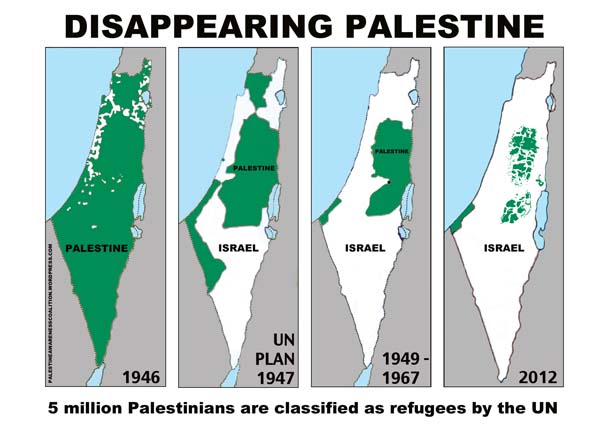
The good news [especially for those who must live with me] is I returned home without flaming anger—my rage this time just simmers on a low boil over America’s apathy and willful ignorance regarding our collusion in the misery of another indigenous people.
What fuels the arrogant notion of American exceptionalism is the same spirit of Zionism
One of Sabeel’s missions is to stick us with the truth as they remind us “the truth will set us free”.
Because it is US policies that aid and abet Israel’s Nuclear Deceptions, Humanitarian and War Crimes I FEEL stuck with having to run again for US HOUSE;

But NOT as an independent this time, I am offering myself to any party in any District in Florida who is ready to support an American for US HOUSE compelled by George Washington’s warning to US:
“Observe good faith and justice towards all nations; cultivate peace and harmony with all…and passionate attachments for others, should be excluded; and that, in place of them, just and amicable feelings towards all should be cultivated. The nation which indulges towards another a habitual hatred or a habitual fondness is in some degree a slave…a passionate attachment of one nation for another produces a variety of evils.”
Good and Evil run through every human heart and all Free Will means is we get to choose which rules.
During my intense 8 days in Jerusalem and Bethlehem, I met more than a few who had chosen the best way to transform the current reality is by transforming individual hearts:
The Tent of Nations driveway to Daher’s Vineyard and organic farm, in the hills southwest of Bethlehem, must be navigated by foot, which provides the settlers and Israeli Forces a visual witness of nonviolent solidarity seeking to End Israel’s Occupation of the State of Palestine.
Because of that visual witness, a curious settler once visited the farm and when he learned what was going on, he built The Tent of Nations three out-houses and moved out of the settlement [all are illegal under international law] to Tel Aviv.
“The long-term goal of The Tent of Nations is to prepare youth to make positive contributions to their future and society through the values of understanding, tolerance, and respectful coexistence. These goals are achieved through education-awareness campaigns, youth empowerment, and work camps.” ###
Keith Reynolds is a Canadian supporter of Sabeel who builds playgrounds for children in war-torn areas and is a long time friend of Mordechai Vanunu, Israel’s Nuclear Whistle Blower who attended Sabeel’s Conference sessions and ate meals with old friends and met many new ones.

“Playground Builders is dedicated to building hope and peace through the gift of play. Since our inception in 2007 we have built approximately 20 playgrounds per year supplying safe play for over 250,000 children. But this is just the beginning.
“We not only build playgrounds. We help societies in crisis by injecting money into the local economy and creating much-needed jobs. This helps to keep our costs low. Additionally, our board and volunteers underwrite administrative and travel costs so that virtually every dollar donated can go directly to building a new playground.
“Playgrounds are more than just physical places to play. They are spaces where kids can be kids, community members can feel connected and empowered, new possibilities find a strong foundation and peace and hope begins. Playground Builders builds hope, one playground at a time.”
LEARN MORE:
Americas Part in the Israeli Palestinian Conflict
Eileen Fleming is a regular columnist for Veracity Voice
Eileen Fleming, Founder of WeAreWideAwake.org
A Feature Correspondent for Arabisto.com
Author of “Keep Hope Alive” and “Memoirs of a Nice Irish American ‘Girl’s’ Life in Occupied Territory”
Producer “30 Minutes with Vanunu” and “13 Minutes with Vanunu”
Reported Iranian Nuclear Deal: Hold The Cheers
November 10, 2013 by Administrator · Leave a Comment

November 7 and 8 nuclear talks at most may offer Iran modest temporary relief in return for major concessions.
How they’re presented remains to be seen. How they’re implemented is another matter.
Longstanding anti-Iranian hostility remains unresolved. Washington wants it that way. So does Israel.
Netanyahu wants no concessions offered. He calls any deal a bad one. It’s “very dangerous for peace and the international community,” he claims. It’s hard imagining more convoluted thinking.
Temporary modest relief, if offered, is too little. Reports suggest Washington may unfreeze a portion of billions of dollars of Iranian assets held in foreign banks. It may allow some international trade.
In return, reports say stiff demands require Iran to halt uranium enrichment to 20%, render most of its nuclear fuel unusable, agree not to use high speed IR-2 centrifuges, and not activate its Arak facility when completed.
Details aren’t finalized. Terms discussed are temporary. They represent step one along a long road toward resolving longstanding anti-Iranian hostility.
John Kerry, French Foreign Minister Laurent Fabius, Britain’s William Hague and Germany’s Guido Westerwelle arrived in Geneva. They participated in Friday talks.
A November 8 State Department statement said:
“In an effort to help narrow the differences in negotiations, Secretary Kerry will travel to Geneva, Switzerland today at the invitation of EU High Representative Ashton to hold a trilateral meeting with High Representative Ashton and Foreign Minister Zarif on the margins of the P5+1 negotiations.”
On arrival, Fabius said “(t)here has been progress, but nothing is hard and fast yet.” Late afternoon Friday Geneva time, Kerry added:
“I want to emphasize there is not an agreement at this point. I don’t think anybody should mistake that there are some important gaps that have to be closed.”
Precisely what emerges remains to be seen. Most important is what follows.
Agreements are easily broken. Washington’s history reflects duplicity. It’s word isn’t its bond. Hold the cheers.
Headlines may belie reality. US rapprochement with Iran isn’t likely. Why after all these years? Why now?
Why after five years of deep-seated Obama administration hostility? Why in an administration infested with hardliners? Why despite a change in Iranian leadership?
Positive reports overstate reality. What’s given can easily be taken away. America’s so-called deal is reversible. Ahead of arriving in Geneva, John Kerry said:
“We are asking them to step up and provide a complete freeze over where they are today. Iran knows that if they don’t meet the standards of the international community, the sanctions could be increased and even worse.”
Iran’s good intentions may not matter. Washington and Israel are obstacles. On November 8, Haaretz headlined “Netanyahu warns Kerry: Israel not bound by any deal between Iran and West.”
They met in Jerusalem. They did so before Kerry left for Geneva. Netanyahu said “Israel utterly rejects” a deal. It’s “not obliged” to respect one.
It’ll “do everything it needs to do to defend itself and the security of its people.” Iran threatens no one. Its nuclear program is peaceful. Israel and Western officials know it. They claim otherwise.
On Wednesday, Obama said negotiations “are not about easing sanctions. (They’re) about how Iran begins to meet its international obligations and provide assurances not just to us but to the entire world.”
An administration spokesperson said:
“In the months since the Iranian election, we have continued to pursue our unwavering goal of preventing Iran from obtaining a nuclear weapon.”
“We have not let up on vigorous sanctions enforcement one iota.”
“This includes new designations of sanctions evaders as well as other steps to address potential sanctions evasion.”
Anti-Iranian organizations are masters at inventing nonexistent threats.
The Jewish Institute for National Security Affairs (JINSA) calls itself “the most influential group on the issue of US-Israel military relations.”
It supports Israel’s worst crimes. It’s in lockstep with its hegemonic regional agenda.
Its Iran Task Force includes a rogue’s gallery of members. Its October 29 Los Angeles Times op-ed headlined “How to negotiate with Iran,” saying:
“The most pressing national security threat facing the United States remains preventing a nuclear-capable Iran.”
Washington “should only pursue an agreement within certain parameters:”
(1) “Iran must resolve outstanding international concerns.”
(2) It must “suspend all enrichment-related and reprocessing activities.”
(3) “(D)eny Iran nuclear weapons capability.” Doing so involves severely restricting its legitimate operations.
(4) Mandate “strict inspections.”
(5) Negotiate “from a position of strength.” Doing so requires intensified sanctions, leaving open a military option, “initiat(ing) new military deployments,” and supporting “Israeli military action if conducted.”
(6) Don’t “waste time. Iran will likely attain an undetectable nuclear capability by mid-2014, and perhaps earlier.”
Imposing “a strict deadline for talks can dissuade Iran from using diplomacy as a cover while sprinting for the bomb, and reassure Israel so it does not feel compelled to act alone.”
Negotiators “must walk away from any agreement” deviating from the above terms.
An earlier JINSA commentary called sanctions “dangerously ineffective.” It urged military force at an “optimal time regardless of elections or other political considerations.”
The American Enterprise Institute (AEI) exerts enormous influence in Washington. It’s pro-business, pro-war and pro-unchallenged US dominance. It’s militantly anti-Iranian.
Danielle Pletka is vice president for foreign and defense studies. On November 7, sheheadlined “A Lousy Iran Deal,” asking:
“What’s a ‘modest rollback’ exactly? How much ‘suspension’ is suspension?” Why isn’t a total “freeze” imposed?
“What will the Iranians have given? Nothing. Every single offer reportedly out there from the Iranians is less than what was offered mere months ago in earlier negotiations.”
“In exchange, every concession contemplated by the Obama team is more than what was offered in earlier negotiations. Who’s the better negotiator here? Did you have any doubt?”
Reports suggest Washington demands major concessions. In return, Iran appears being offered modest, temporary relief at best.
Obama has little wiggle room on congressionally imposed sanctions. He can’t stop stiffer ones if enacted. They’ll stick with a virtual two-thirds or greater majority in both houses assured to pass them.
Congressional hardliners from both parties want them. Perhaps they’ll be forthcoming regardless of Geneva’s outcome.
Imposing them will unravel whatever is agreed on. Maybe Obama plans it that way. He can say we tried. We failed. He’ll blame Iran for US duplicity. It won’t surprise.
Sanctions imposed under the International Emergency Economic Powers Act (IEEPA) are at Obama’s discretion. They include frozen Iranian assets.
He can lift them all with a stoke of his pen. Doing so would send an important signal. Unfreezing a modest amount temporarily is much different.
It’s tokenism. It can be withdrawn with the same pen stroke. It can happen without warning. It can be with no justification.
According to Pletka, Iranian concessions merely slow its nuclear program. She wants significant rollback.
“(S)low down is fine with Iran,” she says, “because it has EVERYTHING IT NEEDS FOR A NUCLEAR WEAPON, or even several.”
What once was “a demand to end (its) entire nuclear weapons program has become a demand to make it smaller and hide it better.”
Pletka and likeminded hardliners know Iran’s nuclear program has no military component. They duplicitously claim otherwise. They’re in lockstep with longstanding US and Israeli policy.
They want the Islamic Republic eliminated. They want it replaced. They want Western control restored. They want war short of other ways to get it.
They’ll support an Israeli attack. It’s unlikely but possible. America and Israel have longstanding plans readied. Both countries represent the greatest threat to world peace.
In June 1981, Israeli warplanes attacked Iraq’s Osirak nuclear reactor. It was under construction. It was nearly completed.
Israeli Prime Minister Menachem Begin, Defense Minister Ariel Sharon, and other hardliners called Iraq an existential threat. Independent observers said otherwise.
Anticipatory self-defense doesn’t wash. It’s lawless. George Bush asserted America’s right to “impose preemptive, unilateral military force when and where it chooses.” Obama governs by the same standard.
In 1981, the Security Council said “the military attack by Israel was in clear violation of the Charter of the United Nations and the norms of international conduct.”
It didn’t matter. Recrimination didn’t follow. America gets away with murder and then some. So does Israel.
Iraq was a Nuclear Non-Proliferation Treaty signatory since 1968. It remains one. Israel is a nuclear outlaw. It falsely calls Iran an existential threat.
Will a future attack follow? Will Washington support it? Will they attack together? Dick Cheney calls war on Iran inevitable. He urges it. He’s not alone.
Lunatics infest Washington. Likeminded ones govern Israel. Anything ahead is possible. Both countries want sovereign independent Iran eliminated. So do rogue regional allies.
An interim deal at best delays possible military force. Employing it remains on the table.
So does potentially striking Iran with bunker buster or other nuclear weapons.They’re deployed close by. They’re ready to be launched on command.
Iran’s under no illusions. Washington and Israel can’t be trusted. Neither country negotiates in good faith. They’re all take and no give.
Agreements they reach are often breached. Regional tensions remain high.
Israeli German-supplied submarines carry nuclear missiles. Its warplanes are equipped to launch them. So can its long range missiles.
In mid-October, the IDF held war games. They included long-range warplane exercises. Air-to-air refueling was practiced. Drills over the Mediterranean were unusually extensive.
War games aren’t unusual. At the same time, practicing offensive tactics are worrisome. Israel notoriously attacks preemptively. It struck Syrian targets five times this year.
Perhaps it plans something major against Iran. If not now, maybe later. Maybe jointly with Washington.
Maybe at a more strategic time. Nuclear talks may be more subterfuge than real. The fullness of time will tell.
Stephen Lendman lives in Chicago. He can be reached at .
His new book is titled “Banker Occupation: Waging Financial War on Humanity.”
http://www.claritypress.com/
Visit his blog site at sjlendman.blogspot.com.
Next Page »

